CPT Code 59409 Vaginal Delivery Billing Guide 2026
CPT code 59409 billing gaps cost practices real money. See how automated coding gives administrators cleaner claims in 2026.


Billing 59409 looks simple until a denial lands. Here is what the code actually covers, what it refuses to touch, and where split-care billing quietly goes wrong.
CPT code 59409 is one of the most deceptively straightforward codes in obstetric billing. The descriptor reads simply, the clinical scenario feels obvious, and most coders move on without a second look. That confidence is where the exposure begins.
The common assumption is that billers and practice administrators believe the fix is better coder training or more detailed payer-policy lookups, that the denial problem lives in the billing department. Understanding exactly what the code authorizes, and what it refuses to cover, is the first line of defense against denials that no modifier can fix after the fact. Per the BillingFreedom Obstetrics Coding and Documentation Reference Guide (October 2024), the code covers delivery of the baby and placenta, and includes repair of first- or second-degree perineal lacerations when performed.
Instrument-assisted delivery, whether by forceps or vacuum extraction, is also bundled inside the code and billed separately. See our AI medical scribe for how this works in practice.

Service: Delivery of baby and placenta
- Status Under 59409: Included
Service: Episiotomy
- Status Under 59409: Included
Service: Forceps or vacuum extraction
- Status Under 59409: Included
Service: First- or second-degree laceration repair
- Status Under 59409: Included
Service: Antepartum (prenatal) care
- Status Under 59409: Explicitly excluded
Service: Postpartum care
- Status Under 59409: Explicitly excluded
According to the BillingFreedom Obstetrics Coding and Documentation Reference Guide (October 2024), CPT that same figure explicitly excludes antepartum and postpartum care; those services must be billed separately when applicable. A hospitalist OB who delivers a patient but had no involvement in prenatal care bills that same figure precisely because the delivery-only descriptor matches what was actually rendered, and nothing more. "Only" is a liability signal.
The BillingFreedom Obstetrics Coding and Documentation Reference Guide (October 2024) is explicit: the word signals a split-billing scenario where the delivery service has been separated from antepartum and postpartum care. Payers read that word and immediately expect the claim to reflect delivery only. When the documentation doesn't confirm that scope clearly, the payer has grounds to question whether the global package was billed elsewhere by the same provider.
"Only" is not a modifier. It is a liability signal.
When the delivering physician dictates a rushed note that omits transfer-of-care context, instrument use, or laceration repair detail, the coder is left reconstructing intent from incomplete evidence. That reconstruction is where denials are born. Knowing exactly what that same figure covers is the foundation, but it only prevents one category of error. The next layer of risk lives in how this delivery-only code interacts with the global OB package, and that relationship is where most split-care billing mistakes are actually made.
Key takeaways
- CPT 59409 covers vaginal delivery only, no antepartum, no postpartum, and that narrow scope is exactly where billing exposure hides when the note doesn't say so explicitly.
- The single clinical fact separating 59409 from 59410 is whether the delivering provider also performed the postpartum visit; get that one element wrong and the claim is either undercoded or indefensible on audit.
- Split-care delivery denials rarely surface at the moment of coding, they appear months later, after the original encounter context is gone and the reasoning behind the code choice can't be reconstructed.
- Five claim data elements are mandatory on every 59409 submission per CMS: the procedure code, an ICD-10 vaginal delivery diagnosis, the rendering provider's NPI, the correct place of service, and a date of delivery, missing any one triggers adjudication failure before a human reviewer ever sees the claim.
- Approximately 30% of claim denials trace back to insufficient or missing documentation, and for 59409 that statistic isn't background noise, it's the primary mechanism of revenue loss.
- The documentation gap that breaks a 59409 claim is created at the point of encounter, not at the clearinghouse; no downstream billing action recovers what the delivery note failed to capture.
- iScribe Health's Automated E&M Coding generates codes directly from clinical documentation in real time, so the scope-of-service context that makes a 59409 claim defensible is captured at the bedside, before it can be lost in translation to the coder.
How CPT 59409 Fits the Global OB Package Components Billers Must Know
The global OB package is a billing map.
CPT 59400 bundles every phase of obstetric care into a single claim, and understanding its internal structure is precisely what keeps split-care billing clean.

CPT 59400 as a Blueprint - What the Global Package Actually Bundles
According to the AMA CPT Code Set, CPT 59400 bundles three distinct phases of care into one billable unit: antepartum visits, the vaginal delivery, and postpartum care. Each phase carries its own reimbursement weight within that single code, which is why the structure matters the moment care splits across providers.
The Component Code Triad - How 59409, 59425/59426, and 59430 Replace the Global Package in Split-Care Billing
Three codes reconstruct what 59400 covers. The AMA CPT Code Set confirms that antepartum care bills as CPT 59425 for four to six visits, or CPT 59426 for seven or more visits; delivery bills as CPT 59409; and postpartum care bills as CPT 59430. That triad maps directly onto real-world split-care scenarios. Consider a patient transferred mid-pregnancy to a new OB practice: the original provider bills 59425 or 59426, the delivering provider bills 59409, and the postpartum provider bills CPT 59430.
Together, those three codes reconstitute the global package without overlap and without leaving revenue on the table. Missing 59430 alone forfeits the postpartum reimbursement entirely, a real dollar loss that compounds across a busy obstetric panel.
The Audit Trigger No One Talks About - Billing 59409 and 59400 for the Same Patient and Provider
Submitting 59409 alongside 59400 for the same patient and the same provider is unbundling. Without visibility into which provider billed which component, even an experienced coder is working blind, and in practices running high patient volumes, that blind spot scales into systematic exposure. iScribe Health's Ambient AI Documentation addresses this directly: by capturing structured delivery documentation through ambient listening at the point of care, the platform surfaces which care phases the delivering provider performed, giving the coding team an encounter-level record to confirm whether 59409 alone is correct or whether a missing component is about to generate a denial.
Because iScribe Health integrates with supported EHRs, that structured record flows into the existing workflow without requiring a separate documentation pass.
At the point of note completion, after the AI drafts the encounter summary, iScribe Health's E&M Coding Intelligence and Real-Time Denial Alerts layer in an additional check, flagging component mismatches before the claim ever leaves the practice. That pre-submission review is where systematic exposure gets caught rather than corrected after the fact. The workflow shift is validated in data from the Center for Sports Medicine & Orthopaedics, Chattanooga: 941 encounters analyzed, 54.8% provider, AI agreement, 33% overcoding rate found.
Until they ran the trial, no one in the building knew the split, demonstrating precisely what the ACOG Coding Committee Guidelines warn about: documentation gaps that go undetected without structured, encounter-level review. The AAPC My OB-GYN Coding Alert similarly underscores that maternity coding precision depends on documentation that accurately reflects what each provider rendered, the exact problem iScribe Health's ambient documentation infrastructure is built to solve across every patient encounter and every day of clinical practice.
33%
Overcoding rate uncovered without AI review
941
Encounters analyzed in AI coding trial
With the global package structure and its component codes established, the next layer of precision is knowing how 59409 differs from its closest neighbor, 59410, a distinction that hinges entirely on what happened in the delivery room after the baby arrived.
Vaginal Delivery Code Distinctions Every Biller Gets Wrong Between 59409 and 59410
The single clinical fact that separates these two codes is whether the delivering provider also performed the postpartum visit. That one element determines everything: the correct code, the defensible claim, and the revenue the practice either captures or forfeits, or gets paid faster on.
1. CPT Code 59409 - Vaginal Delivery Only, No Postpartum Care Included
Per the AMA CPT Code Set, CPT that same figure covers vaginal delivery only, with postpartum care explicitly excluded from the service. The right pick is any scenario where the delivering provider renders no postpartum follow-up: transferred care, laborist arrangements, or emergency admissions from outside the practice. The limitation billers underestimate is that "delivery only" must be stated in the clinical note, not inferred from the practice's care model.
This is where OB practices we work with run into a concrete operational problem: the note that arrives at the coder's desk often does not state care disposition clearly, because the physician dictated it hours after the delivery, well outside the room, working from memory. iScribe Health's Ambient Listening and Conversational AI captures care-continuity context in real time, so the note already reflects whether postpartum care was rendered or transferred before it ever reaches the billing queue. That is the difference between a documentation outcome and a desk-level judgment call.
2. CPT Code 59410 - Vaginal Delivery Plus Postpartum Care, the Upgrade Billers Miss
CPT 59410 adds the postpartum visit to the vaginal delivery service, and according to the AMA CPT Code Set, it is the correct code when the delivering provider also conducts that follow-up visit. The revenue difference between that same figure and 59410 is real and recurring across every qualifying delivery. The risk: billing 59410 speculatively, before the postpartum visit actually occurs, converts a legitimate upgrade into an overcoding exposure the moment the patient does not return.
iScribe Health's E&M Coding Intelligence and Real-Time Denial Alerts are designed to surface exactly this scenario, flagging when a that same figure claim is queued without documented confirmation that the postpartum visit occurred and who rendered it, before the claim goes out the door. Getting paid faster depends on getting paid right the first time.
3. Undercoding Risk - Billing 59409 When the Delivering Provider Owns Postpartum Care
When a provider delivers and then sees the patient at the six-week visit but the billing system defaults to that same figure, the practice absorbs a revenue loss on every one of those encounters. The AMA CPT Code Set is explicit: billing that same figure in that scenario constitutes undercoding. The gap is not effort. The gap is visibility into whether the note actually documented that the postpartum visit occurred and who rendered it.
High-volume OB practices and health systems where clinicians regularly spend significant time charting outside of patient care time are most exposed to this gap, because rushed, after-hours documentation is where postpartum care disposition gets dropped from the note. iScribe Health's Ambient AI Documentation captures that disposition at the point of encounter, and Automated E&M Coding applies it at the point of note completion, after the AI drafts the encounter summary. The result is a claim that reflects the clinical reality rather than a billing system default.
4. Overcoding Risk - Billing 59410 When Postpartum Care Transfers to Another Provider
A meaningful share of OB patients do not return for postpartum care with the delivering provider, whether by care plan design or patient no-show. Billing that same figure in those cases, without documentation confirming the delivering provider performed the visit, constitutes overcoding and creates compliance exposure. The AMA CPT Code Set is equally direct here: when postpartum care transfers or does not occur, that same figure is the correct code, and 59410 is indefensible.
The CMS Medicare Physician Fee Schedule Final Rule CY 2015 reinforced the principle that global obstetric package components must be supported by documentation at the encounter level, not reconstructed retroactively. iScribe Health's EHR Integration surfaces the relevant encounter data inside the clinician's existing workflow, so the distinction between codes is resolved in the note, not in the billing department after the fact.
5. Practice-Wide Coding Inconsistency Between 59409 and 59410 as an Audit Trigger
A laborist group that consistently bills that same figure alongside a partner who defaults to 59410 for identical care arrangements produces exactly the pattern payers flag. The OIG Work Plan, Obstetric Coding Compliance Guidance identifies intra-practice coding inconsistency as an audit trigger, because payer pattern-matching reads the discrepancy as a potential billing irregularity rather than a legitimate clinical difference. No amount of biller retraining normalizes that pattern if the source notes do not uniformly document postpartum care disposition at the point of encounter.
This is the structural problem iScribe Health is built to close. When iScribe Health's Ambient AI Documentation and AI Customization are running inside a supported EHR, which is when the platform is most impactful, materializing seamlessly for practices already operating on a supported system, every provider's note captures postpartum care disposition in the same structured way, at the same moment in the workflow. That consistency is what makes that same figure versus 59410 a documentation outcome rather than a pattern that invites audit scrutiny. Physician Burnout Reduction is a downstream benefit of the same workflow: when real-time ambient listening removes two-plus hours of after-hours charting, providers document more accurately precisely because they are not reconstructing clinical events from memory at the end of a long shift.
Knowing which code is correct in the abstract is only half the problem. The harder challenge is recognizing which code applies to the specific clinical arrangement in front of you. The next section maps the most common real-world split-care delivery scenarios to the documentation each one demands.
Common Clinical Scenarios Where CPT 59409 Applies to Split-Care Deliveries
Five distinct patient care patterns land on CPT that same figure, and each one demands a different set of facts in the clinical note before the code is defensible. The scenario type is a documentation blueprint.
1. Transferred Antepartum Care - Delivering Provider Bills CPT Code 59409 for Delivery Only
When a patient receives antepartum care from one provider and delivers with a different one, the delivering provider bills only the delivery component. As Medical Billing Analysts notes, the global obstetric package is inappropriate here because the delivering provider did not furnish the full continuum of care. The note must name the original managing provider and confirm no postpartum follow-up is planned with the delivering physician, or the claim lands in a documentation gray zone that payers routinely deny.
This is precisely where care teams working under peak census pressure face the highest risk: the transfer-of-care narrative, who managed antepartum care, when the handoff occurred, and what the delivering provider's role was limited to, is exactly the contextual detail that gets compressed or dropped entirely when a clinician is moving between patients. iScribe Health's ambient AI documentation captures that encounter context at the bedside in real time, so the note reaching the coder already contains the care-handoff narrative before the claim is ever built. For IT and EHR administrators and clinical informatics teams working to standardize clinical documentation quality across the practice, that consistency across every transfer-of-care encounter is the operational outcome that closes the denial loop at the source.
2. Hospitalist and Laborist Deliveries - CPT 59409 Applied Per Delivery Without Antepartum or Postpartum Ties

Laborist and hospitalist programs are a high-volume, high-frequency that same figure scenario. Industry data confirms that hospitalist groups handling deliveries without antepartum or postpartum ties should bill that same figure per vaginal delivery. The documentation fingerprint here is the explicit absence of a prior patient relationship. Under labor-and-delivery pressure, that contextual detail is precisely what gets dropped from the note, locking in a denial before the billing team ever opens the claim.
High-volume practices and health systems where clinicians regularly spend significant time charting outside of patient care time are most exposed to this failure pattern, because the workflow does not support capturing care-continuity context in the moment it exists. iScribe Health's ambient listening and conversational AI is most impactful in exactly these settings, streamlining clinical workflows so care teams can maintain documentation quality even during peak census periods. The absence-of-prior-relationship detail that defines the hospitalist that same figure is surfaced automatically in the AI-drafted encounter summary, at the point of note completion, before the note leaves the clinician's hands.
3. Emergency Transfers in Active Labor - No Prior Relationship Confirms CPT 59409 as the Correct Delivery Code
A patient arriving in active labor from another facility, with no prior relationship with the receiving provider and no postpartum follow-up planned, is a clean that same figure scenario. Medical Billing Analysts identifies this as a delivery-only service by definition. The note must reconstruct the transfer origin and confirm the absence of any antepartum or postpartum relationship.
In split-care and emergency-transfer scenarios, the clinical note functions as the legal instrument that reconstructs the care handoff for the payer. When that reconstruction is absent, the that same figure claim fails because the note cannot prove the delivery-only context ever existed. Since documentation gaps cannot be corrected at the clearinghouse, the denial is locked in before the billing team ever touches the claim.
iScribe Health's EHR integration means the AI-drafted encounter summary, including transfer origin, care-continuity context, and delivery mechanism, flows directly into the supported EHR at the point of note completion, without requiring a separate documentation step from the clinician. For clinical informatics teams working to standardize documentation quality across the practice, that seamless integration removes the workflow friction that causes transfer-of-care details to disappear under emergency conditions. iScribe Health's Real-Time Denial Alerts add a downstream safety net: if a claim pattern associated with missing delivery-only context is detected, the alert surfaces before submission rather than after.
4. Multiple Births - Appending Modifier 59 to CPT 59409 for Each Additional Vaginal Delivery
A laborist delivering twins bills that same figure for the first baby, then that same figure with Modifier 59 for each additional vaginal delivery. Modifier 59 signals that each delivery is a distinct procedural service. Payer acceptance rates for this modifier vary across commercial, Medicare, and Medicaid plans, so verifying payer-specific guidelines before submission is not optional. The note must document the number of infants delivered and the delivery type for each, or the modifier has no clinical anchor to stand on.
In a multiple-birth scenario unfolding in real time, ambient listening captures the delivery sequence and infant count as the encounter progresses, so the AI-drafted note already contains the per-infant delivery documentation the modifier requires, rather than relying on the clinician to reconstruct sequencing after the fact. That accuracy at the point of note completion is the difference between a modifier with a clinical anchor and one that invites a duplicate-charge denial.
5. Induction Leading to Vaginal Delivery by a Non-Antepartum Provider - CPT 59409 Remains the Delivery Code
When a provider manages an induction and delivers the baby but had no role in antepartum care, that same figure remains the correct code regardless of the induction's complexity. As Capline Healthcare Management reinforces, the delivering provider bills only the delivery component when the antepartum relationship belonged to someone else. The honest trade-off: if the induction was significantly more complex than typical, Modifier 22 may apply, but only when the note explicitly articulates what elevated the procedural difficulty.
That articulation, the specific clinical factors that distinguished this induction from a routine one, is the kind of narrative detail that clinicians under time pressure intend to document but rarely circle back to complete. iScribe Health's E&M Coding Intelligence and Automated E&M Coding surface that gap at the point of note completion, after the AI drafts the encounter summary, flagging where procedural complexity language is absent and where a Modifier 22 rationale would need to be explicitly stated before the note supports the code. For IT and EHR administrators overseeing documentation standards across a practice, that point-of-completion review is the quality gate that keeps complexity modifiers defensible before claims are submitted.
Most providers handling high delivery volumes under time pressure capture the delivery mechanics accurately but drop the care-handoff context entirely. That omission is a documentation workflow problem. iScribe Health's ambient AI documentation, integrated directly into a supported EHR for a seamless experience, captures encounter context at the bedside in real time, so the note reaching the coder already contains the transfer-of-care narrative, delivery mechanism, and care-continuity context each that same figure scenario demands, before the claim is ever built. Documentation is complete when it leaves the clinician, rather than reconstructed after the denial arrives.
Related Reading
Documentation Requirements That Make or Break a 59409 Claim
Every element missing from a that same figure delivery note is not a paperwork gap. It is a denial waiting to be triggered by a payer's adjudication algorithm, and no downstream billing action can recover it.
1. Explicit Scope-of-Service Statement - Delivery Only, Nothing More
The note must state, in plain language, that only the delivery service was rendered. INFINITI RCM's June 2025 billing guidance is direct: documentation must explicitly reflect that only the delivery service was performed when 59409 is billed. Without that statement, a payer has no basis to confirm this is a legitimate delivery-only claim rather than a misbilled global package, and the denial follows automatically.
2. Transfer-of-Care Narrative - Who Did What and Why
A laborist's note that says "spontaneous vaginal delivery" but omits any reference to the antepartum care arrangement gives a payer no basis to confirm a legitimate split-care claim. Per industry guidance on OB-GYN billing, the note must identify who managed antepartum care and whether postpartum follow-up will be handled by another provider. Vague or absent transfer-of-care narratives are among the most predictable denial vectors for delivery-only codes, and the fix has to happen at the bedside, not the clearinghouse.
3. Delivery-Specific Clinical Elements - Type, Episiotomy, Laceration, Complications
Four clinical facts must appear in every defensible that same figure note: delivery type (spontaneous vs. instrument-assisted), episiotomy status, degree of any laceration repaired, and notation of complications encountered. INFINITI RCM's 2025 coding guidance lists each as a required documentation element, and the AMA CPT Editorial Panel reinforces that procedure-specific clinical detail is the foundation of any defensible obstetric claim. Rushed delivery notes that omit laceration degree do not just create a documentation gap; they make any associated repair service unbillable alongside that same figure, compounding the revenue loss.
4. Modifier 22 With Complexity Justification - Earn It in the Note
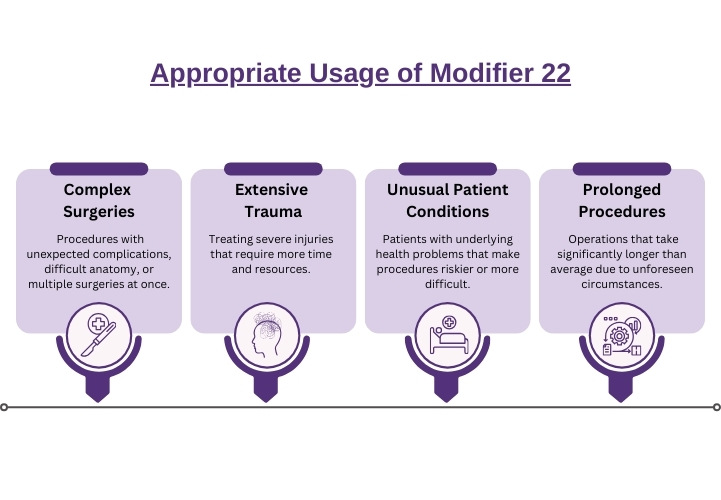
Modifier 22 for increased procedural complexity may be appended to that same figure only when the note explicitly articulates what made the delivery more complex than a typical case. INFINITI RCM's June that same figure guidance is unambiguous: without that narrative, the modifier will not survive payer scrutiny. Appending Modifier 22 to a sparse note flags it for audit and recoupment review, converting a revenue opportunity into a liability.
5. The Coder Cannot Fix What the Note Never Said - Point-of-Encounter Finality
Every undocumented element at the point of encounter is a permanently forfeited revenue opportunity. Coders can only code what the note actually says, and payer adjudication systems are already programmed to find the gaps. Most billing teams treat documentation as something to verify during claim preparation. The operational reality is that the capture window closes the moment the provider leaves the delivery room.
OB teams we work with at iScribe Health, particularly those in high-volume practices where clinicians regularly spend significant time charting outside of patient care time, know exactly how costly post-encounter reconstruction becomes: incomplete notes, missed modifiers, and denied claims that represent clinical effort already performed. iScribe Health's ambient AI documentation captures delivery-specific elements in real time at the bedside, so the note arrives at the coder's desk already containing every element a that same figure claim needs, including delivery mechanism, episiotomy status, laceration degree, complication notation, and transfer-of-care context, with no downstream reconstruction required. Because iScribe Health is built around EHR integration, practices and health systems already running a supported EHR get a seamless ambient documentation experience, the AI drafts the encounter summary at the point of note completion, flowing directly into the existing workflow rather than sitting outside it.
That hands-free experience at the bedside is precisely where the greatest value materializes. The physician focuses on the patient and the delivery, the ambient listening captures the clinical narrative, and the result is more defensible documentation without adding time to the encounter.
The trade-off worth naming honestly: ambient AI scribing has a short ramp period, median time-to-comfort is under one week, and most providers are signing notes on day two, but practices should still plan for dedicated implementation support and assess whether their current volume and staffing model supports the onboarding investment before committing.
Getting the note right is only half the battle. Once the documentation is airtight, the claim still has to clear payer-specific submission rules, Medicare fee schedules, and Medicaid program requirements that vary by state and update without warning. The next section maps exactly what happens to that same figure claim after it leaves the practice.
OB Delivery Claim Submission Requirements and Medicare Medicaid Reimbursement Rules for 59409
A correctly coded that same figure claim can still be denied before a reviewer ever reads the diagnosis. That is the part most billing teams miss.
1. Core Claim Data Elements Required for CPT Code 59409 Submission
The CMS Claims Processing Manual, 2024 specifies five non-negotiable fields on every that same figure claim: the procedure code, an ICD-10 vaginal delivery diagnosis, the rendering provider's NPI, the correct place of service code, and a date of service that matches the documented delivery date. All five must align with the original encounter note. A mismatch on any single field is sufficient grounds for denial, regardless of how accurately the clinical work was documented or the code was selected.
2. Medicare Physician Fee Schedule Reimbursement for CPT 59409 - RVU-Based Payment for Delivery-Only Service
Medicare reimburses that same figure under a Resource-Based Relative Value Scale structure, where the final payment equals the assigned RVU multiplied by the annual conversion factor and adjusted for the rendering provider's geographic practice cost index. The CMS Medicare Physician Fee Schedule, that same figure is explicit: billers must verify the current RVU value and locality-specific GPCI adjustment before submission, because the locality adjustment shifts the effective rate materially across regions. Accepting payment without that verification means the practice may never flag an underpayment, a quiet revenue leak that compounds across high patient volumes.
3. State Medicaid Reimbursement Rules for 59409 - Specialty Codes, Prior Authorization, and Program Carve-Outs
State Medicaid programs, including MOMS-type maternity managed care arrangements, impose specialty code requirements, prior authorization rules, and delivery-service carve-outs that function as invisible adjudication filters. A claim submitted to a state Medicaid MOMS program without the required specialty code will be denied even when the that same figure code and documentation are correct. The Medicaid.gov Managed Care Policy Guidance, that same figure confirms these requirements are payer-specific and must be verified before each submission cycle. Policies update mid-year without notice, making recurring verification a billing hygiene requirement rather than a one-time setup step. iScribe Health's Real-Time Denial Alerts are built to surface these mid-cycle policy shifts before they produce a denied claim rather than after.
4. Place of Service Code Accuracy for CPT 59409 - Hospital Inpatient vs. Birthing Center Distinctions
Place of service 21 applies to inpatient hospital deliveries; a freestanding birthing center requires a different designation entirely. The financial exposure from a POS mismatch compounds when resubmission is late or incomplete, and practices delivering patients across more than one facility type carry a statistically real risk of at least one POS error per billing cycle. This is a claim-level field that payer adjudication systems evaluate before any clinical review occurs, making it one of the fastest paths to a denial on an otherwise correct that same figure claim. iScribe Health's EHR Integration passes facility context captured during ambient documentation directly into the encounter record, reducing the reliance on manual field entry that produces these errors in the first place.
5. Commercial Payer Policy Verification for 59409 - Why Reimbursement Rules Vary Significantly Beyond Medicare and Medicaid
Commercial payers frequently apply global OB package bundling edits that reject standalone that same figure claims, even in legitimate split-care or transferred-delivery scenarios. The ACOG Coding and Payment Guide for OB/GYN, that same figure confirms that commercial acceptance criteria and bundling edits differ substantially from Medicare and Medicaid rules, requiring verification of local payer guidelines before each submission. Denials rooted in contract-level bundling language cannot be resolved by the billing team alone; they require contracting-level intervention.
A correctly coded that same figure claim becomes an unenforceable one the moment it hits a bundling edit the practice was never notified about. Ensuring reimbursement integrity across commercial payers requires both accurate upstream documentation, supported by iScribe Health's Ambient AI Documentation and Automated E&M Coding, and active payer-policy monitoring that does not wait for a denial to confirm the problem exists.
Why Practices Billing 59409 Without Automated Coding Oversight Carry a Hidden Revenue Risk
Why CPT 59409 Miscoding Persists Across Trained OB Billing Teams

Audit Data - Undetected Miscoding Rates in Specialty Billing and What They Mean for 59409
An iScribe audit of 941 real encounters at the Center for Sports Medicine & Orthopaedics in Chattanooga revealed a 54.8% provider, AI agreement rate and a 33% overcoding rate that no one in the building knew existed until they ran the trial.
How Inconsistent 59409 vs. that same figure Coding Across Providers Creates Denial and Audit Exposure
Provider-level variation in how that same figure and 59410 are applied within the same practice is a direct signal that the coding decision is being made from incomplete or inconsistent notes rather than a shared documentation standard. DeliverHealth's analysis confirms that AI-powered coding compliance tools surface and correct exactly this kind of inconsistent coding pattern across providers before the claim is submitted, a correction that coder training or payer-policy lookups alone cannot reliably achieve at scale.
Why the Coding Error Originates at the Point of Encounter, Not at the Clearinghouse
The hidden cost is that undercoding goes uncontested and overcoding accumulates undetected, both compounding silently across every billing cycle. iScribe Health's Automated E&M Coding addresses this by capturing the delivery-only context, the split-care arrangement, and the absence of postpartum care at the point of encounter in real time, so code selection is grounded in what actually happened rather than what a coder had to infer from an incomplete note submitted hours later.
Related Reading
Next steps
If your practice keeps seeing 59409 denials despite experienced coders and thorough payer-policy reviews, the path forward starts with fixing documentation at the point of encounter, not at the clearinghouse. The note written in the delivery room is the only record that can carry the split-care narrative, the absence of postpartum follow-up, and the delivery-only context a coder needs to build a defensible claim. No downstream billing action recovers what was never captured there. Start with our AI medical scribe.
The finding from iScribe's 941-encounter audit, a 33% overcoding rate that no pre-submission review had detected, means that practices billing codes separated by a single clinical element, as 59409 and 59410 are, carry compounding miscoding risk that coder training alone cannot surface. The principle that documentation gaps cannot be corrected at the clearinghouse means the denial is already locked in before your billing team opens the chart. Together, they point to one action: move the documentation quality gate to the bedside, where the claim is actually won or lost.
Start with an AI medical scribe that captures delivery-only context, split-care arrangements, and care-continuity details through ambient listening in real time, so the encounter note reaching your coder already contains every element a 59409 claim requires. Real-time denial alerts then flag coding inconsistencies before claims leave the practice, and automated E&M coding applies a defensible code selection at the point of note completion, eliminating the manual reconciliation that consumes billing staff time after the fact.
Frequently Asked Questions
Does 59409 include forceps or vacuum extraction, or do I bill those separately?
Instrument-assisted delivery, whether by forceps or vacuum extraction, is bundled inside CPT 59409 and is not billed separately. The code covers delivery of the baby and placenta, episiotomy, and first- or second-degree laceration repair as well.
What's the actual difference between billing 59409 and 59410?
The single clinical fact that separates them is whether the delivering provider also performed the postpartum visit. CPT 59409 covers vaginal delivery only with postpartum care explicitly excluded, while CPT 59410 adds the postpartum visit to the delivery service. Billing 59410 before the postpartum visit actually occurs converts a legitimate upgrade into an overcoding exposure if the patient does not return.
If I bill 59409 but my partner bills 59400 for the same patient, is that a problem?
Submitting 59409 alongside 59400 for the same patient and the same provider is unbundling, which the ACOG Coding Committee Guidelines identify as one of the most common triggers for OB coding audits and claim denials. Payers treat 59409 as already included within the global package, so billing both is not a gray area.
How do I handle postpartum billing when the delivering provider isn't the one doing the six-week visit?
When postpartum care transfers to another provider, the delivering provider bills only CPT 59409 for the delivery, and the provider who renders the postpartum visit bills CPT 59430 separately. Billing 59410 in that situation, without documentation confirming the delivering provider performed the postpartum visit, constitutes overcoding and creates compliance exposure.
What documentation does the delivering provider's note actually need to include for 59409 to hold up?
The note must clearly state that delivery-only care was rendered, transfer-of-care context, instrument use if applicable, and laceration repair detail should all be documented. When those elements are missing or dictated from memory after the fact, the coder is left reconstructing intent from incomplete evidence, which is where denials are born.