CPT Code 76817 Explained: What It Covers and When to Use It
CPT code 76817 audit exposure costs practices real money. Billing decision-makers, see where documentation gaps drain reimbursement.


Most 76817 billing failures start in the exam room, not the billing queue. Here is where the documentation breaks down and what it costs you.
CPT code 76817 looks simple until a payer auditor starts asking questions. The common assumption is that better coder training or a more experienced billing vendor solves the revenue problem, but the gap between what happened in the exam room and what the note says happened is where most billing problems begin. Practices that treat 76817 as a routine lookup item are carrying more audit exposure than they realize, and the consequences compound quietly across every encounter.
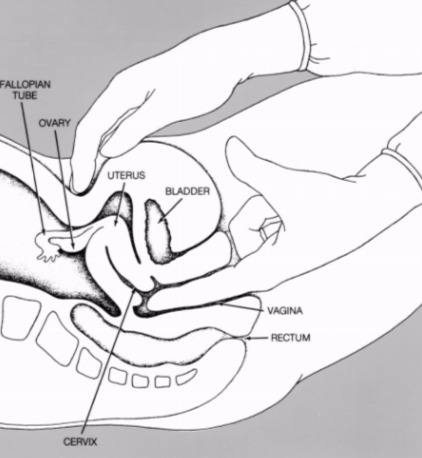
CPT code 76817 describes a diagnostic ultrasound of the pregnant uterus performed via a transvaginal approach, requiring real-time imaging and permanent image documentation. Each element carries weight: the approach must be transvaginal, the imaging must be real-time, and the documentation must include permanently stored images. Per the AAPC OB-GYN Coding Alert, clinical structures evaluated under this code include the gestational sac, embryo or fetus, cervix, and surrounding pelvic structures. See our AI medical scribe for how this works in practice.

If the note says "OB ultrasound performed" without specifying the transvaginal approach, the code is indefensible on audit regardless of what the physician actually did. A missing method isn't a documentation technicality; it's a missing element of the code's clinical definition. As the AAPC OB-GYN Coding Alert confirms, the transvaginal approach provides higher resolution than transabdominal scanning, making it especially valuable in early pregnancy or when transabdominal views are inconclusive. The obstetric context is equally required: providers who perform the service correctly but document it generically hand auditors an easy denial. Practices using AI-powered clinical documentation can capture the approach, real-time imaging confirmation, and evaluated structures at the point of care, embedding the specificity the code requires before the claim is ever built.
Key takeaways
- CPT 76817 is a transvaginal OB ultrasound code, and the moment a clinical note omits the approach, gestational age, or fetal count, the code becomes indefensible to a payer auditor regardless of how skilled the biller is.
- Denial rates on OB imaging claims reach 30% at some practices, and the root cause is documentation deficiency, not coder error, a distinction that changes where the fix has to happen.
- Modifier 59 and XU are not workarounds a biller can apply after the fact; CMS NCCI policy treats them as attestations that a separately documented, clinically distinct service occurred.
- The revenue gap between a correctly coded 76817 and a miscoded 76815 is not a rounding error, at volume, it compounds silently across every encounter and funds recoverable revenue the practice never sees.
- A practice can look stable on aggregate denial reports while simultaneously undercoding and overcoding, because opposite errors cancel each other out until an encounter-level audit forces the issue.
- Most OB billing errors around CPT 76817 originate at the point of care, not in the billing queue, which means the intervention has to happen before the note is signed, not after.
- iScribe Health's Automated E&M Coding generates codes directly from clinical documentation in real time, so the specificity that makes a 76817 claim defensible is captured during the encounter, not reconstructed from an incomplete note hours later.
Transvaginal vs Transabdominal OB Ultrasound Coding Where Most Claims Break Down
Industry billing analyses consistently associate imaging claims at OB/GYN practices with above-average denial rates, with denial rates as high as 30% on imaging claims attributable to documentation deficiencies rather than coder error, contradicting the assumption that better-trained coders alone can resolve the revenue problem.

How an Undocumented Approach Forces the Wrong CPT Code
When the clinical note omits which approach was used, the biller has no defensible basis for selecting the higher-value transvaginal code, so the biller defaults to 76815, the limited transabdominal code, at a materially lower reimbursement rate.
Research comparing transabdominal and transvaginal ultrasound approaches, including published diagnostic analysis of the clinical distinction between the two methods, underscores that approach is a defined, determinative variable, not a documentation courtesy. Common denial code reviews consistently confirm this pattern: OB ultrasound claim denials frequently trace back to missing or ambiguous procedure approach notation that forces billers to default to lower-value codes, rather than to coder ignorance of modifier rules.
This is exactly the struggle iScribe Health was built to remove. Practices we work with, particularly high-volume OB/GYN environments where clinicians routinely chart two or more hours outside of patient care, find that approach notation is the element most likely to be omitted under time pressure. iScribe Health's Ambient Listening and Conversational AI captures the encounter in real time, and its E&M Coding Intelligence surfaces approach, gestational age, and fetal count inside the AI-drafted note before the encounter closes, ensuring the documentation needed to support the correct code is present before the claim is ever submitted.
The Complete vs. Limited OB Ultrasound Distinction, A Second Denial Risk
- Fetal number
- Fetal presentation
- Cardiac activity
- Placental location
- Amniotic fluid assessment
- Gestational age measurement
iScribe Health's Automated E&M Coding addresses both axes simultaneously, capturing complete-versus-limited distinctions alongside approach notation so neither dimension is left to chance.
NCCI Bundling, When Same-Day Transabdominal and Transvaginal OB Claims Are Combined
When a physician performs both a transabdominal and a transvaginal ultrasound in the same encounter, billing both codes is clinically appropriate, but only when the documentation explicitly supports separate medical necessity for each. Without that language in the note, payers apply NCCI bundling edits and deny the second code outright, leaving practices to absorb the loss or absorb the cost of an appeal.
The hidden cost of that approach is the appeal cycle, the delayed payment, and the claims that never get appealed at all. iScribe Health's Real-Time Denial Alerts and EHR Integration address the problem at its actual origin point: surfacing approach, gestational age, fetal count, and medical necessity language inside the clinical note before the encounter closes, so the claim arrives at the payer already defensible. Because iScribe Health materializes most impactfully when the practice or health system is already running a supported EHR, the ambient documentation layer integrates directly into existing workflows; there is no parallel charting system to learn and no separate step where medical necessity language must be manually inserted.
Related OB Ultrasound CPT Codes Billers Confuse With 76817
Four variables determine which OB ultrasound code belongs on a claim: whether the patient is pregnant, which approach the clinician used, how far along the pregnancy is, and whether the exam was complete or limited. When the clinical note captures all four, code selection is mechanical. When even one is missing, billers are forced to guess, and that guess is almost always the lower-value code, costing the practice real reimbursement and, in some cases, saddling patients with out-of-pocket bills that should never have materialized.
1. CPT 76817 vs. 76830 - Obstetric vs. Non-Obstetric Transvaginal - The Most Auditable Mix-Up in OB Billing
76830 is the transvaginal ultrasound code for non-pregnant patients; 76817 applies when the patient is confirmed pregnant. Billing that same figure on a pregnant patient encounter is one of the most consistently flagged coding errors in OB audits, according to guidance published in Ultrasound in Obstetrics & Gynecology (International Society of Ultrasound in Obstetrics and Gynecology). The error almost always traces back to a note that never documented confirmed pregnancy status at the time of service, leaving the biller to default to the gynecologic code. Accurate, compliant coding across high patient volumes is the professional standard, and at scale, even a single missed pregnancy-status field on a note becomes a systematic revenue leak.
2. CPT 76801 vs. 76817 - First-Trimester Complete Transabdominal vs. Transvaginal OB - Route and Required Elements Both Matter
76801 is transabdominal, first-trimester, and requires a full element set: fetal number, cardiac activity, crown-rump length, and uterine and adnexal evaluation. A biller who sees "first-trimester OB ultrasound" in the note without an approach notation cannot safely distinguish between the two. The denial risk runs in either direction: undercoding that same figure as 76817 loses reimbursement; overcoding the reverse draws audit scrutiny, the same documentation-completeness standard emphasized in Ultrasound in Obstetrics & Gynecology (International Society of Ultrasound in Obstetrics and Gynecology).
iScribe Health's ambient listening and conversational AI captures approach and required element detail inside the encounter, at the moment of care, before anyone has to reconstruct it from memory. When the AI drafts the encounter summary at the point of note completion, approach notation, transabdominal or transvaginal, is already present, giving E&M Coding Intelligence a complete record to work from rather than a partially documented one.
3. CPT 76801 vs. 76815 - Complete First-Trimester Evaluation vs. Limited Scan - A Top People-Also-Ask Distinction
CPT 76801 requires documentation of all required first-trimester elements to justify a 'complete' designation; CPT 76815 is a limited transabdominal scan targeting a specific clinical question, fetal heartbeat, placental location, or amniotic fluid, without meeting complete-exam criteria. Upcoding a limited scan to 76801 is a frequent audit finding. The tradeoff: 76815 reimburses less, but it is the only defensible code when documentation does not support all required complete-exam components.
4. CPT 76816 vs. 76815 - Follow-Up Transabdominal vs. Limited Transabdominal - Subsequent-Visit Code Confusion

76816 is a follow-up or repeat transabdominal OB ultrasound and requires that a prior complete study already exists in the record. That same figure is a limited scan with no such prerequisite. Billers frequently miss this distinction because the clinical note describes a brief, targeted exam without specifying whether it is a follow-up to a documented complete study. Without that prior-study reference in the chart, payers downcode that same figure to 76815 on review. iScribe Health's EHR Integration surfaces the prior-study context inside the note workflow, so the follow-up relationship that justifies that same figure is captured in the chart, not assumed after the fact by the biller.
5. CPT 76604 - Chest Ultrasound Distractor Code That Should Never Substitute for CPT 76817 in OB Contexts
76604 is a chest ultrasound code with no obstetric application. Its appearance in OB coding discussions is a distractor, and its use in place of any OB ultrasound code, including that same figure, constitutes a miscoding error with no defensible clinical rationale, as the Ultrasound in Obstetrics & Gynecology (International Society of Ultrasound in Obstetrics and Gynecology) coding framework makes clear. If 76604 appears on an OB claim, the root cause is almost always a documentation workflow that failed to route the encounter to the correct code family from the start, precisely the class of error that Automated E&M Coding, operating on a complete ambient-captured note, is designed to prevent before the claim is ever built.
The pattern across all five codes is the same: the OB ultrasound code family is a documentation-dependency chain. When clinical notes omit approach, trimester, fetal count, or exam completeness, even a well-trained biller cannot select the right code without manufacturing clinical detail that was never captured.
Selecting the right code from this map is only half the billing equation. What you actually collect on a correctly coded claim depends heavily on which modifiers apply to the encounter. The next section breaks down which modifier combinations change your reimbursement and which ones trigger automatic denials when applied incorrectly.
Related Reading
- Cpt Code 57454
- Cpt Code 76805
- Cpt Code 58150
Modifiers That Change What You Collect on a 76817 Claim
Modifier 59 and XU are not rescue tools a skilled biller can deploy after the fact. According to the CMS National Correct Coding Initiative (NCCI) Policy Manual, they are attestation instruments: appending either modifier asserts to the payer that a separate, clinically distinct service occurred and was separately documented. When the encounter note does not independently document both the transvaginal and transabdominal components as distinct services with their own findings, submitting Modifier 59 without that documentation does not defeat NCCI bundling. It creates an audit-triggering false attestation. The modifier's protective value is a function of what the clinician captured in the chart, not what the biller appends to the claim line.
"I was billed under CPT 76817 (transvaginal ultrasound) despite believing I received a transabdominal ultrasound, which has created confusion about whether the correct code was applied and what it actually covers."
— what we hear from medical billing professionals
One of the more persistent billing gaps practices face at high patient volumes is the coding mismatch that arises when a transvaginal study and a transabdominal study are performed in the same encounter but documented as a single narrative. That confusion almost always traces back to documentation that never clearly separated the two approaches at the point of care. The claim becomes indefensible because the note gave the biller nothing distinct to defend.
1. Modifier 26 and TC Split - Separating the Professional Read from the Technical Acquisition on CPT Code 76817

The correct structure splits the claim: Modifier 26 (professional component, the physician's interpretation) plus Modifier TC (technical component, the sonographer's acquisition). This split is required, not optional, when both roles bill under one NPI on the same date. It is most beneficial when a hospital-based OB group and an employed sonographer share a single billing entity.
2. Modifier 59 and XU - Establishing Clinical Distinctness When 76817 Is Billed Alongside a Transabdominal OB Ultrasound
The CMS National Correct Coding Initiative (NCCI) Policy Manual confirms this pairing triggers automatic bundling without a valid modifier. XU is the more precise choice when the transvaginal approach was clinically necessary for a reason the transabdominal study could not address. Neither modifier works if the note does not document separate medical necessity for each approach.
3. Same-Day Scenario - Correct Line-Item Structure When Physician and Sonographer Share One NPI on a 76817 Claim
Billers who append 59 without confirming the note contains separate medical necessity language for the transvaginal approach are filing a claim the documentation cannot defend. A post-payment auditor will request the note, find a single narrative covering both approaches, and recoup the payment regardless of which modifier was appended.
4. 76830 and 76856 TC/26 Modifier Rules - Why Non-OB Pelvic Codes Follow the Same Split Logic as CPT Code 76817
Per the CMS National Correct Coding Initiative (NCCI) Policy Manual, conflating non-OB and OB modifier contexts on the same claim creates a mismatch the edit system flags automatically. The split logic is the same; the code context is not interchangeable.
5. Modifier 52 - Reduced Services on an Incomplete 76817 Examination and Its Effect on Reimbursement

When a study cannot be completed due to poor visualization, patient intolerance, or equipment limitation, Modifier 52 signals reduced services and invites a proportional reimbursement reduction rather than a full denial or post-audit clawback. The tradeoff is real: proactively appending Modifier 52 reduces the payment collected on that claim. But billing a complete study for one the note describes as incomplete creates overpayment exposure that compounds across a payer audit cycle. Modifier 52 is the defensible choice when the clinical note documents why the study ended early.
Most billing teams handle this by training coders to memorize the modifier matrix and flag same-day combinations before submission. The hidden cost is that the training addresses the claim, not the note. Ensuring accurate, compliant medical coding across high patient volumes, the exact challenge required to maximize reimbursement and minimize claim denials, demands that the documentation upstream of the claim already contains a separate medical necessity rationale for the transvaginal approach, or a clear flag that the study was incomplete. No modifier expertise can manufacture that clinical detail after the encounter ends.
This is the upstream gap iScribe Health's ambient AI documentation is built to close. Using ambient listening and conversational AI, iScribe Health captures approach, completeness, and distinct clinical indication during the encounter itself, before the note is finalized and before the claim is built. Because iScribe Health integrates directly with supported EHRs, the AI-drafted encounter summary is available at the point of note completion, giving coders a structured, defensible record rather than a single narrative that collapses both approaches into one paragraph.
In high-volume OB practices where clinicians routinely chart two or more hours outside of patient care time, that point-of-care capture also reduces the documentation burden that causes clinicians to default to shorthand, shorthand that leaves modifier submissions without clinical support. The result is that the modifier the biller appends reflects what the CMS National Correct Coding Initiative (NCCI) Policy Manual requires: an attestation grounded in separately documented clinical findings, not an assertion the note cannot sustain.
Getting the modifier structure right on a 76817 claim is the prerequisite. But it only matters if the reimbursement on the other side justifies the workflow complexity. The next section breaks down exactly what Medicare and commercial payers are paying for CPT 76817, and what systematic modifier errors are costing a mid-volume OB practice annually.
What CPT 76817 Actually Reimburses Across Medicare and Commercial Payers in 2026
The difference between a claim that pays $92.86 and one that pays $138.92 is a documentation gap with a measurable dollar consequence.
There is a second dimension to this gap that practices rarely discuss: patients scheduled for a transvaginal ultrasound routinely receive an insurer cost estimate near $250, then open an explanation of benefits showing billed charges of $966 or more, a disconnect that erodes patient trust and invites appeals.

2026 Rate Benchmarks - What Medicare and Major Commercial Payers Actually Pay for 76817
The CMS Medicare Physician Fee Schedule Database (MPFSDB) July 2026 Update sets the 2026 national non-facility rate for CPT 76817 at $92.86, calculated by multiplying the code's total RVUs by the CMS conversion factor. Published commercial fee schedule data indicates that major payers routinely reimburse that same code at rates meaningfully above the Medicare floor, with national averages from large commercial carriers ranging from roughly $115 to $139 depending on payer and contract tier, producing a spread of $20 to $45 above the Medicare baseline that varies by geography and network agreement.
Payer: Medicare (MPFS)
- 2026 Rate for CPT 76817: $92.86
- Setting: Non-facility (POS 11)
Payer: UnitedHealthcare
- 2026 Rate for CPT 76817: $115.76
- Setting: National average
Payer: Cigna
- 2026 Rate for CPT 76817: $138.92
- Setting: National average
Revenue Lost Miscoding 76817 as 76815 or 76816
The CMS Physician Fee Schedule confirms that a downcode from that same figure to 76815 or 76816 produces a direct, calculable RVU-based shortfall on every affected claim. At Medicare rates alone, the per-encounter loss runs $18 to $38 depending on the alternative code billed. At commercial rates, that loss reaches $40 to $84 per claim.
To illustrate the scale: a mid-volume OB practice performing roughly 200 transvaginal encounters per month that consistently codes 76815 instead of 76817 could leave a significant five-to-six-figure sum on the table annually, assuming even a partial commercial payer mix. The answer lives upstream, in the clinical note itself, which is where iScribe Health's ambient AI documentation is designed to intervene.
How Undocumented OB Encounters Are Silently Miscoding Your 76817 Claims

Inconsistent 76817 Coding Across Physicians in the Same Practice
According to CureCloudMD's analysis of best practices in medical coding, when different physicians in the same OB practice document the same transvaginal encounter with different levels of specificity, the billing team produces inconsistent code selections on identical clinical services. That inconsistency originates weeks earlier, when the physician leaves the note silent on the elements that distinguish that same figure from 76815.
The Overcoding Rate in OB Ultrasound - What AI Documentation Audits Are Finding
The direction of the error is not always what billing teams expect. Overcoding rates as high as 33% on OB ultrasound encounters went undetected until AI-assisted documentation analysis exposed the split, creating audit exposure and revenue inaccuracy simultaneously, a pattern also identified in 3Gen Consulting's E&M coding audit analysis. Notes that imply a complete study without confirming one push coders toward that same figure on encounters that only support 76815.
Manual review catches some of this, but it cannot read every encounter against a consistent standard across an entire practice. AI-assisted documentation review flags the spread as it builds rather than after it has already shaped a quarter's worth of claims, and its findings are consistently uncomfortable. iScribe Health's E&M Coding Intelligence applies that same encounter-level standard across every note, surfacing the spread as it builds rather than after it has already shaped a quarter's worth of claims.
Why Retrospective Coder Review Cannot Fix a 76817 Documentation Gap
CureCloudMD is direct on this point: most that same figure billing errors originate in clinical documentation that never captured enough specificity, not in coder ignorance of the rules. When the note does not contain the detail, no amount of coder expertise can recover it, and the claim is already compromised before it reaches the billing queue.
Practices that rely on retrospective coder review as their quality control mechanism are, in effect, auditing a loss they have already taken. 3Gen Consulting's E&M coding audit analysis and CureCloudMD both find that E&M coding accuracy sits near 55% across practices, a pattern that reflects documentation deficiency upstream, not a coder training gap downstream.
The fix has to happen earlier, at the moment of documentation. iScribe Health's Ambient AI Documentation captures structured, code-ready clinical detail in real time through ambient listening, before the encounter closes and before the physician moves to the next patient. For OB practices where clinicians are regularly charting two or more hours outside of patient care, that capture happens at the only moment it can actually matter: during the encounter itself, not at 10 p.m. when detail degrades and the clinical window is long gone.
Related Reading
- Cpt Code 59409
- Cpt Code 59515
Capture the Clinical Specificity That Makes 76817 Defensible Every Time
The billing team can only code what the clinical note actually says. The intervention has to happen earlier, at the moment of care, not after the note is signed.

Why the Fix Lives Upstream of the Billing Workflow
As a consistent pattern across the market confirms, clinical miscoding most often originates at the point of documentation, not at the billing stage, so coder expertise alone cannot compensate for upstream gaps. Billers receive encounter notes silent on approach, trimester, and fetal number, then face a choice between undercoding and a denial. Training the billing team to know the same figure rules does not create clinical detail that was never recorded.
Switching to a digital EHR does not solve this either. What most teams report is that digitalization may not ensure completion of many examination elements, so electronic documentation reproduces the same gaps in a different format. The fix is structured, contextually responsive capture at the point of care.
How AI-Assisted Documentation Embeds 76817-Defensible Language at the Point of Care
An AI medical scribe like iScribe Health's Automated E&M Coding reframes this as a workflow problem rather than a behavior problem. The gap is visibility, and the tool closes it at the source.
Real-time documentation capture locks in the differentiating variables, approach, trimester, fetal heartbeat notation, examination completeness, while the encounter is still active. The billing team receives a note that already contains every element needed to select and defend the code, rather than a narrative they must interpret under audit pressure.
The documentation infrastructure is the revenue infrastructure. For CPT that same figure, getting that right at the point of care is the difference between a defensible claim and a silent write-off.
Next steps
If your billers are routinely receiving OB ultrasound notes that never documented the transvaginal approach, gestational age, or fetal count, the path forward starts with capturing those differentiating variables at the point of care, before the encounter closes and before anyone in the billing queue has to guess between 76817 and a lower-value adjacent code. Start with our AI medical scribe.
The OB ultrasound code family is a documentation-dependency chain, not a knowledge test: when clinical notes omit approach and completeness elements, even a certified coder cannot select 76817 without manufacturing detail that was never recorded. And because Modifier 59 and XU are attestation instruments, not rescue tools, appending them to a claim the note cannot support does not defeat NCCI bundling. It creates audit exposure. Both facts point to the same corrective action: structured, real-time capture of the clinical specificity that makes that same figure defensible, embedded in the encounter workflow before the physician moves to the next patient.
Start with the AI medical scribe from iScribe Health. At note completion, the system surfaces approach notation, gestational age, and examination completeness inside the AI-drafted encounter summary, giving your billing team a record that already contains every element needed to select and defend the code.
Frequently Asked Questions
What's the difference between a complete and a limited OB ultrasound for billing purposes?
A complete OB ultrasound requires documentation of fetal number, presentation, cardiac activity, placental location, amniotic fluid assessment, and gestational age measurement, all of them. If any one of those elements goes unrecorded, the claim cannot support a complete-study code, and the payer will downcode it to a limited-study code regardless of what the physician actually performed.
When should I use 76830 instead of 76817?
Use 76830 when the patient is not pregnant, it is the transvaginal ultrasound code for non-obstetric encounters. CPT 76817 applies only when the patient is confirmed pregnant, and billing 76830 on a pregnant patient encounter is one of the most consistently flagged coding errors in OB audits, typically because the note never documented confirmed pregnancy status at the time of service.
Does CPT 76604 ever apply in an OB billing situation?
No. CPT 76604 is a chest ultrasound code with no obstetric application, and the post flags it as a distractor that has no place in OB billing.
If a physician performs both a transabdominal and a transvaginal ultrasound in the same visit, can I bill both?
Billing both codes is clinically appropriate only when the documentation explicitly supports separate medical necessity for each approach. Without that justification in the note, NCCI bundling edits fire automatically and the payer reimburses only the lower-value code.
How do I know whether to use 76801 or 76817 when the note just says 'first-trimester OB ultrasound'?
You cannot safely distinguish between them without an approach notation in the note. CPT 76801 is transabdominal and requires a full element set including fetal number, cardiac activity, crown-rump length, and uterine and adnexal evaluation, while 76817 is transvaginal and applies across any trimester. A note that omits the approach forces the biller to guess, and that guess almost always results in the lower-value code.