How to Set Up Automated Medical Documentation in 2026
Automated medical documentation reduces physician charting burden, cutting after-hours work and keeping clinicians focused on patient care.


Physicians spend 4.5 hours a day on documentation that happens after care, not during it. Here is how ambient AI fixes the architecture, not just the workload.
Automated Medical Documentation: How the Technology Actually Works The common assumption among physicians and clinical providers is that thorough, accurate documentation requires the physician's own attention after the encounter, that any shortcut or automation will create more rework than it eliminates. Yet the reality of where that assumption leads is a kitchen table at 10 PM, after a full clinic day, with a fatigued brain reconstructing conversations that happened eight hours earlier. The structural failure isn't the physician's discipline. See our AI medical scribe for how this works in practice.
It's a workflow architecture that treats documentation as something that happens after care, not during it. Understanding how automated medical documentation actually works changes that framing entirely. The technology isn't a faster version of the old dictation model.

It's a fundamentally different pipeline, one built to capture clinical encounters at the moment of highest fidelity, not reconstruct them from memory under cognitive load. Automated medical documentation uses three AI layers working in sequence. Layer 1 - Ambient Listening Captures the Encounter in Real Time Ambient listening captures the spoken clinical encounter passively, without physician commands or interruptions.
According to industry research, ambient AI scribes combining automated speech recognition, natural language processing (NLP), and machine learning represent a direct response to the documentation burden that EHR adoption created without solving. Layer 2 - Natural Language Processing Extracts Clinical Meaning NLP then parses that audio into clinically meaningful content, separating relevant diagnostic language from background conversation. This step transforms raw transcription into structured clinical signal, distinguishing what matters medically from the ambient noise of a real encounter.
Layer 3 - Machine Learning Structures the Final Note Machine learning models, trained on specialty-specific clinical language, structure that content into formatted notes including SOAP format, HPI, and assessment and plan sections. The result is a structured clinical note generated during or immediately after the encounter, before accounting for the cognitive cost of after-hours charting, when recall accuracy degrades and completeness suffers.
3 hours Daily physician time lost to documentation alone
Key takeaways
- After-hours charting isn't a scheduling problem, it's a documentation system failure, and no amount of staffing or coding software fixes what broken source documentation breaks downstream.
- Physicians log more than 30 minutes of after-hours EHR time per day on average, a pattern that signals workflow inefficiency, not clinical dedication.
- Ambient AI scribes capture the natural provider-patient conversation in real time and produce a structured clinical note automatically, no dictation commands, no post-visit recall required.
- Most ambient-only tools skip the coding intelligence layer entirely, which means a well-structured AI note can still produce an undercoded or non-compliant claim.
- "Integrates with Epic" is one of the most misleading phrases in health technology procurement, surface-level compatibility and genuine EHR integration depth are not the same thing, and the gap is where documentation workflows quietly break down.
- HIPAA compliance for AI documentation tools isn't a paperwork formality; healthcare data breaches average between $9.77 million and $10.93 million, the highest of any sector for over a decade.
- AI documentation limitations, hallucinations, specialty gaps, accuracy variance, each have documented mitigation strategies; the real question is whether your vendor gives you the controls to manage them systematically.
- iScribe Health closes the loop by combining AI-powered ambient scribing with a native coding intelligence layer and deep EHR integration, giving providers real-time documentation support that reduces after-hours charting and produces cleaner claims from the source.
The Hidden Costs of Manual Documentation - Burnout, Undercoding, and Disengagement
Manual documentation doesn't just slow physicians down; it quietly erodes the clinical and financial health of a practice in ways that rarely appear on a single line item. The hours lost to after-hours charting, the revenue left on the table through undercoded encounters, and the gradual disengagement of clinicians who entered medicine to treat patients are all connected to the same root cause. Understanding that connection is the first step toward seeing why ambient AI documentation is a structural fix, not a convenience feature.

Pajama-Time Charting - A Burnout Accelerant, Not a Scheduling Inconvenience
The common assumption is that thorough, accurate documentation requires the physician's own attention after the encounter, and that any shortcut or automation will create more rework than it eliminates. Physician burnout is not an individual resilience problem.
Physicians report burnout, and documentation burden consistently ranks among the top contributing factors. Physicians spend an estimated 4.5 hours per day on EHR-related tasks, with a meaningful portion of that time falling outside clinic hours. That isn't a scheduling gap.
It's a structural drain that compounds across weeks and years until the clinician who once loved medicine is counting down to retirement. The burden is sharpest in high-volume practices and health systems where clinicians routinely chart two or more hours outside of direct patient care time, the exact conditions under which iScribe Health's Ambient AI Documentation and Ambient Listening / Conversational AI capabilities deliver their most meaningful impact. By listening to the patient-clinician conversation in real time and drafting the encounter note automatically, iScribe Health is designed to reduce time spent on documentation so that more time can be spent on patient care, shifting charting from a nightly ritual back to a clinical act that happens inside the encounter itself.
4.5 hours Daily EHR hours stealing time from patient care
Revenue Leakage - How Speed-Optimized Notes Undermine E&M Coding
The financial cost is quieter but just as real. When a physician is charting at 10 PM after a 12-hour day, the note captures the diagnosis. What it often misses is the clinical complexity that justifies a higher E&M level.
A level 4 visit gets coded as a level 3 because the medical decision-making detail never made it into the SOAP note. What most practices report bears this out: E&M undercoding costs individual physicians tens of thousands of dollars annually in unrealized reimbursement. No coding software can recover revenue from a source note that never captured the complexity in the first place.
The ceiling is always the documentation quality, not the billing engine. iScribe Health addresses this at the source. Its Automated E&M Coding and E&M Coding Intelligence features engage at the point of note completion, after the AI drafts the encounter summary, systematically surfacing the clinical complexity that was actually present in the conversation.
The result is the ability to reduce undercoding systematically, closing the gap between the care delivered and the revenue recognized, without asking the physician to add a single additional sentence after hours.
Why Standard Fixes, More Coders, Better Software, Don't Reduce Documentation Burden
The instinct is to hire another coder, upgrade billing software, or bring in a part-time scribe. These fixes address symptoms, and they carry real operational costs. iScribe Health is built to lower the operational costs associated with medical scribing or transcription services by replacing the need for those intermediary layers with ambient AI that works at the moment of the encounter itself.
The documentation architecture failure sits upstream of all three crises: burnout, revenue leakage, and patient disengagement. When the source note is incomplete, every downstream tool works harder for worse results. Practices that attribute their denial rates or burnout scores to staffing ratios are looking at the right damage in the wrong direction.
Automated documentation addresses the upstream source: the moment of the encounter itself. iScribe Health's Ambient Listening / Conversational AI listens to patient-clinician conversations and converts them in real time into structured SOAP notes, and because it integrates directly with supported EHRs via its EHR Integration capability, the enriched note lands where it needs to be without manual transfer. Real-Time Denial Alerts add a downstream safeguard, flagging potential claim issues before they become write-offs.
The result is a system where the quality of the source note rises, every downstream tool performs better, and the physician walks out of the clinic, not back to a screen at midnight.
How Ambient AI Scribes Work to Capture and Structure Clinical Notes
Ambient AI scribes work by doing something deceptively simple: they listen to the natural conversation between a physician and patient, then produce a structured clinical note automatically, without a single dictation command. The real question most clinicians have is whether that output is accurate enough to trust, or whether reviewing it costs as much time as writing the note from scratch. That question, it turns out, rests on a false premise.
Documentation time is therefore a function of workflow design, not clinical rigor, and ambient AI scribes are closing a gap that was never about accuracy in the first place.

Passive Listening as the Starting Point
The physician belief that manual documentation is necessary for accuracy is structurally undermined by the international evidence gap: U.S. physicians spend 4.5 hours daily on EHR work while counterparts in other countries spend roughly one hour, yet both groups produce legally and clinically adequate records.
Ambient AI scribes capture clinical documentation by running entirely in the background during the patient encounter. iScribe Health's Ambient Listening and Conversational AI layer activates before the visit begins, then records continuously while the physician conducts the appointment exactly as they normally would, no pause, no narration, no acknowledgment of the technology at any point. This matters most in high-volume practices where clinicians are regularly charting two or more hours outside of patient care time, because the cost of any extra step compounds across every encounter of every day.
How NLP Models Separate Medically Relevant Speech From Exam-Room Noise
The processing layer does more than transcribe audio. Natural language processing models trained specifically on clinical language distinguish a patient describing chest tightness from background noise, interruptions, or small talk. According to industry research, these systems apply large language model architectures built on medical speech datasets, which is why they outperform generic speech-to-text tools on clinical terminology accuracy. iScribe Health's AI Customization capability sits on top of this foundation, allowing IT, EHR administrators, and clinical informatics teams to tune the system to practice-specific terminology, specialty language, and documentation conventions, so the model learns the environment it is actually operating in, not a generic approximation of it.
From Raw Conversation to Structured SOAP Note
The system converts the processed transcript into a structured draft note, typically including the HPI, subjective and objective findings, assessment, and plan, in standard SOAP format. iScribe Health is built around a specific operational target: notes completed by end-of-clinic, not end-of-evening. A physician who sees 20 patients daily arrives at each review step with a complete draft in hand, not a blank chart. That shift, from creation to review, is where the real time recovery happens, and it is realized across every patient encounter and every day of clinical practice, not as a one-time productivity event.
Why Clinician Review Is Built Into Every AI-Generated Note Workflow
AI-generated notes can contain errors, and the evidence is direct about where they fall short. Research published in PMC (2025) found that AI-generated clinical notes scored lower than human-generated notes across all ten quality domains evaluated, with the largest deficits appearing in:
- Thoroughness
- Organization
- Usefulness
This is a structural challenge clinicians working with ambient AI scribes genuinely face: a draft that is mostly right but thin in exactly the domains that determine whether a note is defensible, billable, and useful to the next clinician who reads it.
iScribe Health addresses this at the point of note completion, after the AI drafts the encounter summary and before the physician signs, by pairing the ambient documentation layer with E&M Coding Intelligence and Automated E&M Coding. Rather than leaving the physician to assess note quality in isolation, the system evaluates the draft against coding criteria, surfacing gaps in documentation that could affect reimbursement or trigger a denial. Real-Time Denial Alerts extend that review further, flagging issues that would otherwise surface weeks later in the revenue cycle.
The result is a workflow where the physician's review step is focused and consequential: not hunting for what the AI missed, but confirming what the AI has already flagged. For IT and EHR administrator teams evaluating ambient documentation platforms, this integration point, where documentation quality connects directly to coding accuracy, is where the comparison between ambient AI scribes becomes most meaningful in practice.
Key Features and Capabilities of Automated Documentation Systems - Including the Coding Layer Most Vendors Skip
Real-time transcription and EHR integration get most of the attention in vendor demos. They matter. But they address only the first layer of what automated documentation actually needs to do. The feature most ambient-only tools quietly omit is a native coding intelligence layer, and without it, a well-structured AI-generated note can still produce an undercoded or non-compliant claim. Clinicians who have spent years losing 2+ hours a day to after-hours charting understand this trade-off acutely: eliminating the documentation burden is only half the job if the resulting note still generates a flawed claim.
1. iScribe Health - Best for End-to-End Automated Medical Documentation with Integrated Coding
For practices losing revenue to undercoded encounters or claim denials, this integration is the core differentiator. The tradeoff: deeper coding intelligence requires more structured implementation and staff onboarding compared to lighter ambient-only tools.
2. Veradigm Ambient AI Scribe - Best for EHR-Native Clinical Note Automation
Veradigm's ambient AI scribe reduces clinician documentation burden by capturing patient-provider conversations and generating structured clinical notes directly within the EHR workflow. It's the right pick for large ambulatory practices already on Veradigm's platform seeking frictionless adoption. The key limitation: its coding support remains surface-level, meaning revenue cycle teams still need a separate layer to catch ICD-10 specificity gaps.
3. Suki AI - Best for Documentation Quality Scoring and Note Completeness
Suki AI goes beyond transcription by applying structured quality frameworks, including PDQI-9 alignment, to evaluate and improve clinical note completeness. This makes it a strong fit for health systems where documentation quality directly affects legal defensibility and payer audits. The tradeoff is that Suki's strength is note quality assurance, not autonomous coding suggestion, leaving a gap for revenue cycle optimization teams.
4. AI-Powered Automated Clinical Coding (NLP Layer): Best for Retrospective Code Assignment at Scale
NLP-driven automated clinical coding systems analyze completed clinical text to assign diagnosis and procedure codes without manual coder intervention. Research published in NPJ Digital Medicine confirms these systems can match or exceed human coder accuracy on high-volume, well-structured notes. The critical limitation: performance degrades significantly on ambiguous, fragmented, or specialty-specific documentation, requiring human review queues that erode efficiency gains.
5. Medwave AI Medical Coding Accuracy Engine - Best for Denial Prevention Through Real-Time Code Validation
Medwave's AI coding accuracy engine focuses on real-time validation of code assignments against payer rules, flagging specificity errors and unbundling risks before claims submission. For revenue cycle managers in high-denial-rate specialties, this pre-submission intelligence is directly tied to cash flow. The tradeoff: it operates downstream of documentation, meaning it corrects coding errors rather than preventing the documentation gaps that cause them upstream.
6. Automated HCC Risk Adjustment Coding - Best for Value-Based Care Organizations Closing Coding Gaps
Hierarchical Condition Category (HCC) automated coding tools mine clinical documentation to surface unaddressed chronic conditions that affect risk scores and capitated payment accuracy. For ACOs, Medicare Advantage plans, and value-based care groups, missed HCC codes represent direct revenue leakage. The key limitation is that these systems depend entirely on documentation completeness, if the ambient scribe or clinician note omits a condition, the HCC engine has nothing to capture.
Related Reading
How Automated Documentation Integrates With EHR Systems Like Epic
That audit exposure risk compounds when the underlying documentation tool connects poorly to the EHR it nominally supports. "Integrates with Epic" has become one of the most misleading phrases in health technology procurement, and the gap between surface-level compatibility and genuine EHR system integration depth is where most documentation workflows quietly break down, where practices discover they've simply relocated the problem rather than solved it.

API-Native vs. Compatibility-Only - The Integration Depth Gap
"AI vendors often assume a modern API layer exists in clinical environments, but legacy EHR systems like Epic may not expose the necessary APIs, causing pilot projects to fail before they start."
Automated documentation workflow tools fall into two categories: those with native API connections that write structured data directly into EHR fields, and those that produce a finished document and stop there. The second category still requires a provider or staff member to move content manually, field by field, into the correct chart location. Across a full clinic day, this compounds into a meaningful time drain and reintroduces the exact transcription errors the tool was supposed to prevent. Practices should ask vendors directly whether notes push into discrete fields or arrive as unstructured text.
How Ambient AI Pushes Structured Notes Into Epic
Epic integration at the API level means the ambient AI system maps each note component, chief complaint, HPI, assessment, plan, to the corresponding discrete field in the patient chart, without provider intervention. According to Fierce Healthcare, Epic now holds 43.7% of the U.S. acute care EHR market, up substantially over the past several years, making it the practical benchmark for evaluating any documentation tool's integration claims. The AI medical scribe model that works best here is one purpose-built to push field-mapped notes directly into the Electronic Health Record workflow, eliminating the copy-paste step entirely rather than disguising it.
How to Integrate Automated Documentation With Legacy EHR Systems When Native APIs Are Unavailable
Practices running older systems frequently discover mid-implementation that their EHR lacks the API layer modern ambient AI tools expect. Legacy platforms like Oracle Health and Meditech may require a middleware translation layer, adding weeks to go-live timelines and introducing an additional point of failure.
Privacy, Security, and HIPAA Compliance Requirements for AI Documentation Tools
Selecting an ambient AI documentation tool without first clearing the compliance bar isn't a paperwork oversight. It is a financial liability decision, and the synthesis claim that makes this concrete is this: the healthcare industry's average data breach cost, the highest of any sector for more than a decade running, ranging between roughly $9.77 million and $10.93 million depending on the year measured, combined with HIPAA's requirement that any vendor processing PHI execute a Business Associate Agreement before data is shared, means that vendor selection for ambient AI documentation is simultaneously a clinical and financial liability decision. Practices that skip formal BAA vetting and fail to evaluate on-device versus cloud processing architecture are not merely non-compliant; they are exposing themselves to breach liability that dwarfs the entire annual ROI of the tool. (IBM Cost of a Data Breach Report, Healthcare Industry)
One of the most dangerous patterns we see among practices evaluating ambient scribing tools is this: AI vendors actively market themselves as "HIPAA-compliant by design" while their own Terms of Service explicitly disclaim HIPAA compliance. That contradiction is not buried in fine print; it is a material vendor risk that GRC professionals and practice administrators must surface before a single encounter is recorded. The compliance gap is compounded by how fast the regulatory landscape moves; keeping pace with frequent updates across HIPAA, ISO 27001:2022, and NIST 800-53 Rev 5 transitions through manual tracking is a burden no lean compliance team can sustain without structured vendor accountability built in from the start.

iScribe Health treats compliance integrity as a core delivery goal, and it works best when a practice or health system is already running a supported EHR and wants a seamless ambient documentation experience without introducing a new PHI exposure surface.
Ambient Audio Capture and PHI Exposure
Traditional EHR security policies were designed to protect data at rest: structured records stored in a database behind access controls. Ambient AI scribes do something fundamentally different. They capture live, unstructured audio containing diagnoses, medications, and social history in real time, then transmit that audio to processing infrastructure.
That transmission is a PHI exposure window that no EHR firewall was architected to close. According to the HIPAA Journal, hacking and unauthorized third-party access to cloud-processed data account for the majority of large healthcare breaches reported to the HHS Office for Civil Rights, making vendor data-handling architecture a primary risk vector, not a secondary one. This is especially consequential for high-volume practices and health systems where clinicians are regularly charting two or more hours outside of patient care time.
iScribe Health's Ambient Listening and Conversational AI capability is designed to deliver the greatest value when physicians want a completely hands-free documentation experience during the visit, capturing the encounter in real time and drafting the note so the physician can stay fully present with the patient. That hands-free model eliminates the post-visit documentation burden that drives burnout, but it also means every conversation is a live PHI stream. The architecture handling that stream must be evaluated with the same rigor applied to any mission-critical clinical system.
What a BAA Must Cover for AI Scribing Tools
Under HIPAA, any vendor that creates, receives, maintains, or transmits PHI on behalf of a covered entity must execute a Business Associate Agreement before a single byte of patient data is shared. No BAA means the practice, not the vendor, absorbs direct breach liability. A compliant BAA for an ambient scribing tool must specify permitted uses of audio data, data retention and deletion timelines, subcontractor obligations (including any third-party infrastructure used for processing or storage), breach notification procedures, and explicit prohibitions on using PHI for model training without explicit authorization.
A critical audit failure point, one that surfaces repeatedly in compliance reviews, is the reliance on AI-generated or summarized compliance documentation as though it were authoritative source material. AI tools that synthesize regulatory content can present condensed or paraphrased requirements in a form that appears authoritative but does not hold up against actual audit scrutiny. BAA review and HIPAA technical safeguard evaluations must be grounded in primary regulatory text and vendor-provided contractual language, not AI-generated summaries.
iScribe Health's focus on enhancing compliance integrity means its documentation workflow, from ambient capture through EHR integration, is designed to produce clinically accurate, audit-ready encounter records at the point of note completion, after the AI drafts the encounter summary, rather than synthesized approximations that introduce downstream liability. That rigor extends across every patient encounter and every day of clinical practice, realized continuously as the platform helps care teams maintain documentation quality even during peak census periods when the pressure to cut corners is highest.
Challenges and Limitations of AI Medical Documentation: and How to Mitigate Them
AI documentation limitations are not binary deal-breakers. Each one has a documented mitigation strategy, which means the real evaluation question is whether your vendor gives you the controls to manage those limitations systematically rather than leaving you to catch errors alone.
1. AI Hallucinations in Clinical Notes - When Automated Medical Documentation Invents Facts
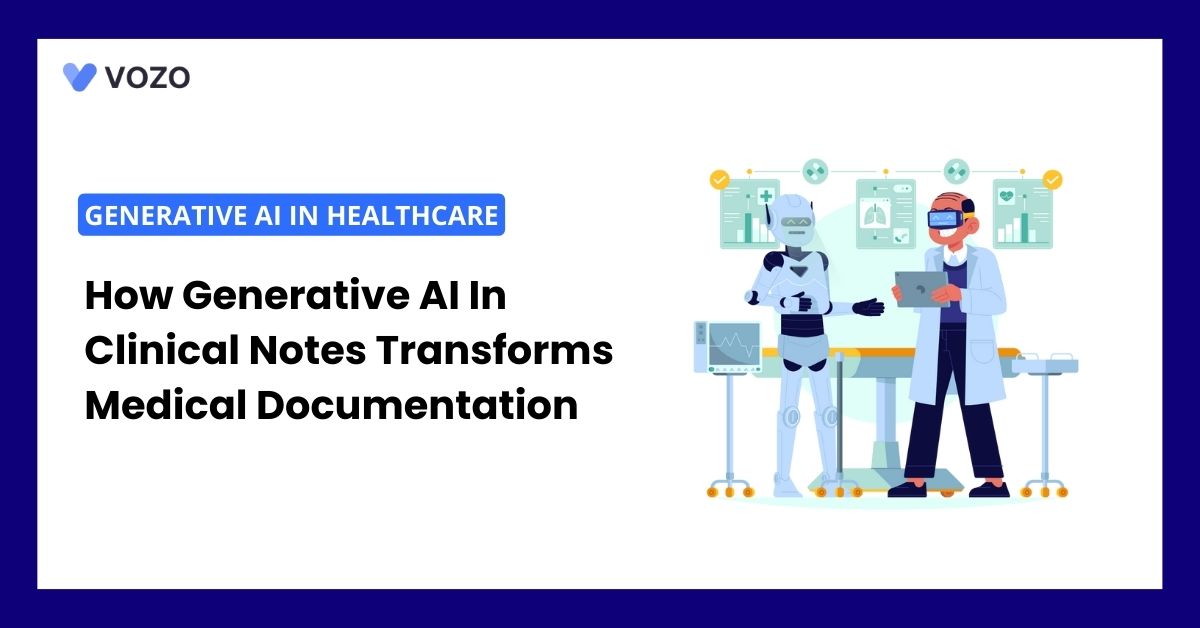
AI systems can mishear, misattribute, or generate clinical content that was never spoken. According to industry research, these errors are not self-correcting and can propagate into the permanent medical record if unchecked. The risk compounds in high-volume practices where clinicians are moving through patient after patient, the very setting where ambient scribing delivers the most value, and where a hallucinated medication dose or misattributed symptom has the least margin for error.
The mitigation is structural: mandatory clinician review workflows built into the platform, not bolted on as an afterthought. iScribe Health surfaces the AI-drafted encounter summary at the point of note completion, after the ambient listening session ends but before anything is committed to the chart, giving the physician a focused, seconds-long checkpoint rather than a return to two hours of after-hours documentation. That review step is where hallucinations are caught; skipping it is where they become permanent record entries.
2. Algorithmic Bias in Documentation - How Training Data Gaps Skew Patient Records

Automated medical documentation systems trained on historically homogeneous datasets can systematically underrepresent or mischaracterize conditions in minority, elderly, or non-English-speaking populations. This bias embeds itself silently into structured records, compounding health disparities over time. Clinical informaticists and compliance officers should audit model training data provenance and mandate diverse validation cohorts before enterprise-wide deployment of any AI documentation platform.
3. EHR Interoperability Gaps - When Automated Notes Can't Talk to Downstream Systems
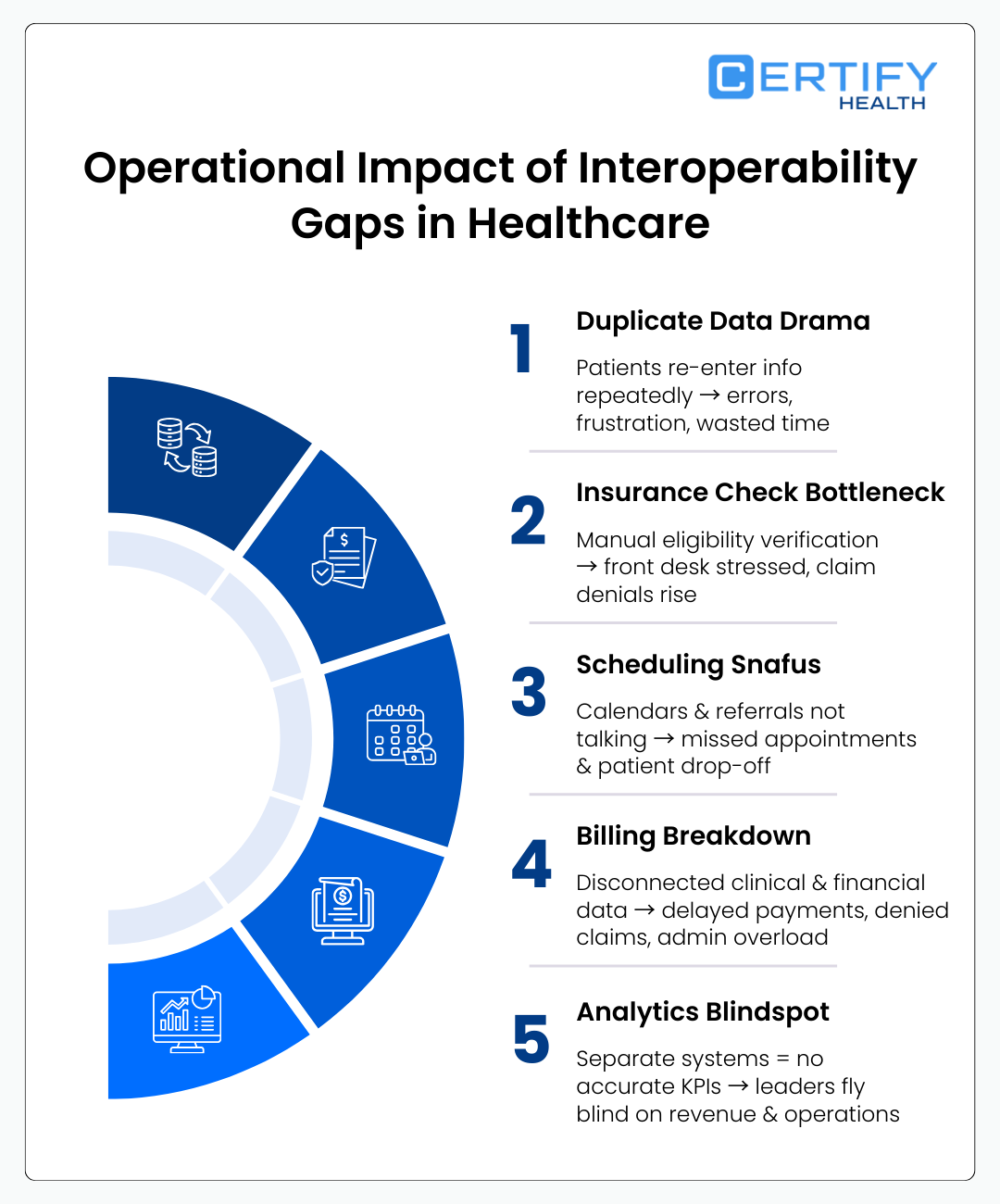
Proprietary AI output formats that cannot push structured data into downstream EHR fields create a hidden operational cost. Notes requiring manual copy-paste eliminate most of the time savings ambient scribing provides, and for clinicians already charting two or more hours outside of patient care time, replacing one manual burden with another is not an improvement. iScribe Health's EHR Integration is designed to eliminate that copy-paste loop.
The platform materializes its value specifically when the practice is already running a supported EHR and wants a seamless ambient documentation experience, pushing structured output directly into the chart rather than generating a parallel document the clinician must reconcile manually. Practices should treat EHR push depth, not surface-level compatibility claims, as the primary interoperability test when evaluating any ambient scribing vendor.
4. Clinician Trust Deficit - Overreliance and Under-Engagement With AI-Generated Records
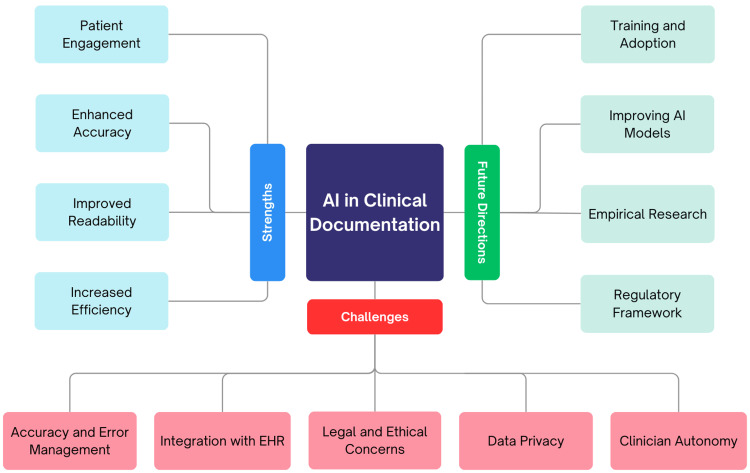
Automated medical documentation creates a dual trust problem: some clinicians rubber-stamp AI output without critical review, while others distrust it entirely and duplicate effort manually. Both extremes erode the technology's value. Building calibrated confidence requires structured onboarding, transparent model explainability features, and feedback loops that let clinicians flag errors, turning passive consumers of AI notes into active, accountable reviewers.
5. HIPAA and Data Privacy Exposure - The Compliance Risk of Cloud-Based Documentation Pipelines
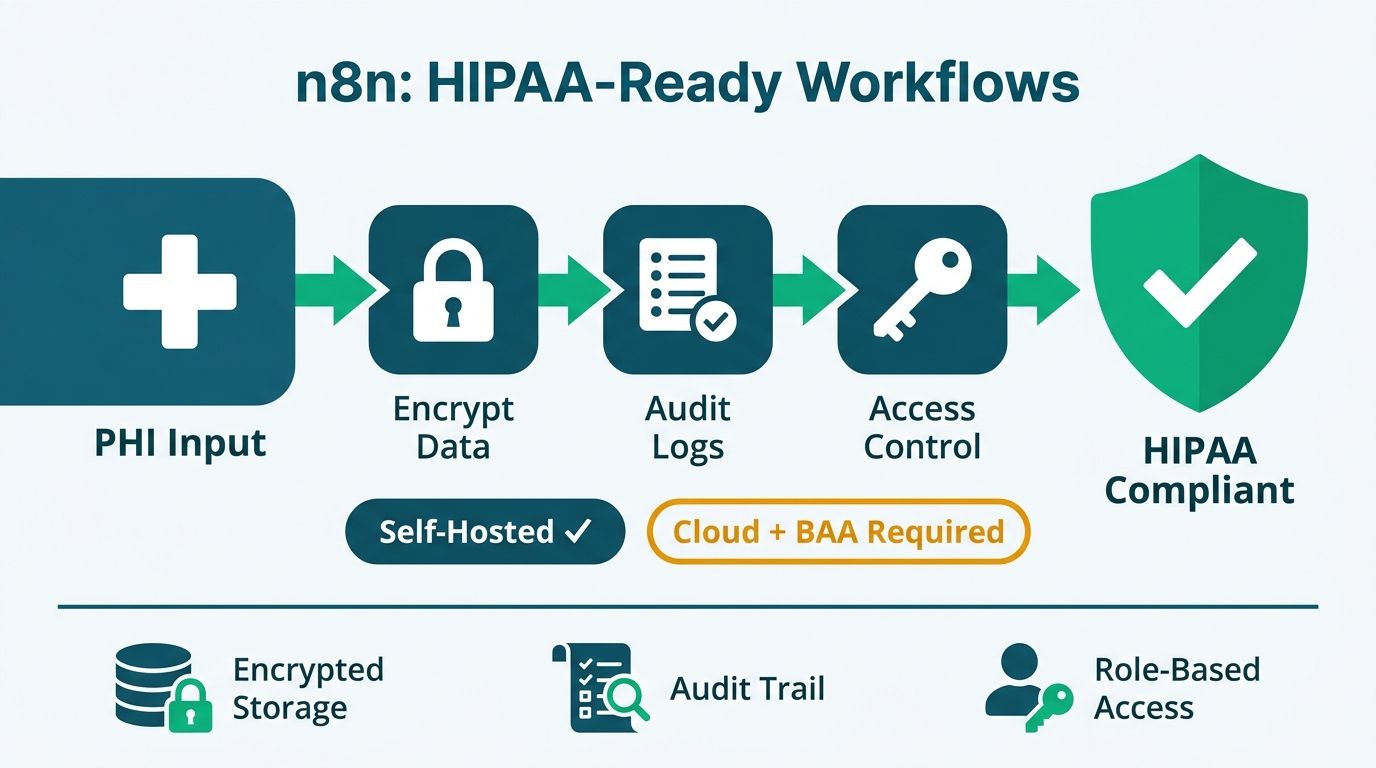
Audio captured during patient encounters is protected health information the moment it is recorded. The privacy risk is not theoretical: AI documentation systems built without rigorous engineering controls can leak sensitive patient data, including name, date of birth, address, phone number, and provider and medical record numbers, to the wrong recipients. That is not a configuration problem; it is a critical system failure with direct HIPAA consequences for the practice.
A related and underappreciated exposure is scope creep in data extraction. AI systems that capture ambient conversations can inadvertently structure sensitive session data, emotional cues, behavioral patterns, details patients disclosed without understanding the full scope of what was being recorded, in ways neither the clinician nor the patient authorized. Vendors built via no-code or low-code AI tooling frequently lack the security architecture to prevent either category of failure, and a signed Business Associate Agreement does not compensate for an insecure underlying system.
Practices should require written answers on BAA status, SOC 2 Type II certification, on-device versus cloud processing architecture, and documented data retention policy before any pilot begins, and should treat vague answers to any of those questions as a disqualifying signal, not a negotiating point. The failure modes of AI documentation and manual documentation are structurally opposite.
How to Set Up Automated Medical Documentation in 2026 - A Step-by-Step Implementation Guide
Most documentation problems aren't fixed by working faster or adding headcount because the breakdown happens before coding software or support staff ever enter the picture. This section examines where that upstream failure actually occurs, what it costs in revenue and physician wellbeing, and how to audit your current workflow before automating anything.
Why Replacing Your Documentation System Eliminates Burnout and Undercoding at the Source
Physicians across specialties logged more than 30 minutes of after-hours EHR time per day, a pattern described as a marker of workflow inefficiency, not clinical thoroughness. After-hours charting isn't evidence that you care more; it's evidence that your documentation system was never designed to keep pace with your clinical day. The AMA's survey data links administrative documentation burden directly to physician burnout at scale. That's a structural finding, not a personal one.
Why Fixing Coding Software or Hiring More Staff Still Burns Out Physicians
The failure point is almost always upstream. Coding software can only work with the documentation it receives. If notes are built from memory at 9 p.m. under cognitive load, critical clinical complexity goes uncaptured, and no coding engine recovers what was never recorded. Based on our market understanding, undercoding from incomplete documentation costs individual physicians tens of thousands in recoverable revenue annually. Hiring additional staff addresses throughput, not source quality.
Audit Before You Automate. Start with a structured documentation audit: measure average charting time per encounter, after-hours documentation burden, and E&M coding accuracy by CPT distribution.
1. iScribe Health - Best End-to-End Automated Medical Documentation Platform
Its real-time NLP engine reduces physician documentation time by up to 70%. The primary tradeoff is a longer onboarding cycle compared to lighter point solutions, requiring dedicated IT coordination during rollout.
2. Nuance DAX Copilot - Best for Epic-Native Ambient Documentation
Nuance DAX Copilot is the go-to choice for health systems already running Epic, offering deep native integration that auto-populates structured notes directly into the EHR without manual copy-paste steps. Clinicians in high-volume outpatient settings benefit most from its specialty-tuned language models. The key limitation is cost: enterprise licensing is prohibitive for independent practices or smaller ambulatory groups operating on thin margins.
3. Abridge - Best for Real-Time Conversation Summarization in Complex Cases
Abridge excels at capturing and summarizing nuanced, multi-topic patient-physician conversations, making it particularly valuable in complex chronic disease management or multidisciplinary consult settings. Its AI generates structured SOAP-format summaries within seconds of encounter completion. The tradeoff is that Abridge's EHR connector library, while growing, still lags behind DAX in breadth, requiring middleware configuration for non-Epic environments.
4. Ambience Healthcare - Best for Health System-Wide AI Scribe Deployment
Validated by Cleveland Clinic's large-scale AI scribe pilot, Ambience Healthcare is purpose-built for enterprise health system rollouts that require simultaneous documentation, clinical documentation integrity, and point-of-care coding automation. It is the right pick for CMIOs managing multi-specialty, multi-site deployments. The primary limitation is that its enterprise-first architecture makes it poorly suited for solo practitioners or small group practices seeking lightweight solutions.
5. Suki AI - Best Lightweight Voice Assistant for Independent Practices
Suki AI targets independent and small-group practices that need automated medical documentation without the overhead of enterprise contracts or complex IT deployments. Its voice-command interface works across iOS and Android, enabling documentation from any care setting. Suki integrates with major EHRs including Epic, Cerner, and Athenahealth. The tradeoff is that its summarization depth for highly complex or subspecialty encounters is less robust than enterprise-tier competitors.
6. DeepScribe - Best for Specialty-Specific Documentation Accuracy
DeepScribe is engineered for specialty clinics, oncology, orthopedics, cardiology, where generic NLP models produce unacceptable error rates in clinical terminology. Its specialty-trained models are continuously refined using clinician feedback loops, delivering documentation accuracy that generalist tools cannot match. The limitation is that DeepScribe's specialty focus means primary care practices may find its feature set over-engineered and its per-seat pricing harder to justify.
7. EHR Workflow Analysis and Pre-Implementation Mapping - Best First Step Before Any Tool Selection
Before selecting any automated medical documentation platform, health systems must conduct structured workflow analysis to map current documentation touchpoints, identify bottlenecks, and define integration requirements. Skipping this step is the leading cause of failed implementations. This process, involving clinical informatics staff, frontline physicians, and IT, typically takes four to eight weeks but dramatically reduces post-deployment rework, retraining costs, and clinician dissatisfaction with the chosen system.
Related Reading
- Best Medical Dictation Software
- Medical Coding Automation
- EHR Documentation Burden
- AI Medical Dictation Data Security
Next steps
If your clinic day ends at 5 PM but your charts aren't done until 10, the path forward starts with closing that gap at the point of care, not after it. Documentation built from memory under cognitive load doesn't just cost time. It costs coding accuracy, and the two failures compound each other in ways that don't show up until denial season. U.S. physicians spend far more time on EHR work than clinicians in other countries, who average roughly one hour, yet both groups produce legally and clinically adequate records. Documentation time is a function of workflow design, not clinical rigor. Start with our AI medical scribe.
That means the after-hours charting burden is recoverable. But documentation is only half the problem: audits routinely surface significant miscoding, including overcoding on roughly one-third of encounters in one orthopedic trial. Ambient documentation alone does not fix that.
Together, these findings point to a single logical next step: a platform where real-time note capture and coding intelligence operate on the same encounter, not in separate workflows bolted together after the fact.
Start with the AI medical scribe built to address both layers. Review the platform, confirm EHR integration depth for your current system, and run a 30-day pilot against your baseline charting time and E&M distribution. By day 30, the gap between the care you delivered and the revenue you recognized should be measurably narrower.
Frequently Asked Questions
What exactly is automated medical documentation?
Automated medical documentation uses three AI layers in sequence: ambient listening captures the spoken clinical encounter passively, natural language processing (NLP) parses that audio into clinically meaningful content, and machine learning models structure the content into formatted notes including SOAP format, HPI, and assessment and plan sections. The result is a structured clinical note generated during or immediately after the encounter, without dictation commands or after-hours reconstruction from memory.
How does an AI medical scribe actually capture notes in real time?
The system activates before the visit begins and records continuously while the physician conducts the appointment exactly as they normally would, no pause, no narration, no acknowledgment of the technology at any point. NLP models trained on clinical language then separate medically relevant speech from background noise and small talk, converting the processed transcript into a structured draft note typically including HPI, subjective and objective findings, assessment, and plan.
Can AI-generated notes be trusted for billing and coding, or do they still require a lot of physician editing?
AI-generated notes can contain errors, research found they scored lower than human-generated notes across all ten quality domains evaluated, with the largest deficits in thoroughness, organization, and usefulness. The post argues that the answer isn't more physician editing but a native coding intelligence layer built into the workflow: iScribe Health pairs its ambient documentation layer with E&M Coding Intelligence that evaluates the draft against coding criteria and surfaces gaps before the physician signs, so the review step is focused rather than a line-by-line hunt for what the AI missed.
Will automated documentation actually save me time, or will reviewing the AI draft take just as long as writing the note myself?
The post addresses this directly: the physician moves from note creation to note review, and that shift is where the real time recovery happens. Primary care physicians currently spend approximately 3 hours per day on clinical documentation alone, and U.S. physicians average 4.5 hours daily on EHR-related tasks, while counterparts in other countries spend roughly one hour and still produce legally and clinically adequate records, which the post uses to show that documentation time is a function of workflow design, not clinical rigor.
Does the system work for different specialties, or is it only accurate for general practice?
The post notes a real limitation: transcription accuracy degrades in subspecialties with dense technical terminology, which is why specialty-tuned language models matter more than generic ones. iScribe Health's AI Customization capability allows IT, EHR administrators, and clinical informatics teams to tune the system to practice-specific terminology, specialty language, and documentation conventions so the model learns the environment it is actually operating in.