How Does an AI Scribe Work? A Clear Step-by-Step Guide
Learn how an AI scribe works and how ambient listening helps physicians eliminate after-hours charting for good.


Dictation made charting faster. Ambient AI makes it disappear. Here is exactly how the pipeline works, and why the difference is measured in hours, not seconds.
Physicians who've tried dictation software know the routine: see the patient, step out, pull up the EHR, and start narrating. The note gets done faster than typing, sure. But you're still doing it after the visit, often long after the clinic has gone quiet. For orthopedic providers juggling high patient volumes and complex documentation, that gap between "faster transcription" and "documentation that happens during the encounter" is where hours of personal time quietly disappear. Understanding that gap is the first step toward closing it, and it's why ambient scribing for orthopedic providers represents a different category of tool.
Most physicians assume an AI medical scribe is essentially a faster, smarter dictation tool. That assumption is understandable, but it misidentifies what the technology actually does. An AI medical scribe built on ambient documentation doesn't wait for you to narrate.

It listens passively during the live encounter, capturing the natural conversation between you and your patient, and captures physician dialogue and patient context during the visit to generate clinical notes in under 30 seconds. No commands. No post-visit narration.
The difference is when the work occurs. Dictation relocates the documentation burden from the exam room to after hours. Ambient capture eliminates the after-hours burden entirely.
The American Medical Association found that physicians spend 2 to 3 hours completing charts after hours, so-called "pajama time," even as overall work hours have declined. Dictation tools didn't solve this. They made the after-hours work faster, not absent. The timing of documentation is the problem dictation was never designed to fix.
The timing of documentation is the problem dictation was never designed to fix.
2 to 3 hours
Physicians charting after hours every day
Four broad scribe types exist in practice, and each handles the timing problem differently:
- Dictation-based AI scribes require post-visit narration; pajama time persists.
- Template-assisted scribes reduce formatting effort but not documentation time.
- Human-AI hybrid scribes can deliver high quality, but cost and scheduling complexity scale with volume.
- Ambient AI scribes listen passively during the live encounter, require no physician narration, and generate the structured clinical note automatically before the visit ends.
Only the ambient model eliminates after-hours charting by design. Platforms like iScribe Health's Ambient AI Documentation capture the natural provider-patient conversation as it unfolds, so the structured note is ready for review the moment the encounter ends. No commands, no narration, no post-visit typing. Physician review of the structured draft remains a firm, non-negotiable step before sign-off, and the approach works best when physicians want to stay present during the visit.
Key takeaways
- An AI scribe is not a smarter dictation tool, it captures the full clinical encounter as it happens, so the chart builds itself during the visit, not after the last patient leaves.
- Dictation still defers the documentation burden; ambient AI eliminates it by converting real-time conversation into structured clinical notes without a separate narration step.
- The intelligence isn't at the microphone, it's in the NLP and large language model layer that reads a raw transcript and produces a properly formatted, field-ready clinical note.
- A note that exists is not a note that codes correctly; AI scribes that capture full clinical context close the revenue leakage that standard after-visit documentation routinely misses.
- Orthopedic encounters require laterality, implant specificity, and MDM complexity that general-purpose ambient tools transcribe accurately but structure incorrectly, specialty training is the difference.
- Roughly half of every physician's clinical day goes to EHR and administrative tasks rather than face-to-face patient care; ambient documentation directly reclaims that time.
- iScribe Health's ambient listening platform passively captures the natural provider-patient conversation, no scripted commands, no button-pressing, and converts it into structured clinical notes delivered directly into your EHR for review.
Step 1: How Audio Capture Starts the AI Scribe Pipeline
Repeated across a full clinic day, that deferred effort is precisely where after-hours charting is born.
"Most AI meeting tools capture audio locally but then ship the transcript or audio off to cloud servers for the AI processing step, a critical privacy gap at the start of the pipeline."
— what we hear from privacy-conscious tech professionals

How Ambient Listening Turns the Exam Room Conversation Into the Chart Input
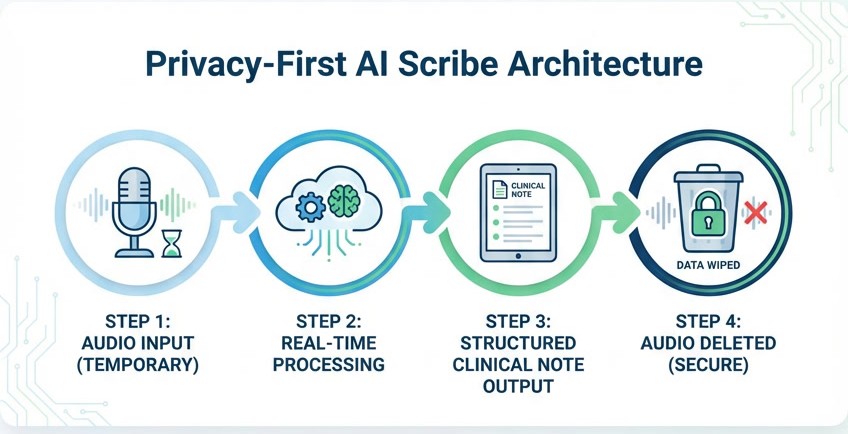
Audio capture is the first step in the AI scribe pipeline. The system passively records the natural conversation between provider and patient through a secure microphone or device, and that conversation becomes the direct input for clinical documentation.
The American Medical Association's 2024 reporting confirms that EHR-related work continues to follow physicians home even as overall work hours have declined. Traditional dictation workflows, however fast, still leave a documentation tail that extends past the clinical encounter.
Device Options and HIPAA-Compliant Audio Capture via Smartphone, Desktop, or Dedicated Mic
Audio capture can happen through a smartphone placed on the exam room counter, a desktop microphone, or a dedicated clinical recording device. The hardware matters less than what happens to the audio afterward, specifically, whether the platform applies encrypted transmission, a signed BAA, and documented data-retention policies, because these safeguards vary significantly across vendors. HIPAA-compliant AI scribe platforms address legitimate privacy concerns through encrypted transmission, Business Associate Agreements with the vendor, and data handling policies that restrict how audio is stored or retained.
Consent Before Capture - Why the Pipeline Starts With the Patient
HIPAA and most state-level healthcare privacy regulations require that patients be informed when a clinical encounter is being recorded, and many jurisdictions require explicit consent before recording begins.
Step 2: How Speech-to-Text Transcription Converts the Conversation

ASR Converts Spoken Audio to Raw Text in Real Time, Not After You Leave the Room
Automatic Speech Recognition converts spoken audio into a raw text transcript during the encounter itself, not in a batch process after the visit ends, which means downstream processing can begin while the conversation is still unfolding.
The performance gap between clinical-grade ASR and consumer speech-to-text is structural. Generic engines were not trained on drug names, clinical acronyms, or the dense shorthand clinicians use in real encounters, so purpose-built medical ASR is essential for accurate transcription. Medical ASR also filters out clinically irrelevant dialogue, the MA's parking reminder, background noise from the hallway, before anything reaches the next layer.
Speaker Diarization - How the System Knows Which Voice Is the Clinician's and Which Is the Patient's
Speaker diarization tags each voice separately so that every statement in the raw transcript is attributed to the correct person before any note structuring begins. It is prerequisite infrastructure.
Without it, clinician and patient speech arrive as an undifferentiated stream of text. No language model, however sophisticated, can reliably reconstruct correct attribution from that input.
IScribe Health's Ambient Listening pipeline applies healthcare-trained ASR with speaker diarization built for the acoustic conditions of a real exam room, supporting the hands-free experience that keeps physicians fully present with their patients rather than managing a recording interface.
Step 3: How NLP and Large Language Models Structure Clinical Content

NLP Filters the Noise Before Any Structure Is Built
A patient asking about parking validation, a physician commenting on the weather, a family member's aside about weekend plans: none of that belongs in a clinical note, and a well-trained NLP layer discards it without being told. Research published in JMIR Aging, Development and Validation of a Rule-Based Natural Language Processing Algorithm to Identify Falls in Inpatient Records of Older Adults, validated this directly: an NLP algorithm applied to free-text inpatient admission notes achieved 93.3% sensitivity and 99.0% specificity when extracting clinically relevant data points from unstructured documentation. The filtering step is precise, and the same interpretive logic applies when the source material is a live conversation rather than a written note.
93.3%
NLP sensitivity extracting clinical data points
LLMs Reason About Context, Not Keywords
A patient presenting with what sounds like CKD stage 3 whose physician updates the stage to 4 after reviewing recent labs mid-encounter is one example; the LLM carries that correction forward rather than preserving the earlier reference. The result is a note whose internal logic holds together, which is precisely what PMC / National Library of Medicine research on clinical NLP identifies as the prerequisite for documentation that survives downstream coding and compliance review.
From Raw Transcript to SOAP Note in Real Time
SOAP note format (Subjective, Objective, Assessment, Plan) is the dominant structure in U.S. clinical documentation, and it is the target schema the LLM maps to during the encounter. That draft note then leaves the AI's hands and enters the official medical record, and that handoff is where trust, compliance, and EHR integration all converge.
Related Reading
- Hipaa Compliant Ai Scribe
- Top Medical Scribe Companies
- Ai Scribe Cost
- Medical Scribe Cost
Step 4: How the Structured Note Gets Pushed to Your EHR for Review

The Structured Draft Lands in the EHR, Not Your Clipboard
This is where iScribe Health's ambient documentation is designed to close the loop: at the point of note completion, after the AI drafts the encounter summary, the structured draft is pushed into the correct chart location so physician review and sign-off can happen immediately at the end of the encounter.
Deep, native integration with major ambulatory EHRs including athenaOne (Preferred Ambient Partner), Veradigm, and Greenway Health means a physician reviewing an AI-generated SOAP note on a tablet immediately after an encounter, making two minor edits, and signing off in under 60 seconds is not an edge case.
Clinicians adopt tools that prove fewer clicks inside existing workflows immediately; if pushing a structured note into the EHR adds a screen, a routing step, or any manual handoff, adoption stalls before the technology ever demonstrates its value. iScribe Health's ambient documentation experience is designed to materialize precisely when the practice or health system is already running a supported EHR and wants that friction removed entirely.
Bi-Directional Sync - Why the EHR Feeds the AI, Not Just the Other Way Around
Before the encounter ends, a well-integrated AI scribe pulls the patient's existing problem list, active medications, and prior diagnoses from the EHR, grounding the drafted note in the full clinical picture rather than the conversation alone.
Definitive Healthcare reports that Epic's unified data environment makes patient problem lists, medication histories, and prior visit notes centrally accessible to AI tools embedded in or connected to the platform.
Fully Embedded vs. Overlay - Two Integration Models and What Each Means for Your Workflow
Epic's ecosystem supports both models: fully embedded third-party AI applications through App Orchard, and external tools that connect through APIs as overlay applications. KLAS Research confirms Epic's position as the market share leader among large health systems, meaning the integration model a practice chooses has direct implications for IT governance, physician workflow, and long-term scalability.
For practices already running a supported EHR, iScribe Health's ambient documentation is designed to close that gap, pushing structured drafts into the correct chart location so physician review and sign-off can happen immediately at the end of the encounter, without a copy-paste step.
Why AI Scribes Catch the Revenue Leakage Standard Documentation Misses
The distinction costs practices far more than most billing teams realize, and it stays invisible until a payer challenge or an internal audit forces the reckoning.

The Clinical Context That Evaporates Between the Exam Room and the Chart
The specific functional limitation a patient described, the comorbidity that shaped the treatment decision, the reasoning behind ordering one imaging study over another: these details are the raw material of medical decision-making complexity, and they evaporate fastest when documentation happens hours after the encounter rather than during it.
Defensible documentation requires both real-time capture and a structured review step that catches clinical inaccuracies before they harden into a signed note and a submitted claim. iScribe Health's Ambient Listening and Conversational AI layer is designed precisely for this: by capturing the full conversational encounter in real time rather than reconstructing it from memory, the system preserves the clinical context that deferred charting destroys, while its E&M Coding Intelligence layer reviews the structured output at the point of note completion, before the physician signs, so inaccuracies and coding misalignments are flagged while the encounter is still fresh and correctable.
What a 941-Encounter Orthopedic Audit Revealed About the Coding Gap
An 8% provider-AI agreement rate alongside a 33% overcoding rate, as identified in MBW RCM (2023), had been entirely invisible to the practice before the trial ran, a pattern that reflects how quietly systematic miscoding compounds across a full patient panel.
iScribe Health's Automated E&M Coding and E&M Coding Intelligence layer is designed to close that gap by surfacing these misalignments at the point of note completion rather than at the point of audit.
AI Scribe Feature Evaluation Checklist
AI Scribe Evaluation Checklist
- Passive capture (no commands) → What to Ask: Does the system activate without button presses or dictation triggers? → Why It Matters: Hands-free operation is the primary time-recovery mechanism.
- Clinical-grade ASR → What to Ask: Is the speech engine trained on medical vocabulary for your specialty? → Why It Matters: General-purpose engines routinely mishear drug names and clinical shorthand, producing errors that corrupt downstream billing.
- Speaker diarization → What to Ask: Does the transcript separate physician voice from patient voice? → Why It Matters: Misattributed statements corrupt downstream note structure.
- EHR integration depth → What to Ask: Does the structured note push directly to the correct chart fields, or require copy-paste? → Why It Matters: Copy-paste reintroduces the administrative drag ambient capture was meant to eliminate.
- Bi-directional sync → What to Ask: Does the system pull existing problem lists and medications before the encounter? → Why It Matters: Pre-populated context prevents contradictions with the existing record.
- Specialty-trained structuring model → What to Ask: Is the NLP/LLM layer trained on your specialty’s coding constructs (e.g., laterality, implant descriptors)? → Why It Matters: General models transcribe accurately but structure incorrectly for specialty billing.
- E&M coding validation → What to Ask: Does the platform flag E/M level support before the physician signs? → Why It Matters: Unchecked coding misalignment only surfaces during audits, after the damage compounds.
- HIPAA compliance documentation → What to Ask: Can the vendor provide a BAA and documented audio-retention policy? → Why It Matters: Practices cannot assume these protections; they must be confirmed before deployment.
- Patient consent workflow → What to Ask: Does the platform include a consent step before capture begins? → Why It Matters: Most jurisdictions require informed patient consent before recording.
Benefits of AI Scribes That Go Beyond Saving Physicians Time
Roughly half of every physician's clinical day is spent on EHR and administrative tasks rather than direct patient interaction, according to Tai-Seale et al. Health Affairs. That figure reframes the documentation problem entirely. The cost is not just the two or three hours of after-hours charting at the kitchen table. It is the fractured attention during every encounter that precedes it, the glances at the screen while a patient is mid-sentence, the hesitation before a follow-up question that never gets asked.
The benefits of AI scribes for doctors go well beyond speed. Here is what actually changes when documentation stops competing with the encounter itself.
1. Eliminating Screen Time So Physicians Can Actually See Their Patients
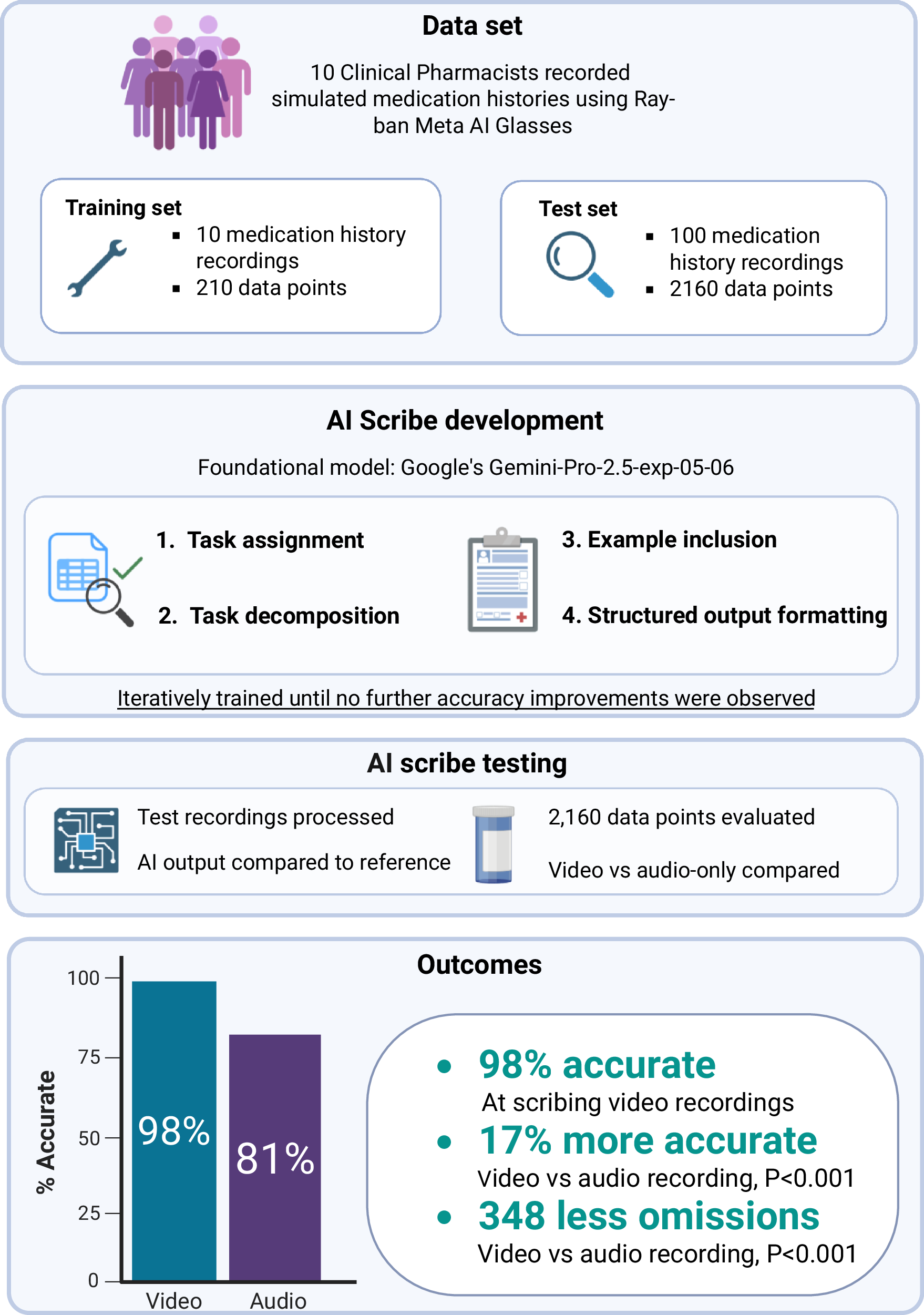
According to Tai-Seale et al. Health Affairs, physicians split their clinical day almost evenly between patients and screen-based desktop medicine. That means every second encounter, in effect, is competed for by the EHR. The hidden cost is missed clinical signal. A patient's hesitation, a symptom mentioned quietly, a question forming but never asked, these disappear when the physician's gaze is on a monitor instead of the person across the room. For individual physicians and advanced practice providers carrying full schedules, this fractured attention accumulates into a qualitatively different kind of practice than the one they trained for.
2. Ambient Listening - The Hands-Free Documentation Ideal
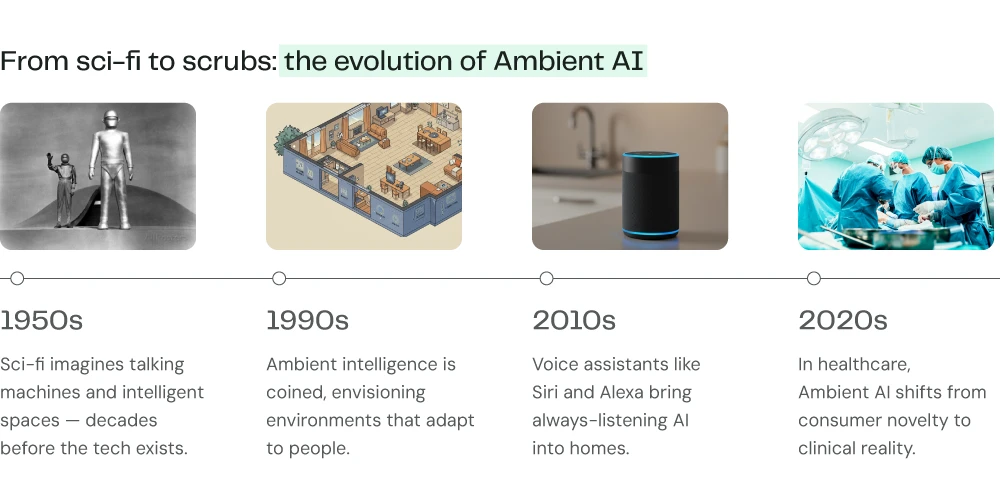
Ambient listening converts the natural conversation between physician and patient into a structured clinical note without requiring any commands, templates, or narration. The encounter itself becomes the documentation event, not a precursor to one. This approach delivers the greatest value when physicians want a completely hands-free experience during the visit, no button-pressing, no dictation triggers. The honest trade-off: performance depends on audio clarity, and in consistently noisy clinical environments, transcription fidelity can vary, making physician review of every draft a firm requirement rather than an optional step.
3. Reduced Physician Burnout by Eliminating After-Hours Charting

When ambient capture produces a near-complete draft note before the physician leaves the exam room, the after-hours cleanup session shrinks sharply. That reclaimed personal time compounds across weeks and months in ways that a minutes-per-note productivity metric is structurally unable to measure. For practices where clinicians are regularly charting two or more hours outside patient care time, this is where iScribe Health is most impactful, and where the staff retention and satisfaction benefits become concrete enough to show up in attrition data rather than just satisfaction surveys.
4. Key Features to Evaluate When Choosing an AI Scribe
The features that matter most to physicians evaluating ambient tools cluster around three questions: Does it work passively without interrupting clinical flow? How deeply does it integrate with the EHR already in use? And is the underlying model trained on specialty-specific language, or is it a general-purpose transcription layer dressed up as a clinical tool?
Specialty fit matters more than raw transcription speed. A model that does not recognize the clinical vocabulary of a specific practice will produce drafts that require as much correction as a note written from scratch. iScribe Health includes EHR integration and AI customization as core components of the pipeline, not optional add-ons, because a tool that generates additional correction work has relocated the administrative burden rather than reduced it.
5. Broader Benefits of AI Scribes for Doctors Across Specialties

The care quality gains from ambient clinical documentation are not specialty-specific, but they are not uniform either. Primary care physicians recover the conversational depth that chronic disease management depends on. Surgeons capture pre-operative nuance that shapes coding accuracy downstream. Mental health providers preserve the relational tone of the encounter without a keyboard between them and the patient. Across all of these contexts, the compounding benefit is the same: when documentation stops competing with the encounter, physicians practice closer to the standard of care they trained for, and patients receive the full attention that clinical presence requires.
For individual physicians and advanced practice providers, the operational reality is straightforward: reducing the time spent on post-visit documentation creates capacity to see more patients per day without burning out, a combination that practices running at high volume cannot afford to leave on the table.
Related Reading
- Best Ai Scribe For Athenahealth
- Ai Medical Scribes With E&m Coding Built In
- Ai Scribe Accuracy
- Do Ai Scribes Reduce Claim Denials?
How iScribe Brings the Full AI Scribe Pipeline to Orthopedic Practices
A post-op rotator cuff visit carries laterality documentation, implant specificity, functional outcome language, and a medical decision-making complexity that a general-purpose ambient scribe will transcribe accurately but structure incorrectly.

A Specialty-Trained Model That Speaks Orthopedic Clinical Language From Capture to Chart
Most orthopedic providers who have tested a general ambient scribe walk away impressed by the note quality, until billing flags ambiguous laterality on a high-complexity case, or an implant reference gets flattened into a generic device descriptor that no longer supports the procedure code. This pattern is consistent with the findings from MBW RCM's encounter audit cited earlier: documentation that appears complete at the note level can still carry structural coding errors that only surface under review. The friction is that the downstream structuring model was never trained to treat "left distal femur, cemented total knee, primary" as a distinct clinical and billing construct.
iScribe Health's specialty AI scribe is purpose-built for orthopedic documentation. The model recognizes post-op status flags, laterality qualifiers, and functional outcome phrasing as structured data fields rather than incidental conversation, so precision at the clinical level carries through to the billing record.
The Coding Intelligence Layer Where Note Quality Becomes Reimbursement Accuracy
The hidden revenue risk of traditional documentation is not visible at the point of note creation. Together, these findings mean that the financial case for ambient AI scribing is the elimination of a silent, accumulating gap between the care actually delivered and the revenue legitimately capturable from it.
iScribe's E/M coding intelligence layer validates E/M level support against the structured output before the physician signs off. For AI medical scribe for orthopedic practices with a high mix of post-surgical follow-ups and complex new patient evaluations, that validation loop is where documentation quality converts into reimbursement accuracy.
No Commands, No Templates, No After-Hours Charting
The ambient listening layer activates passively, capturing the natural conversation without commands, button-presses, or scripted narration, so the encounter proceeds exactly as it would without any documentation technology in the room.
Eliminating after-hours charting also eliminates the clinical context decay that happens when a provider reconstructs a complex encounter from memory at 9 p.m.
Next steps
If your charts are still finishing hours after your patients leave, the path forward starts with moving documentation into the encounter itself. Ambient capture is not a faster version of dictation. It is a fundamentally different event sequence, one where the conversation becomes the chart input and the structured draft is ready before the exam room door closes.
The NLP reasoning layer that separates clinically codable facts from ambient noise means the quality of the generated note depends on how the system interprets the conversation, not just how clearly it hears it. That interpretive step is what makes notes defensible at coding review. And the finding that a 941-encounter orthopedic audit revealed a 33% overcoding rate that was invisible to the practice until the trial ran means documentation quality is a revenue integrity question, not just a time question. Together, they point to evaluating whether the ambient scribe you are considering closes the loop at coding, not just at note generation.
Start with Best AI medical scribe for orthopedic practices to see how iScribe handles laterality, implant documentation, and E&M validation inside a real orthopedic encounter workflow. From there, a focused walkthrough of your specific EHR and encounter mix confirms whether the pipeline fits how your practice already runs, before any commitment is made.
Frequently Asked Questions
What's the real difference between an AI scribe and traditional dictation software?
The core difference is timing, not speed. Dictation tools require you to narrate after the visit, relocating the documentation burden to after hours, pajama time persists. An ambient AI scribe like iScribe Health's listens passively during the live encounter and generates a structured clinical note before the visit ends, eliminating after-hours charting by design rather than just making it faster.
How does an AI scribe stay HIPAA-compliant when it's recording a patient conversation?
HIPAA-compliant platforms address this through encrypted audio transmission, a signed Business Associate Agreement with the vendor, and documented data-retention policies, but the post is clear that these protections vary significantly across vendors and should be confirmed explicitly before deployment, not assumed. The pipeline also starts before the microphone: patients must receive a plain-language disclosure, and many jurisdictions require explicit consent before recording begins.
How does the AI scribe know which voice belongs to the doctor and which belongs to the patient?
Speaker diarization tags each voice separately so every statement in the raw transcript is attributed to the correct person before any note structuring begins. Without it, the physician's clinical assessment and the patient's self-reported symptoms collapse into a single undifferentiated stream that no language model can reliably reconstruct, making diarization prerequisite infrastructure, not a convenience feature.
Can an AI scribe catch it when a diagnosis or detail gets corrected mid-visit?
Yes, this is one of the key advantages of large language model reasoning over older keyword-matching tools. An LLM reads the full context of the conversation, so if a physician updates a diagnosis or restages a condition after reviewing labs mid-encounter, the model recognizes the later statement as a correction and reconciles the conflict before the note is drafted, rather than freezing on the first mention.
Does using an AI scribe actually reduce after-hours charting, or does it just speed it up?
Only ambient AI scribes eliminate after-hours charting by design, dictation tools and template-assisted tools make post-visit work faster but don't remove it. The American Medical Association found physicians still spend 2 to 3 hours completing charts after hours even as overall work hours have declined, confirming that speed alone doesn't solve the timing problem. Ambient capture makes the live encounter the primary documentation event, so the structured draft is ready for physician review the moment the visit ends.