HIPAA Compliant AI Scribe Compliance Checklist 2026
HIPAA compliant AI scribe compliance goes beyond a signed BAA. See what practice administrators must audit to avoid real documentation risk in 2026.


A signed BAA is not a compliance strategy. Here is what actually exposes your practice to seven-figure penalties, and the three technical requirements that close the gap.
Signed paperwork does not protect patients. That is the compliance truth most practice administrators discover too late, usually when an OCR auditor is already asking questions about documentation workflows rather than vendor contracts. The gap between a vetted AI scribe and a genuinely compliant practice is a behavior gap, and it lives entirely inside your clinical team's daily routines. For specialty practices where documentation complexity is highest, that gap carries real consequences, which is why AI scribing built for specialty workflows must be evaluated on adoption durability, not just contractual coverage, a distinction supported by iScribe Health's documented 94% provider acceptance rate across specialty deployments.
Signed paperwork does not protect patients. A signed Business Associate Agreement governs what a vendor can do with PHI on their infrastructure.

It says nothing about what your providers do with PHI on theirs. As Corporate Compliance Insights reported in July 2023, technical compliance measures alone are insufficient to address the full scope of health data risk, and that conclusion applies directly to the BAA-plus-encryption checklist most administrators treat as a finish line. Clinicians under documentation pressure will find the fastest path to a finished note, sanctioned or not.
Consumer apps may process PHI under terms of service that permit data use for model improvement, a material HIPAA violation that no vendor BAA can retroactively fix. Dark Reading's analysis found that technology adoption without adequate operational controls creates new compliance and security risks rather than eliminating them, a finding that maps precisely onto AI scribe deployments where provider acceptance was never treated as a compliance variable.
Operational compliance requires two simultaneous evaluations: the technical and contractual lens (BAA quality, encryption standards, audit log availability, no-training commitments), and adoption readiness. Does the tool integrate natively with your EHR so notes push directly into the correct patient chart without copy-paste, and what is the vendor's documented provider acceptance rate? When the practice is already running a supported EHR, AI-generated notes that land directly in discrete chart fields without a manual transfer step make the compliant workflow and the convenient workflow the same workflow, delivering the seamless ambient documentation experience EHR-integrated practices need. That alignment is what makes compliance operationally durable rather than contractually defensible on paper and invisible in practice.
Key takeaways
- A signed BAA and AES-256 encryption confirm a vendor's legal accountability, they say nothing about whether providers will open the tool on Monday morning, and that gap is where most compliance programs quietly fail.
- Copy-paste is a PHI exposure window: the moment a provider manually transfers an AI-generated note into Epic, that data has left the vendor's audited environment and your certified compliance no longer covers it.
- HIPAA penalties for AI scribe violations in 2026 reach up to $1.9 million per violation category, and OCR audits increasingly follow the data chain, not just the paperwork.
- RAC auditors have recovered over $1 billion in improper Medicare payments, and their scope now includes E&M coding at the encounter level, meaning documentation accuracy is a direct compliance and revenue risk.
- A vendor who cannot produce written documentation for end-to-end encryption, access controls, and audit logging before a single second of patient audio is processed should be disqualified, regardless of how polished the demo is.
- Provider adoption rates matter as much as technical certifications: a tool with low acceptance rates creates documentation gaps that produce the exact PHI handling failures a BAA is supposed to prevent.
- iScribe Health closes the copy-paste exposure gap by pushing AI-generated notes directly into the correct patient chart through native EHR integration, no clipboard, no duplicate entry, no break in the auditable data chain across major EHR platforms.
What HIPAA Violations From AI Scribes Actually Cost Practices in 2026
HIPAA Violations From AI Scribes - What They Cost

Solo practitioners and small-group administrators often tell themselves that once the BAA is signed and the encryption box is checked, the compliance work is done. In practice, that assumption leaves a gap that a workflow audit can expose, and it is a gap that even reputable vendors with strong BAA programs cannot fully close on your behalf. Understanding where that gap leads, and what it costs, requires looking at how regulators actually assign penalties and how audit failures occur in everyday clinical workflows.
Consumer AI Tools and Direct HIPAA Violations
Standard ChatGPT does not offer a Business Associate Agreement on its consumer tier, and data submitted to it may be used for model training. Basic Otter.ai plans carry the same gap. Without a signed BAA, any patient encounter processed through those tools is an unmitigated HIPAA violation the moment PHI enters the prompt. There is no gray area, no good-faith defense, and no safe harbor for "I didn't realize it counted."
OCR Penalty Brackets and Seven-Figure Exposure
HIPAA civil monetary penalties are structured in four tiers, with the maximum reaching $1,919,173 per violation category per calendar year, according to the U.S. Department of Health and Human Services (HHS) HITECH Act Penalty Reform Notification (2019). The tier applied is determined by culpability. The HHS reform made explicit that active, documented compliance practices are required to benefit from lower penalty tiers during an investigation, not merely a signed contract.
$1,919,173
max HIPAA penalty per violation per year
EHR Integration and Audit Chain-of-Custody Failures
When an AI scribe does not connect natively to the EHR, clinicians typically copy AI-generated text from a browser or app and paste it into the chart. That handoff breaks the audit chain: no timestamped record of where the note originated, no log confirming the source, no traceable path from AI output to final chart entry. When an OCR auditor requests documentation of how PHI was handled at every step, a copy-paste workflow produces silence. iScribe Health's native EHR integration eliminates that gap by writing notes directly into the patient chart with a timestamped, traceable record built into every encounter.
The penalty tiers and audit failures above are the consequence of skipping three specific technical requirements that practices can address before an investigation begins.
Related Reading
- Urology Billing Software
- Best Urology Emr
- Ai Scribe Comparison
- Cpt Code For Vasectomy
- Urology Billing Codes
- Urology Coding Cheat Sheet
The Three Core Technical Requirements Every HIPAA Compliant AI Scribe Must Meet
Understanding which technical safeguards actually separate compliant AI scribes from badge-displaying vendors is the first step toward protecting your practice and your patients. A vendor who cannot produce written documentation for all three requirements below before a single second of patient audio is processed should be disqualified, regardless of how polished their demo is.
"Nearly every AI scribe vendor claims HIPAA compliance, making it difficult to distinguish which products have genuinely addressed the full technical requirements versus those simply displaying a badge."
— what we hear from healthcare IT decision-makers
1. A Signed Business Associate Agreement (BAA) - The Non-Negotiable First Step Before Any PHI Touches Your HIPAA Compliant AI Scribe
A BAA is a federally required contract that makes the AI scribe vendor legally responsible for safeguarding any PHI they access, store, or transmit on your behalf. Without a signed BAA in place before processing begins, your practice bears full liability for any breach involving that vendor. A vendor who hesitates, delays, or offers to sign only after contract execution is not a compliance partner. Ask for the BAA template during the evaluation stage, before any demo audio is recorded.
2. A Strict No-Patient-Data-for-Model-Training Policy - How to Verify It in the DPA and Privacy Policy
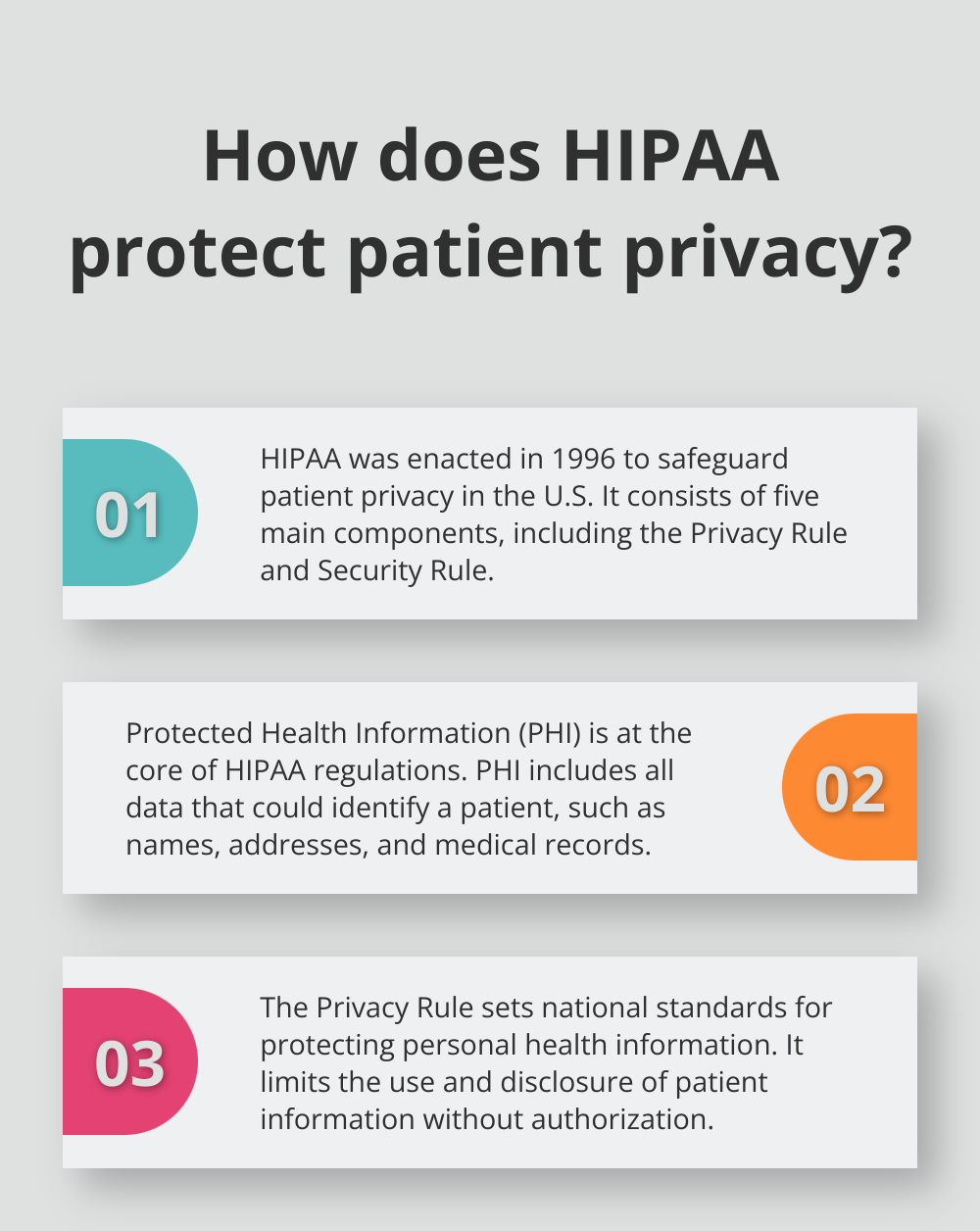
A BAA alone does not prevent a vendor from using de-identified patient audio to improve their underlying AI model. That prohibition must appear explicitly in the vendor's Data Processing Agreement and privacy policy. The verification step is straightforward: request the DPA and search for language that specifically prohibits using patient audio, transcripts, or generated notes for model training. Vague language without that explicit carve-out warrants disqualification. If the vendor cannot produce that document on request, treat the gap as an answer.
3. End-to-End Encryption, Access Controls, and Audit Logging - The Technical Safeguard Triad HIPAA Demands of AI Scribes
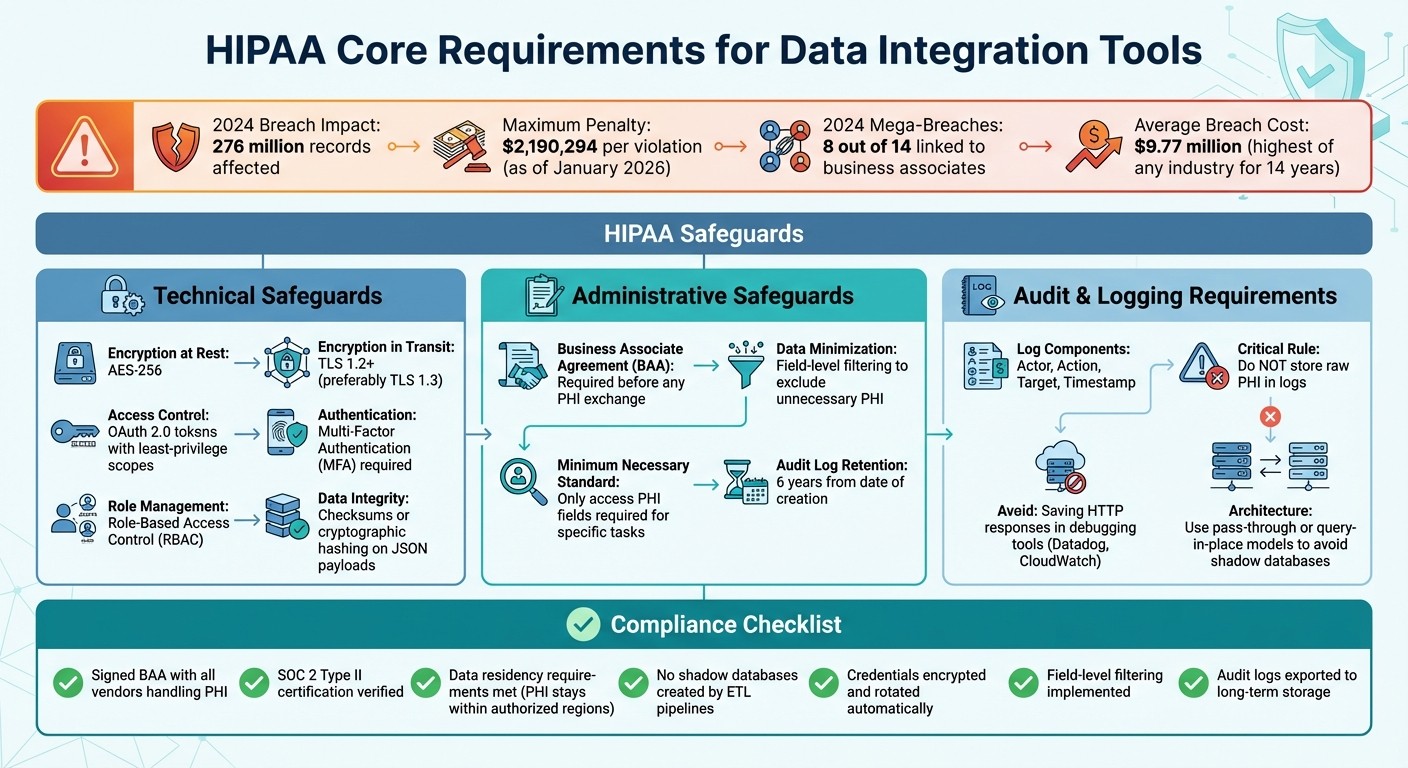
Beyond paperwork, a HIPAA compliant AI scribe must implement the Technical Safeguard requirements of the HIPAA Security Rule: AES-256 encryption for data at rest and in transit, role-based access controls ensuring only authorized clinicians can retrieve notes, and immutable audit logs tracking every instance of PHI access or modification. Practices should request a SOC 2 Type II report or third-party penetration test results to verify these controls are operational rather than merely claimed.
What a Business Associate Agreement Actually Requires and Why It Is Non-Negotiable
Accountability Contract, Not a Signature Formality
A Business Associate Agreement (BAA) is a federally required contract under HIPAA that legally binds any vendor accessing, storing, or transmitting protected health information on behalf of a covered entity, making that vendor directly accountable for safeguarding that data.

Accountability Contract, Not a Signature Formality
As Accountable HQ makes clear in its 2024 HIPAA guidance, covered entities remain liable for HIPAA violations committed by business associates if the BAA lacked required elements. The substance of the agreement determines your protection, not the signature itself.
The Four Clauses That Determine Whether Your BAA Is Legally Sufficient
Under 45 CFR 164.504, as summarized by Accountable HQ, a legally sufficient BAA must include four elements:
- It must specify permitted and required uses of PHI.
- It must require breach reporting within the HIPAA-mandated 60-day notification window.
- It must obligate the vendor to ensure any subcontractors also sign BAAs.
- It must require the return or destruction of PHI at contract end.
The 60-day breach notification clause is the mechanism that determines whether your practice can meet its own downstream notification obligations to patients and HHS, as confirmed by HHS / HIPAA Rules. Practices that rely on ambient AI to handle high patient volumes, where accurate, compliant medical coding across those volumes directly determines reimbursement rates and claim denial rates, cannot afford ambiguity about how their PHI is being used downstream of the note.
Three Vendor Behaviors That Signal a BAA Will Not Protect You
Accountable HQ's 2024 analysis identifies each of the following as a red flag:
- Offering the BAA only after the primary contract is signed.
- Omitting subcontractor obligations entirely.
- Including language that permits use of de-identified patient data for AI model training.
De-identification does not eliminate re-identification risk in AI training contexts, and BAA language that carves out "de-identified" data for model improvement is a loophole, not a benign clause.
Practices running iScribe Health's ambient documentation workflows reduce that exposure through native EHR integration. The AI-generated encounter summary moves from ambient listening through note completion and into the patient chart without unnecessary middleware hops, keeping the subcontractor chain short and auditable. That architecture matters most when iScribe Health is deployed in a practice or health system already running a supported EHR and seeking a seamless documentation experience, because the integration point itself is where subcontractor chain complexity most often emerges.
Data Security Standards and Access Controls Your AI Scribe Vendor Must Demonstrate
A significant share of healthcare data breaches involve insider access or credential misuse, according to industry security reporting.
SOC 2 Type II Versus Type I as the Meaningful Certification Bar
As Thoropass explains in their 2025 compliance guide, these two certifications differ significantly:
- SOC 2 Type I → What It Audits: Security controls were designed correctly on a single date → Limitation: Says nothing about ongoing performance.
- SOC 2 Type II → What It Audits: Controls functioned continuously across a six-to-twelve-month observation period → Limitation: Less common among AI scribe vendors; a meaningful differentiator.
Beyond the audit period itself, one more layer that neither the SOC 2 scope nor a standard BAA is designed to close is whether the vendor's data processing agreement explicitly prohibits using patient audio or transcripts to retrain AI models.
Role-Based Access Control and Audit Log Requirements
HIPAA requires that access records for electronic PHI be retained for six years, and those logs must be exportable on demand for OCR audits or internal reviews.
Encryption Standards Across the AI Scribe Data Lifecycle
- Audio recorded during the encounter
- The transcript generated from that audio
- The structured note before it reaches the EHR
- Any backup or archival storage
Vendors who encrypt the final note but process raw audio through an unencrypted pipeline leave part of that lifecycle exposed.
How EHR Integration Depth Determines Whether Your AI Scribe Compliance Actually Holds
Most practices collecting a signed BAA and a vendor's SOC 2 report assume their compliance posture is settled, but the workflow connecting the AI scribe to the EHR determines whether those documents actually hold. How PHI moves from a generated note into the patient chart, through a secured API or across a clipboard, defines whether the chain of custody stays intact or breaks silently on every encounter. The sub-sections below work through why that transfer method is a compliance architecture decision and what native EHR integration, the approach iScribe Health is built around, protects that copy-paste workflows structurally cannot.
Copy-Paste Creates a PHI Exposure Window Your Vendor's Certification Does Not Cover
The compliance paperwork a practice collects from its AI scribe vendor, the signed BAA, the SOC 2 report, the encryption attestation, protects PHI only within the vendor's audited environment. Once a clinician copies generated text and pastes it into the EHR manually, that PHI has left the audited boundary entirely.
- Native API integration (e.g. iScribe Health) → PHI Transfer: Secured API push directly into the correct patient chart → Audit Log: Logged, timestamped, traceable → Chain of Custody: Intact → Certification Coverage: Within SOC 2 boundary and BAA scope.
- Manual copy-paste → PHI Transfer: Clipboard holds unencrypted PHI in memory → Audit Log: No timestamp, no access record → Chain of Custody: Broken → Certification Coverage: Outside vendor's SOC 2 boundary and BAA scope.
That gap in coverage is not theoretical. According to the HHS Office for Civil Rights (OCR) Breach Portal, hacking and IT incidents represent the dominant and growing category of large healthcare data breaches reported since OCR began tracking them in 2009. Ransomware and credential-theft attacks exploit exactly the kind of uncontrolled data endpoints that copy-paste workflows create: unlogged transfers, unsecured interim files, and PHI that has escaped the audited system boundary.
Beyond the security exposure, there is a practical documentation burden to consider. When the integration doesn't learn or adapt to the clinician's existing documentation style or templates, providers end up doing more editing work than charting work. iScribe Health addresses this directly through its AI Customization capability and Ambient Listening / Conversational AI, which are designed to reduce that rework burden, so that the ambient documentation experience actually functions as relief for physicians carrying substantial documentation burdens outside of patient care time, not as a new editing burden layered on top of their existing workload.
What Native Integration Actually Requires
Native integration means the AI scribe writes directly to the EHR through a standards-based API, typically FHIR or HL7, without any manual transfer step. Practices evaluating vendors should confirm each of the following before assuming a true native connection exists:
- The vendor uses a certified API connection rather than a browser automation workaround
- Notes populate discrete structured fields rather than dropping unstructured text into a single free-text box
- The practice's specific EHR version is on the vendor's supported platform list
Human-in-the-Loop Attestation as the Compliance Checkpoint
Provider attestation is the final control that keeps AI-generated content from entering the permanent record without clinical accountability. A compliant platform enforces a hard attestation step, requiring the provider to review, edit if needed, and explicitly sign off before the note enters the permanent chart. iScribe Health enforces this checkpoint at the point of note completion, after the Ambient AI captures the encounter and drafts the summary, making provider attestation a hard gate rather than an optional step. At minimum, the attestation workflow should:
- Make it impossible to finalize a note without a provider signature
- Log the attestation event with a timestamp
- Prevent backdating
Related Reading
- Top Medical Scribe Companies
- How Does An Ai Scribe Work
- Medical Scribe Cost
- Ai Scribe Cost
HIPAA Compliant AI Scribe Vendor Comparison for Enterprise and Independent Practices
BAA availability and SOC 2 certification are the floor. The compliance variable that determines risk exposure at the point of care is whether your AI scribe pushes notes natively into the chart or forces a manual copy-paste step that breaks the auditable data chain. That architectural difference separates vendors who are contractually compliant from vendors whose compliance holds up in an actual workflow audit.
One pressure point practices consistently underestimate: the medical AI transcription market is flooded with startups offering free tiers with questionable data policies, making it genuinely difficult to trust how a vendor handles PHI before a single encounter is documented. Evaluating BAA language and SOC 2 report depth, not just a badge on a marketing page, is the due-diligence step that separates a defensible vendor selection from an assumption that will surface painfully in an audit.
The table below maps each vendor against the criteria that matter at the point of care: BAA availability, SOC 2 Type II status, EHR integration architecture, and the adoption signal that tells you whether providers will actually use the tool.
- iScribe Health → BAA Available: Yes → SOC 2 Type II: Yes → EHR Integration: Native pushback → Best Fit: Specialty and orthopedic practices.
- Freed AI → BAA Available: Yes → SOC 2 Type II: Verify directly → EHR Integration: Copy-paste transfer → Best Fit: Solo practitioners, independent clinics.
- Abridge → BAA Available: Yes → SOC 2 Type II: Yes → EHR Integration: Native Epic (enterprise) → Best Fit: Large health systems on Epic.
- Nuance DAX Copilot → BAA Available: Yes → SOC 2 Type II: Yes (HITRUST, ISO 27001) → EHR Integration: Native (Microsoft-backed) → Best Fit: Enterprise; request full report.
- DeepScribe → BAA Available: Yes → SOC 2 Type II: Verify directly → EHR Integration: Ambient; confirm API depth → Best Fit: Mid-market specialty practices.
- Nabla Copilot → BAA Available: Yes → SOC 2 Type II: Verify directly → EHR Integration: Strong EHR compatibility → Best Fit: Independent and small group practices.
Most practices treat that table as the finish line. It is not.
1. iScribe Health - Best HIPAA Compliant AI Scribe for Orthopedic and Specialty-Heavy Practices
This architecture contributed to iScribe Health's documented provider acceptance rate across orthopedic encounters in its real-world trial. For orthopedic and specialty-heavy practices where documentation volume is high and coding complexity is real, the platform performs best when the practice is already running a supported EHR and wants ambient documentation that sustains provider adoption alongside vendor certification.
The compliance benefit compounds through the revenue cycle. iScribe Health's E&M Coding Intelligence and Automated E&M Coding surface at the point of note completion, after the AI drafts the encounter summary, so the code that lands in the chart reflects the actual clinical complexity documented, not a default that undersells the encounter. For high-volume practices where clinicians regularly chart two or more hours outside of patient care time, accurate E&M coding across every encounter is both a reimbursement-integrity issue and a compliance issue: a pattern of undercoded or miscoded notes is an audit flag regardless of how clean the BAA is.
Real-Time Denial Alerts add a downstream check, catching claim-level mismatches before they compound into a denial pattern that triggers payer scrutiny. The trade-off is medium implementation complexity requiring IT and EHR administrator coordination.
2. Freed AI - Best HIPAA Compliant AI Scribe for Solo Practitioners and Independent Clinics

According to Precedence Research's announcement, Freed has expanded its clinical toolset beyond transcription. Freed is priced accessibly for individual practitioners and supports documentation across 30-plus specialties with a self-serve setup that requires no enterprise contract, a genuine strength for solo practitioners who need fast, low-overhead deployment without an IT team. A BAA is available. The architectural trade-off is that Freed generates notes that providers copy and paste into their EHR rather than pushing documentation natively, which means audit-trail continuity depends on provider discipline rather than system enforcement. For practices where copy-paste is an acceptable workflow and IT complexity must stay low, Freed delivers strong value; for practices where a traceable, logged note transfer is a hard compliance requirement, native integration is worth the added implementation investment.
Solo private practice clinicians, therapists and independent physicians alike, carry a disproportionate documentation burden relative to their team size, and the appeal of a low-cost, self-serve tool is real. The question is whether the data handling policies behind that free or low-cost tier are transparent enough to satisfy a HIPAA risk analysis. Digital Software Labs covers Freed's architecture in detail and is worth reading before any PHI flows to the platform.
3. Abridge - Best HIPAA Compliant AI Scribe for Enterprise Epic Health Systems

Abridge is purpose-built for large health systems running Epic, with ambient listening and tight native EHR integration that has earned recognition as a leading ambient AI platform, according to independent industry comparisons. Enterprise pricing is structured for health system budgets, reflecting the depth of integration and compliance maturity the platform delivers. The honest trade-off is that Abridge's depth, and the compliance maturity that earned it back-to-back KLAS wins, comes with IT coordination requirements and implementation timelines that health systems absorb more easily than independent or small group practices.
For organizations that can support that lift, Abridge is a strong choice; for practices that need faster deployment without enterprise-scale infrastructure, a lighter-footprint vendor is the more practical starting point.
4. Nuance DAX Copilot and Suki - Mid-Market AI Scribe Options Requiring Rigorous BAA and SOC 2 Scrutiny
Both Nuance DAX Copilot and Suki carry enterprise-grade compliance credentials. DAX Copilot holds SOC 2 Type II, HITRUST, ISO 27001, and FedRAMP Moderate certification through Azure infrastructure, according to multiple industry sources; Suki similarly targets enterprise and mid-market practices with deep EHR integration. The buyer action required here is requesting the full SOC 2 Type II report rather than accepting a badge reference, because compliance documentation quality varies even among certified vendors. Both tools reward buyers who do the documentation work before signing.
5. DeepScribe and Nabla - Specialty-Fit AI Scribes with Compliance Documentation Gaps Buyers Must Evaluate
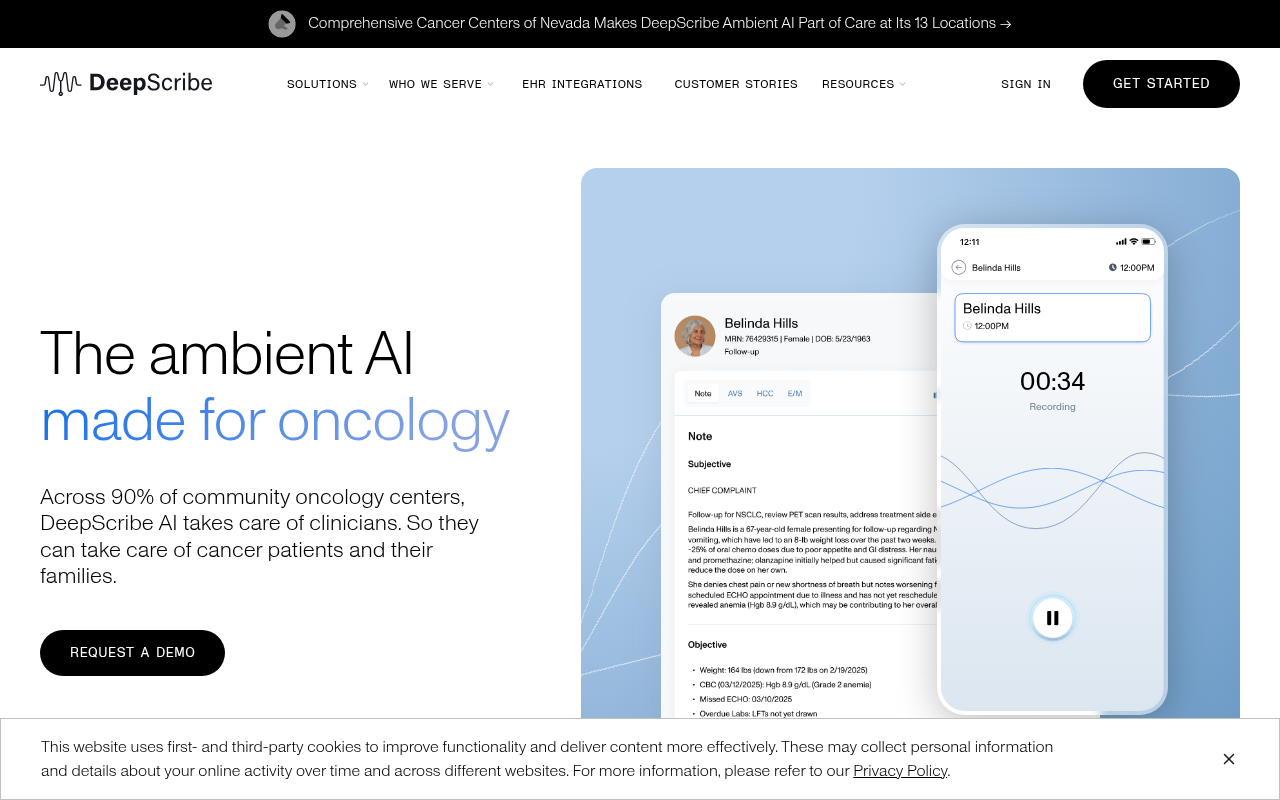
DeepScribe offers strong ambient listening and specialty workflow support at enterprise price points, while Nabla Copilot offers self-serve tiers with real-time note creation and broad EHR compatibility, according to industry research. For both vendors, SOC 2 Type II report availability is not uniformly publicized, which means buyers must request documentation directly rather than assuming certification from marketing language. The broader market reality reinforces this: because the AI scribe space is crowded with startups offering free tiers and limited transparency into data handling, the absence of a proactively shared audit report is a due-diligence flag, not a disqualifier, but one that requires direct follow-up before any PHI flows to the vendor.
The risk that no vendor comparison surfaces openly: when providers abandon a poorly integrated AI scribe and revert to phone dictation or copy-paste habits, the practice does not return to its pre-deployment compliance baseline. It drops below it. Each unsanctioned workaround introduces PHI handling outside the contracted vendor environment and outside any audit log, meaning the practice now carries both the original compliance obligations and a new layer of shadow exposure that no BAA or SOC 2 report covers.
Selecting a vendor that clears every criterion above is necessary. But it still leaves one compliance dimension almost no vendor discusses openly. The next section reveals why coding accuracy inside AI-generated notes is both a revenue-integrity issue and an undetected compliance liability that the standard HIPAA checklist was never built to catch.
The Compliance Dimension AI Scribe Vendors Don't Talk About - Coding Accuracy and Revenue Integrity
RAC auditors have recovered over $1 billion in improper Medicare payments, and their review scope is expanding to include E&M coding at the encounter level, a figure that reframes the compliance conversation entirely.
What a 941-Encounter Orthopedic Trial Revealed About Invisible Overcoding Risk
No current AI scribe tool is natively capable of billing or diagnosing properly, which leaves a critical gap in coding accuracy and revenue integrity that clinicians must fill manually, often without any systematic signal that a problem exists. In a real-world orthopedic trial, iScribe Health's E&M Coding Intelligence surfaced what the Center for Sports Medicine & Orthopaedics in Chattanooga discovered across 941 encounters analyzed:
- 54.8% provider/AI agreement rate
- 33% overcoding rate
- Until the trial was run, no one in the building knew the split
Request the full trial summary and methodology documentation directly from iScribe Health during vendor evaluation to assess the data in your own clinical context.
Why Overcoding Is a Compliance Risk, Not a Billing Problem
Recent developments in Medicare recovery audits signal expanded RAC scrutiny, so practices with inaccurate coding face heightened risk of repayment demands and fraud referrals. IScribe Health addresses this directly through its Automated E&M Coding capability, which is designed to improve coding consistency and coding precision so that reimbursement integrity is built into the documentation workflow, not retrofitted after a claim is denied or flagged.
Key takeaway: A vendor BAA explicitly does not indemnify a covered entity against clinician attestation failures. Overcoding exposure from AI-generated notes is a False Claims Act risk that sits entirely outside the compliance checklist most administrators run before go-live.
How Structured EHR Integration Closes the Gap Before a Claim Is Submitted
When AI-generated notes land as unstructured free text, downstream coding engines have no reliable structure to validate against.
iScribe Health's EHR Integration pushes notes into discrete, structured EHR fields. It delivers its full value when a practice or health system is already running a supported EHR and wants a seamless ambient documentation experience.
Related Reading
- Best Ai Scribe For Athenahealth
- Ai Medical Scribes With E&m Coding Built In
- Ai Scribe Accuracy
- Do Ai Scribes Reduce Claim Denials?
Next steps
If your AI scribe vendor passed every contractual review but providers are still dictating into their phones three months post-go-live, the path forward starts with treating adoption rate as a compliance criterion, not a training afterthought.
The audit-trail gap created by copy-paste workflows means PHI leaves the vendor's certified environment on every encounter where a provider manually transfers a note, creating unlogged exposure no BAA or SOC 2 report covers. The compounding risk of provider workarounds means a failed deployment does not return a practice to its pre-AI compliance baseline; it drops below it, adding shadow PHI exposure on top of the original obligations. Together, they point to evaluating native EHR integration and documented provider acceptance rates before any vendor contract is signed, not after the first denial audit surfaces the gap.
Start with Best AI medical scribe for orthopedic practices to see how native EHR pushback and specialty-fit documentation work as a combined compliance architecture. From there, request iScribe Health's deployment summary, including the 90-day provider acceptance rate and the orthopedic E&M coding trial data, so your evaluation rests on verifiable clinical evidence rather than marketing attestations.
Frequently Asked Questions
Does signing a BAA with my AI scribe vendor mean my practice is HIPAA compliant?
No, a signed BAA governs what the vendor can do with PHI on their infrastructure, but it says nothing about what your providers do with PHI on theirs. The real compliance gap is a behavior gap that lives inside your clinical team's daily routines, not a signature gap.
Is using ChatGPT or basic Otter.ai to transcribe patient visits actually a HIPAA violation?
Yes, without ambiguity. Standard ChatGPT does not offer a Business Associate Agreement on its consumer tier, and data submitted to it may be used for model training, making any patient encounter processed through it an unmitigated HIPAA violation the moment PHI enters the prompt. There is no good-faith defense and no safe harbor.
What should I look for in a vendor's data retention and deletion policy?
The vendor's Data Processing Agreement and privacy policy must explicitly prohibit using patient audio, transcripts, or notes to train public or foundational AI models, vague language is a disqualifying red flag, not a minor ambiguity. You should also confirm that data retention timelines and deletion procedures at contract end are specified in writing. If the vendor cannot produce a DPA with that explicit carve-out on request, treat the gap as an answer.
Why does copy-pasting AI-generated notes into the EHR create a compliance problem?
Copy-pasting breaks the audit chain, there is no timestamped record of where the note originated, no log confirming the source, and no traceable path from AI output to final chart entry. When an OCR auditor requests documentation of how PHI was handled at every step, a copy-paste workflow produces silence, which is itself a liability.
What access controls does a HIPAA-compliant AI scribe need to have in place?
HIPAA's minimum-necessary standard requires role-based access controls (RBAC) so that only authorized users can view, export, or act on AI-generated notes and audio, paired with audit logging to create a traceable chain of custody proving those controls held. Without both, a breach investigation has no chain of custody and the practice carries the liability. When an AI scribe lacks native EHR integration, clinicians often route notes through unlogged manual transfers, bypassing RBAC entirely.