Do AI Scribes Reduce Claim Denials? The Real Answer
Do AI scribes reduce claim denials? The gap is visibility, not effort. See how E&M coding intelligence puts more revenue in your practice.


Most AI scribes don't cut denials. They just produce cleaner versions of incomplete notes. Here's where the real revenue leak hides, and what it takes to actually fix it.
The common assumption among practice administrators and billing decision-makers is that any AI scribe will reduce denials because AI produces more complete notes than rushed physicians typing after hours. Billing teams are handed finalized notes and expected to defend level-of-service decisions they had no part in making. The problem is not effort.
The gap is visibility. By the time a claim reaches a clearinghouse, the documentation that either supports or undermines it is already locked in the record, sometimes days old, shaped entirely by what a clinician remembered to capture after a full schedule of patients. For practices running high-volume clinical workflows, that gap compounds quietly and fast.

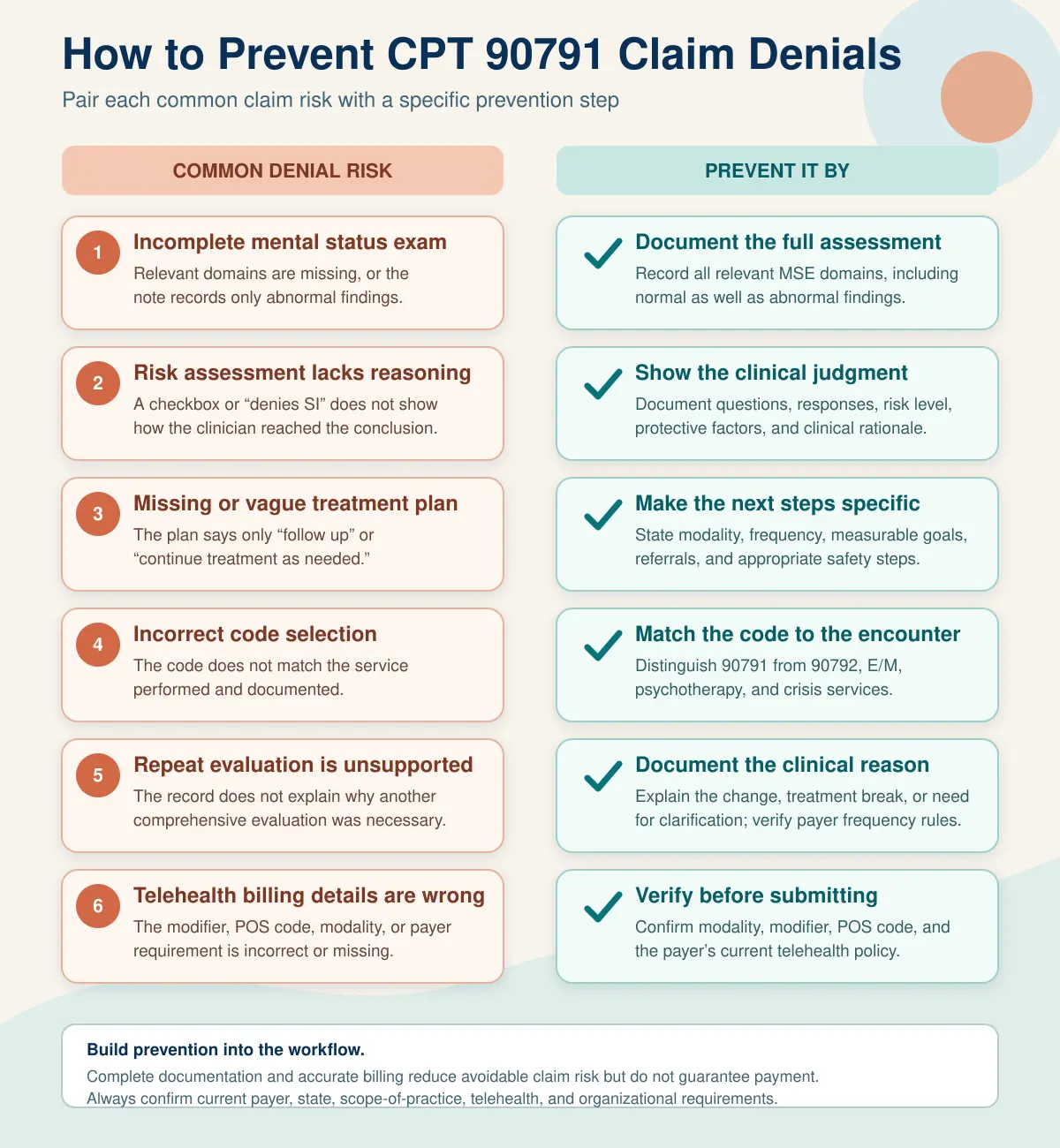
According to the Journal of AHIMA, the primary drivers of claim denials are coding errors, lack of documented medical necessity, and insufficient supporting documentation. All three originate inside the clinical encounter, not inside the billing queue. A coder who receives a note that omits the clinical reasoning behind a treatment decision cannot manufacture medical necessity from thin air. The note either supports the billed code or it does not, and that outcome was determined the moment the physician closed the chart.
Hospital denial rates have increased more than 20 percent over the past five years, the same Journal of AHIMA analysis found. That trend reflects a structural mismatch: clinical documentation practices have not kept pace with payer scrutiny requirements, and the gap shows up as denials.
The damage compounds at the rework stage. A significant share of denied claims are never reworked or appealed at all, so the revenue loss from documentation gaps is permanent.
Billing teams absorb that write-off, even though the root cause was baked into the encounter before they ever saw the file.
TechTarget reporting on AI medical scribes and claim denials reinforces what the Journal of AHIMA frames plainly: denial problems originate at the point of clinical encounter documentation, not at the moment of claim submission. By the time a payer pulls records to audit, the cash-flow damage from documentation gaps is already compounding. No clearinghouse tool or billing software catches a deficiency that was never flagged upstream.
Denials are the visible wound. The revenue loss most practices never measure is quieter and larger: the correctly documented encounters that were systematically coded one level too low, visit after visit, with no rejection ever triggering an alert. That invisible gap is where the next section begins.
Key takeaways
- Most AI scribes are sold on documentation speed, the actual revenue case is what happens before the claim is ever submitted, at the encounter itself.
- A finalized note that reads well is not the same as a note that codes correctly, and the gap between those two things never generates a denial, so most practices never see it.
- Denial rate only captures revenue that was billed and rejected; undercoding is the larger, quieter loss that never shows up in a rework ticket.
- A post-deployment audit of 94 encounters at one orthopaedic group found a 33% overcoding rate and a 54.8% provider-AI agreement rate, and no one in the practice knew either number existed until someone looked.
- The three capabilities that separate denial-reducing AI scribes from basic transcription tools are real-time E&M level suggestions, ICD-10 specificity prompts, and direct integration with revenue cycle workflows, most tools skip at least one.
- iScribe Health's E&M Coding Intelligence closes the loop by building coding recommendations from the complete clinical narrative, not just the finalized note, so the 99213s that should have been 99214s get caught at the source, not after the claim lands on a payer's desk.
The E&M Coding Gap Silently Costs Practices More Than Denied Claims
The denial report is the metric most practices watch, but it captures only the revenue that was submitted and rejected. The larger, quieter problem sits upstream: revenue that was never billed at all because the encounter was coded at a lower complexity level than the clinical facts supported.

Why Undercoding Never Shows Up in Your Denial Reports But Still Drains Revenue
$39 per visit. That is the per-encounter cost when a 99213 is billed where a 99214 was warranted. According to SPRY Health's CPT code analysis, Medicare reimburses 99214 at approximately $131 versus $92 for 99213, a gap that compounds silently across any practice running high daily visit volumes. As a foundational principle of revenue cycle management, undercoding is invisible to every standard accounts-receivable system because the unbilled complexity was never submitted in the first place.
$39
Per-visit loss from one undercoded E&M level
Consider a physician in a high-volume practice who undercodes even a fraction of visits by one E&M level. Multiplied across dozens of daily encounters, that $39 gap becomes a persistent, undetected drain. In high-volume practices or health systems, exactly the environments where iScribe Health's impact is most pronounced, that daily leak accumulates into a structurally significant annual revenue gap.
After-Hours Documentation Is Where Coding Complexity Gets Lost
The connection between documentation timing and coding accuracy is well established. Physicians spend significant time on after-hours charting, the so-called "pajama time" that follows a full clinical day. iScribe Health's impact is most consequential in practices where clinicians regularly chart two or more hours outside of patient care time, because that is precisely where fatigue-driven documentation compression does its worst damage to coding precision.
Accurate E&M level selection depends on the physician documenting the full clinical complexity of the encounter, not a summary of what was discussed. A tired summary produces a defensible 99213. The encounter may have warranted a 99214. The difference is never recovered, and it never appears in a denial report.
The Denial Problem and the Undercoding Problem Are Distinct Financial Injuries
Denials and undercoding represent separate categories of revenue loss, each requiring a different intervention. Broader revenue cycle trends, including those reported by Becker's Hospital Review in its coverage of AI scribes and healthcare costs, identify documentation-code mismatches as a compounding revenue problem, one where the initial underpayment or denial is only the first loss, with administrative drag adding cost at every resubmission step. iScribe Health addresses both sides: Real-Time Denial Alerts surface the rejection problem as it emerges, while E&M Coding Intelligence targets the undercoding problem before a claim is ever generated.
iScribe Health's E&M Coding Intelligence is built for the quieter, costlier problem. It surfaces the full complexity that justifies a higher E&M level at the point of note completion, after the AI drafts the encounter summary, and before the billing sheet is ever generated.
How AI Scribes Improve Documentation Quality to Prevent Denials

Why the Encounter Layer Is Where Denial Risk Is Born
A physician finishing a packed afternoon schedule and dictating notes at 7 p.m. will reconstruct the visit, not replay it.
Broader research on AI scribe risk, including Healthcare Dive research on AI scribe documentation quality vs. human scribes, draws a clear line between tools that capture the full ambient encounter and those that reformat post-visit dictation, noting that only the former meaningfully reduces the omissions that lead to coding mismatches.
What Ambient Capture Gets That Post-Visit Dictation Misses
In a 3-minute post-visit dictation, the surgeon documents the diagnosis and the treatment plan. The functional limitations and therapy history, the details that substantiate medical necessity for a higher-complexity visit, are omitted.
iScribe Health's Ambient AI Documentation records the full clinical conversation as it unfolds, capturing symptoms mentioned in passing, history the patient volunteers mid-exam, and the physician's spoken reasoning. This matters especially during peak census periods, when care teams are under the greatest pressure to compress charting and documentation quality suffers most. iScribe Health's workflows are built to maintain that quality even when patient volume is highest.
For practices already running a supported EHR, iScribe Health's EHR Integration is designed to make the transition to ambient documentation seamless, with no parallel workflows and no redundant data entry.
The Documentation-Quality Link to Medical Necessity
Across the market, time savings from ambient AI scribing also link to a downstream quality benefit: physicians freed from after-hours charting are less likely to rush documentation, and that reduction in burden correlates with more accurate and complete notes.
iScribe Health operationalizes this directly. Because iScribe Health's Ambient AI Documentation touches every patient encounter every day of clinical practice, the improvement to note completeness is cumulative and ongoing, a sustained gain rather than a one-time lift that degrades as staff turnover or volume spikes.
The next section examines the specific coding and billing capabilities, including iScribe Health's E&M Coding Intelligence, Automated E&M Coding, and Real-Time Denial Alerts, that separate AI scribes that stop at documentation from those that close the loop all the way to the claim.
What Coding and Billing Capabilities Advanced AI Scribes Actually Provide
Advanced AI scribes that reduce denials share three specific capabilities that basic transcription tools omit entirely: real-time E&M level suggestions, ICD-10 specificity prompts, and direct integration with revenue cycle workflows. The absence of any one of these features means a tool automates documentation without improving coding accuracy.
"No current AI scribe is capable of billing or diagnosing properly, leaving physicians without automated coding support despite demand for it."
— what we hear from physician practices
1. Real-Time ICD-10 and CPT Suggestions Drawn from the Full Clinical Narrative
Advanced AI scribes that reduce denials provide real-time ICD-10 and CPT code suggestions mapped directly from the ambient clinical narrative, not from the finalized note. Based on our market understanding, tools that analyze the full encounter can surface codes reflecting true complexity that simpler transcription tools miss. A secondary diagnosis documented verbally during the visit but never typed into the note is captured and coded before the claim is built, not discovered during a denial appeal three weeks later.
It is also worth acknowledging a real limitation in the current market: no AI scribe today is capable of billing or diagnosing autonomously. Physicians and advanced practice providers we work with understand this. The value of iScribe Health's coding intelligence is that it ensures the complexity a provider already delivered in the room is accurately captured and surfaced for sign-off, rather than lost to documentation time pressure.
2. Audit Trail Generation for Payer Defense and Appeals
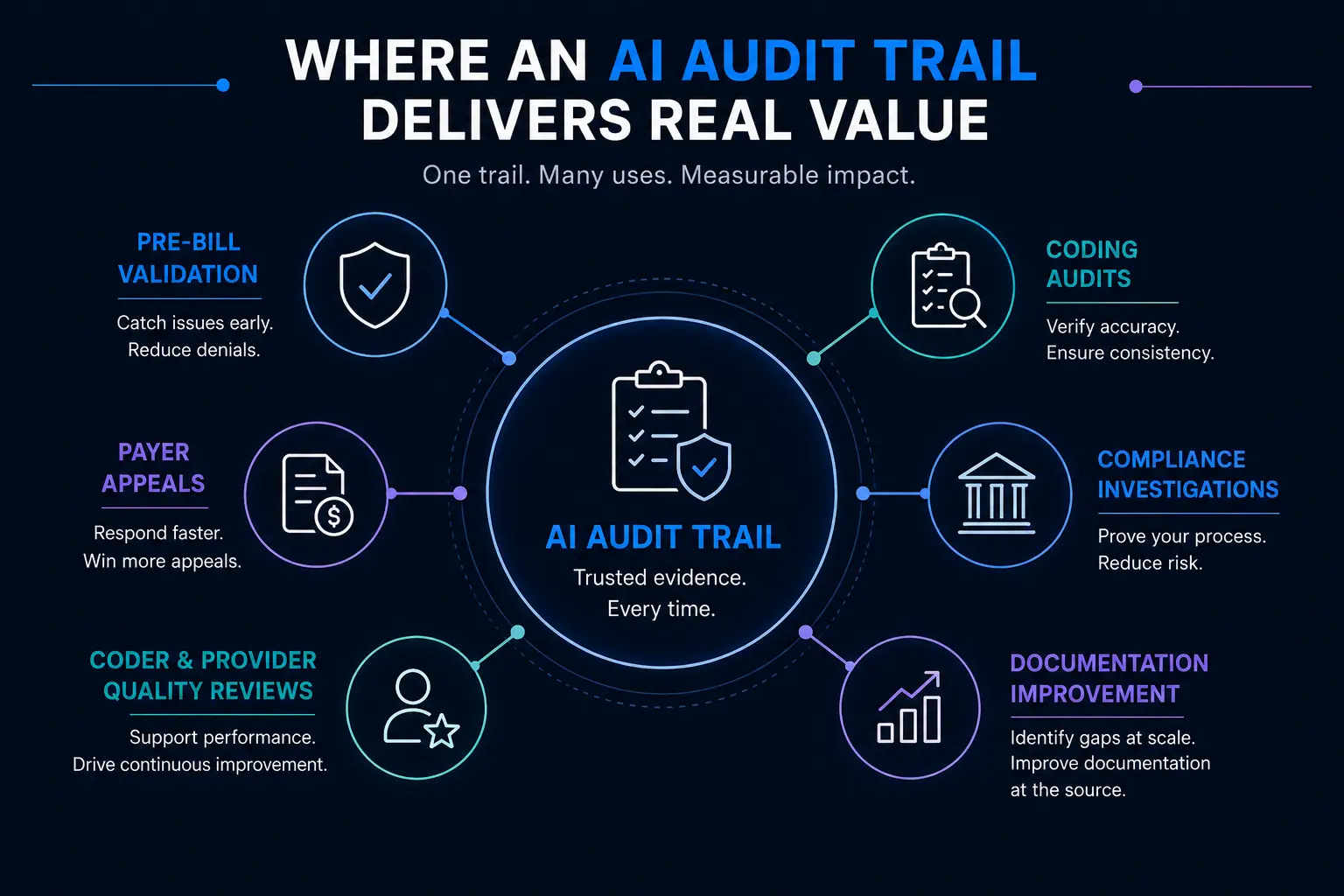
A complete note is not the same as a defensible note. Audit trail transparency is a critical component of denial prevention and appeals defense, because payers increasingly require evidence of how clinical decisions and codes were reached. A tool that generates a readable note but no reasoning chain leaves the practice defensible on completion and indefensible on audit. That distinction is one payers are actively exploiting.
3. E&M Coding Intelligence - AI-Powered Complexity Scoring from the Complete Encounter

E&M coding intelligence is the capability that separates denial-reducing platforms from documentation-only tools. Individual physicians and advanced practice providers routinely bill conservative levels, choosing a lower E&M level when the encounter supports a 99214, from audit anxiety and compressed charting time rather than dishonesty. iScribe Health's Automated E&M Coding analyzes the full clinical encounter as it unfolds and, at the point of note completion, surfaces the level the visit actually supports. The billing queue receives a defensible, evidence-anchored recommendation rather than inheriting whatever the physician had time to capture.
4. The Billing Capability Gap Between Basic AI Transcription and Full-Stack Documentation Platforms

The core architectural difference is where in the workflow coding logic lives. A transcription-only tool hands a completed note to a billing team that still recodes everything manually, a friction point that multiplies across hundreds of weekly encounters. Full-stack platforms like iScribe Health intervene upstream, at the encounter layer, where the coding decision is still correctable before a claim is ever built. For practices where clinicians are regularly charting two or more hours outside of patient care, that upstream intervention reduces both denial exposure and the physician burnout that compounds when documentation pressure has no structural relief.
Related Reading
- Hipaa Compliant Ai Scribe
- Top Medical Scribe Companies
- Ai Scribe Cost
- How Does An Ai Scribe Work
- Medical Scribe Cost
What the Data on Denial Rate Reductions From AI Adoption Actually Shows
Survey data on AI adoption and claim denials points in one direction, but the number that vendors quote most often describes the best-case outcome, not the typical one.

The 83% Statistic - Real and Routinely Misread
83% of healthcare organizations experienced at least a 10% decrease in claim denials within the first six months of adopting AI-driven automation, according to a 2025 RCM Survey. What the same research makes clear is that denial reduction outcomes vary significantly based on which software capabilities are deployed and how deeply those tools connect to revenue cycle management workflows. A narrowly scoped implementation, one that flags denials after the fact without integrating into the clinical and billing workflow upstream, consistently underperforms, and the 83% figure flatters a partial implementation.
iScribe Health's Real-Time Denial Alerts are built specifically for this gap.
Denial Reduction Is One Revenue Lever, E&M Recovery Is the Larger One
Research on E&M coding patterns consistently shows that undercoding losses per provider accumulate into a significant annual gap, one that never appears in a denial rate dashboard because the revenue was never billed in the first place.
iScribe Health's E&M Coding Intelligence and Automated E&M Coding are built specifically to surface that gap by reading the full clinical narrative at the encounter layer, before the note is finalized and before the billing sheet is set.
In those environments, physician burnout from documentation load compounds the coding accuracy problem: fatigued clinicians default to lower-complexity codes to move faster, and the practice absorbs the loss across every encounter, every day. iScribe Health's ambient documentation removes that pressure at the source, decreasing the administrative burden associated with EHR data entry so that clinicians engage with coding prompts rather than bypassing them to get to the next chart.
What a Real Audit Reveals About AI Scribe Coding Output Before Anyone Checks

The Orthopaedic Audit That Found a 33% Overcoding Rate Nobody Knew Existed
A 33% overcoding rate. That is what a post-deployment audit of 941 encounters at the Center for Sports Medicine & Orthopaedics, Chattanooga revealed, with only 54.8% provider-AI agreement across the full encounter set. According to the Acta Scientific Computer Sciences, "AI-Driven Clinical Documentation and Medical Scribes" study, this compliance and denial risk existed without anyone's knowledge until the trial was conducted, and these gaps can accumulate silently in live deployments.
AI Hallucinations, Critical Omissions, and Misinterpretations That Propagate Into the EHR
AI scribe error does not present as a single failure mode. Hallucinations, where the model generates clinical detail that was never said, can enter the record silently, and tools that achieve 95% audited accuracy still leave meaningful error volume at scale. Critical omissions and misinterpretations compound that risk further.
The Acta Scientific Computer Sciences, "AI-Driven Clinical Documentation and Medical Scribes" study confirms that all three error types can propagate into the EHR without notifying the clinician, making downstream review essential rather than optional.
Why Structural Quality Gaps in AI Notes Make Physician Sign-Off Non-Optional
Independent evaluations show that AI-generated notes can carry organizational and thoroughness deficits compared to human documentation, even when the note appears complete at a glance. Those structural gaps mean physician review cannot be treated as a formality.
The Compliance Exposure Hidden Inside a Clean AI-Generated Note
Practices that deploy AI scribing for orthopaedic workflows without a structured coding review layer are, in effect, accepting AI coding recommendations at scale with no feedback loop. iScribe Health's E&M Coding Intelligence addresses this directly by surfacing coding mismatches from the complete clinical narrative at the point of note completion, before a claim is submitted, so a 33% overcoding scenario becomes a caught discrepancy rather than a future audit finding. By operating within EHR Integration, iScribe Health can surface audit candidates upstream, inside the workflow where a physician can act on the flag rather than discover it months later during a payer review.
That upstream positioning is what reduces audit risk in practice. The Acta Scientific Computer Sciences, "AI-Driven Clinical Documentation and Medical Scribes" data makes clear the exposure is real and recurrent, and Real-Time Denial Alerts extend that same logic forward, catching claim-level mismatches before they leave the practice.
AI Scribe Limitations That Determine Whether Denials Drop or Climb
Four AI scribe failure points determine whether your denial rate falls after deployment or quietly climbs. Each one operates below the surface of a clean, readable note, which is exactly why practices miss them during vendor evaluation. These failure points hit hardest in the settings where AI scribes are most appealing: high-volume practices where clinicians are already spending significant time on after-hours documentation and where coding accuracy across hundreds of encounters directly determines reimbursement outcomes.
1. Note-Only Analysis - The Coding Gap AI Scribes Cannot Close at the Source

When an AI scribe processes only the finalized note, the clinical detail captured during the encounter is already gone. Documentation errors and missed codes are baked in before any review occurs, as the broader pattern across documentation workflows makes clear. The physician's post-visit dictation becomes the ceiling for coding accuracy, not the encounter itself.
This is a structural problem for practices evaluating AI scribes selectively, deployed for some note types but not others, because inconsistent ambient coverage creates documentation gaps that accumulate into denial exposure across a patient's longitudinal record. Practices evaluating AI scribes should ask directly: does this tool analyze the ambient session, or only the note it produces? iScribe Health's ambient coding approach generates E&M coding intelligence from the full conversational encounter, not from the completed note, treating the live clinical conversation as the source of coding signal rather than an artifact that has already been filtered through dictation.
2. Silent Error Compounding - What Happens When There Is No Revenue Cycle Audit Layer

Without a structured audit trail, inaccuracies propagate across hundreds of claims before anyone detects a pattern, as most teams reviewing AI scribing workflows have found. A single miscoded visit is a rework ticket. The same error replicated across three months of high-volume encounters is a payer audit trigger.
High-volume practices, where clinicians are regularly charting for extended periods outside of patient care time, face compounded exposure because the sheer throughput means a systematic error reaches scale before a denial spike surfaces it. The absence of a revenue cycle oversight layer does not create one large, visible problem; it creates dozens of small ones that compound silently. iScribe Health's Real-Time Denial Alerts and automated E&M coding are built to flag these signals at the point of note completion, after the AI drafts the encounter summary, creating an auditable link between documentation and code selection before a claim moves downstream.
3. Feedback Loop Deficit - Why Accuracy Alone Does Not Determine Whether Denials Drop

Across the market, the feedback loop stands out as the key differentiator between AI scribes that reduce denials and those that merely produce faster notes. A tool that generates grammatically clean documentation but receives no signal about downstream coding outcomes cannot self-correct. Specialty-specific coding logic, HCC capture consistency, and E&M level calibration all drift without a correction mechanism, and that drift is invisible until it becomes a denial pattern.
Accuracy at the note level and accuracy at the claim level are not the same measurement. iScribe Health's AI Customization and ongoing E&M Coding Intelligence are designed to keep coding logic calibrated across every patient encounter and every day of clinical practice, ensuring that high patient volumes do not erode compliant coding over time or leave reimbursement on the table.
4. Buyer Evaluation Criteria - Four Questions That Predict Whether an AI Scribe Will Move Denial Rates
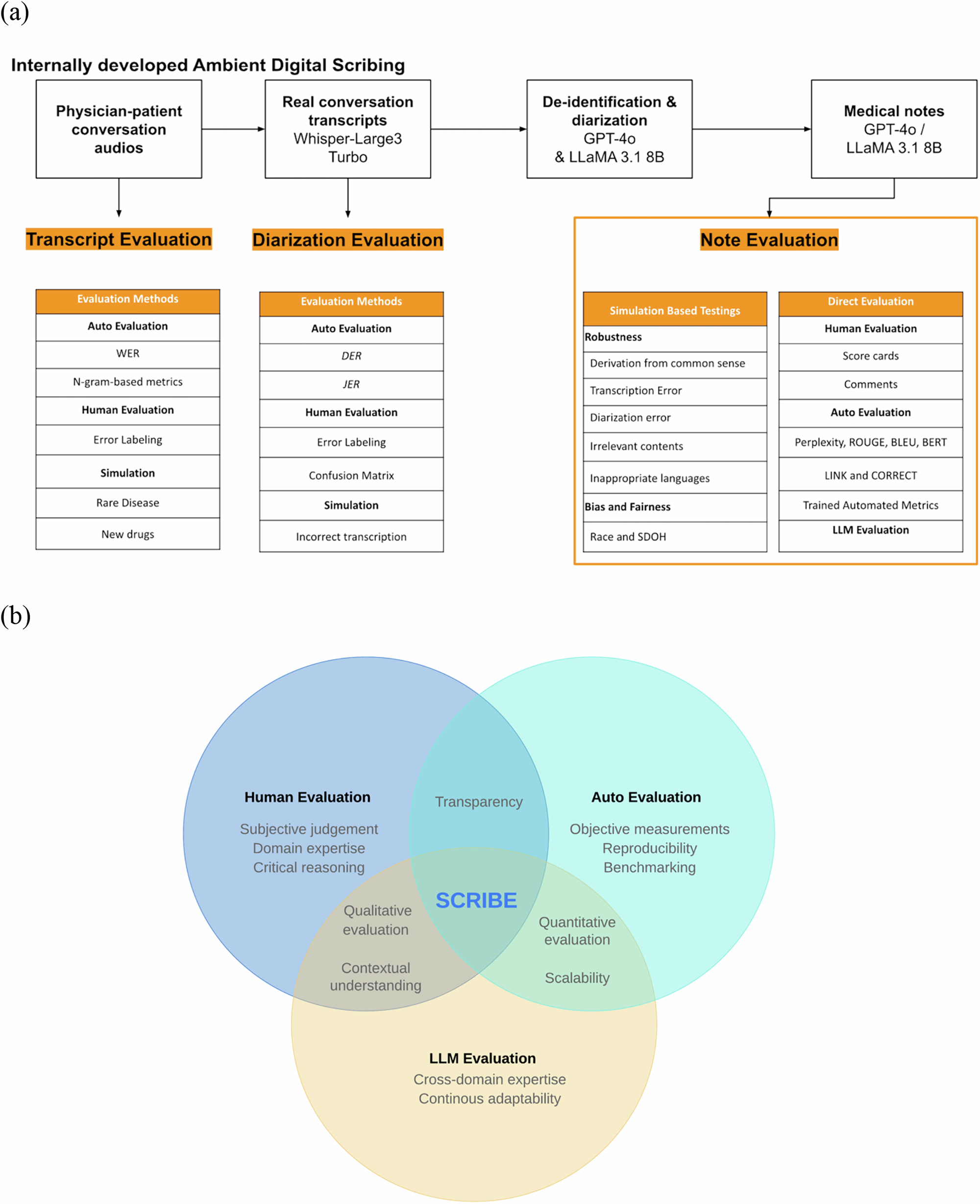
Revenue cycle and clinical operations buyers evaluating AI scribes should anchor on four concrete questions: Does the tool generate coding recommendations from the full ambient encounter or only the finalized note? Does it produce an auditable trail linking documentation to code selection? Is there a mandatory physician review step embedded in the workflow? And does the vendor provide denial-rate benchmarking post-implementation? Tools that cannot answer yes to all four are documentation aids, not denial-reduction solutions.
5. Hallucination and Specificity Failure - The AI Scribe Failure Points That Directly Trigger Payer Denials
AI-generated clinical notes carry a documented hallucination risk: plausible-sounding specificity that does not match the actual encounter. This failure mode is not evenly distributed. Clinicians managing complex patients, patients with accents, or fast-moving clinical conversations are most exposed, and this is precisely where denial risk concentrates.
When ambient listening struggles with conversational nuance or speech variation, errors surface not as obvious nonsense but as confident, coherent inaccuracies that pass a quick read. For HCC capture and chronic condition coding, a hallucinated detail or silent omission does not just affect one claim; it creates a payer-visible pattern across a patient's longitudinal record that invites audit. iScribe Health's Ambient Listening and Conversational AI is built for the documentation environments that matter most, high-volume, high-complexity encounters where after-hours charting burdens are already significant, and pairs ambient capture with a mandatory physician review checkpoint before claim submission, so inaccuracies are caught at the point of note completion rather than discovered during a payer audit.
Related Reading
- Best Ai Scribe For Athenahealth
- Ai Medical Scribes With E&m Coding Built In
- Ai Scribe Accuracy
Next steps
If your billing team keeps absorbing denials that trace back to documentation your clinical team never flagged, the path forward starts with intervening at the encounter layer before the coding signal is lost.
An AI scribe that only processes the finalized note formats documentation gaps more legibly without closing them, meaning the billed code inherits whatever the physician remembered to capture after a full schedule. At the same time, the orthopaedic audit that surfaced a 33% overcoding rate and only 54.8% provider-AI agreement shows that polished, complete-looking notes can silently accumulate compliance exposure that no denial dashboard will ever surface. Together, these two realities point to the same action: auditing your current E&M distribution against your actual encounter data, using a tool that reads the full ambient clinical narrative rather than the edited note.
See the Best AI medical scribe for orthopedic practices to review how iScribe Health's E&M Coding Intelligence and Real-Time Denial Alerts apply coding logic at the point of note completion, before a claim leaves the practice.
Frequently Asked Questions
Does using an AI scribe actually reduce claim denials, or does it just clean up the notes?
It depends on what the AI scribe captures and when. Tools that only reformat post-visit dictation inherit whatever clinical detail the physician already compressed or omitted, they make incomplete notes more legible, not more complete. AI scribes that capture the full ambient encounter in the room surface the medical necessity details, functional limitations, treatment rationale, history volunteered mid-exam, that give payers no opening to deny.
Why are my denial rates stable but revenue still feels off?
Denial reports only capture revenue that was billed and rejected. The larger, quieter problem is undercoding, visits billed at a lower E&M level than the clinical facts supported, where no claim is ever filed for the difference and no denial ever triggers an alert. A single level difference between a 99213 and a 99214 represents approximately $39 per encounter, and that gap compounds silently across every visit with no remittance explanation or rework ticket to flag it.
Does physician burnout actually affect coding accuracy, or is that just an assumption?
The post draws a direct line between after-hours documentation fatigue and coding compression. When physicians chart two or more hours outside of patient care time, the medical decision-making elements that justify a higher E&M level, complexity of problems addressed, data reviewed, and risk of complications, are the first details to get abbreviated or omitted. A fatigued summary of a complex visit produces a defensible 99213 even when the encounter warranted a 99214, and no one in the billing workflow ever knows.
Will an AI scribe work with the EHR system my practice is already running?
IScribe Health is built with EHR Integration for supported systems the practice is already running, with the goal of making the transition to ambient documentation seamless, no parallel workflows and no redundant data entry.
If a denied claim is eventually corrected and resubmitted, doesn't the practice recover the lost revenue?
Not always, a significant share of denied claims are never reworked or appealed at all, meaning the revenue loss from documentation gaps is often permanent, not delayed. Beyond that, broader revenue cycle trends identify administrative drag at every resubmission step as an added cost on top of the initial denial, so even recovered claims carry a financial penalty.