40 CPT Code 99232 Facts Every Medical Biller Should Know
CPT code 99232 is silently costing billers revenue. Close the gap with automated E&M coding and recover what was always yours to claim.


Most hospitalists treat 99232 as a default. It is an active revenue decision, and the difference between getting it right and getting it wrong is almost never a denial.
Both risks are real: subsequent hospital care codes are an active OIG and RAC audit target for overcoding, and systematic undercoding silently erodes collections with no denial to signal the loss. In reality, 99232 is one of the most financially consequential codes in a hospitalist's daily workflow, yet most practices treat it as a passive output of the rounding note rather than an active revenue decision. The gap between what a physician deliberated at the bedside and what ends up documented in the EHR is exactly where reimbursement quietly disappears. Practices that close that gap with tools like clinical documentation automation recover revenue that was always theirs to claim. See our AI medical scribe for how this works in practice.
CPT 99232 covers subsequent inpatient or observation care on days between the initial admission and the final discharge. It is not the right code for the admission day (where 99221-99223 apply) or for the discharge day (99238-99239). A hospitalist rounding on a patient on day 3 of admission bills a subsequent inpatient visit, choosing between 99231, 99232, or 99233 based on complexity. Defaulting to 99231 out of habit on that day is a direct reduction in reimbursable RVUs.

Effective January 1, 2023, the AMA deleted the standalone observation care codes and merged them into a unified inpatient and observation care family. CPT 99232 now applies to both inpatient hospital settings (Place of Service 21) and observation status settings (Place of Service 22). Before the merger, billers maintained separate code sets for each status. After it, that same code carries the same descriptor across both, with payer reimbursement varying by POS designation rather than by code. Practices that did not update their charge capture templates or payer fee schedule mappings introduced a new miscalibration risk on top of the existing level-selection problem.
As HOM Revenue Cycle Management notes, undercoding is a systemic revenue cycle problem that most practices overlook because compliance efforts concentrate on overcoding and fraud risk, leaving the silent revenue loss unexamined. No denial arrives. No alert fires.
The claim pays at the lower rate, and the practice assumes the code was right. iScribe Health's Automated E&M Coding captures clinical nuance at the point of care and maps it to the correct code before the revenue opportunity disappears. The gap is visibility.
Knowing what that code covers is only the first step. The real revenue decision happens when a physician chooses between MDM and time as the basis for that day's level of service, and that is exactly where undercoding originates.
Key takeaways
- CPT 99232 is one of the most financially consequential codes in a hospitalist's daily workflow, and most practices treat it as a passive output of the rounding note rather than an active revenue decision.
- Only ~55% of E&M visits are accurately documented, meaning the dominant billing error isn't fraud or overcoding, it's silent undercoding that clears the payer, pays at the lower rate, and leaves no denial to signal the loss.
- Two distinct pathways, time-based and medical decision making, determine whether a subsequent hospital visit qualifies for 99232, and defaulting to the wrong one costs real reimbursement dollars on every affected encounter.
- The gap between a correctly billed 99232 and a downgraded 99231 is almost never a clinical gap. It's a documentation language gap, and it compounds across every rounding note written under census load.
- Multi-provider scenarios, including nocturnist-to-attending handoffs, are among the most common triggers for same-day 99232 denials, and most practice administrators don't know the rule until a claim comes back.
- iScribe Health's Automated E&M Coding closes the loop by generating E&M codes directly from clinical documentation in real time, so the code that reaches the claim reflects what the provider actually deliberated at the bedside, not what survived the retrospective note.
The Two Pathways for Selecting CPT 99232 That Determine Your Reimbursement
Two pathways determine whether a subsequent hospital visit qualifies for CPT 99232, and choosing between them is one of the highest-leverage decisions a biller makes on any given claim. Understanding both pathways equally is essential to capturing the reimbursement the documentation actually supports.

The Official AMA Descriptor Every Biller Needs for Audit Defense
The verbatim AMA descriptor for CPT reads: "Subsequent hospital inpatient or observation care, per day, for the evaluation and management of a patient, which requires a medically appropriate history and/or examination and moderate level of medical decision making." That exact language is your first line of audit defense, and every element of it carries weight in a payer review.
History and physical examination must still be performed as clinically necessary, but the American Medical Association CPT Code Set is explicit: exam extent no longer determines code level. MDM complexity or total time carries that weight entirely, which shifts where documentation risk lives.
MDM Pathway - Why Moderate Complexity Is a Two-of-Three Threshold, Not a Gut Check
Moderate complexity MDM requires satisfying at least two of three defined elements: the number and complexity of problems addressed, the amount and complexity of data reviewed and analyzed, and the risk of complications or morbidity tied to patient management decisions. Meeting only one element, regardless of how thoroughly it is documented, is insufficient to support the code.
The AMA shift moved the undercoding vulnerability from exam documentation directly into MDM element omission, where it is far harder to detect and far harder to recover from at scale. iScribe Health's E&M Coding Intelligence is designed for this problem. At the point of note completion, after the AI drafts the encounter summary, the platform applies automated E&M coding logic to flag whether the documented MDM satisfies the two-of-three threshold or falls short, before the note is ever signed.
Time Pathway - How 35 to 49 Minutes of Total Provider Time Unlocks 99232
A hospitalist who spends 12 minutes at the bedside but another 28 minutes reviewing overnight labs and coordinating a specialist consult has crossed the 35-minute threshold.
The problem clinicians face repeatedly is that most EHR notes never capture those 28 minutes. The time was spent; the documentation did not follow. iScribe Health's Ambient Listening and Conversational AI addresses this at the source: the platform listens during and around the encounter, captures the full scope of provider activity, and surfaces that context inside the AI-drafted note, including the non-face-to-face work that defines the time pathway and would otherwise go unrecorded.
Choosing the Pathway That Pays More Before Signing the Note
Both pathways should be evaluated on every encounter before the note is finalized. If total time reaches 35 minutes, the encounter is defensible under the time pathway. If MDM documentation satisfies two of the three required elements, the MDM pathway applies independently.
Without a system that runs both calculations simultaneously, that distinction is routinely missed.
Simplifying reimbursement and payment workflows means removing exactly this kind of manual gap: iScribe Health's E&M Coding Intelligence runs both pathway calculations at the point of note completion, so the physician sees the defensible code level before the note is signed rather than discovering the discrepancy after a denial.
What Moderate MDM Requires for CPT 99232 and Where Billers Leave Money Behind
Three elements define moderate medical decision making for CPT that same figure, and meeting any two of them is sufficient.

Moderate MDM Is a Two-of-Three Test, Not a Judgment Call
Moderate MDM for CPT that same figure requires meeting at least two of three elements, a structured threshold established in the AMA CPT Guidelines / CMS E/M Documentation Guidelines, making it an objective checklist rather than a subjective clinical impression.
Element One - Which Problem Complexity Qualifies a Visit for 99232
Number and complexity of problems is satisfied when the note documents at least one chronic illness with exacerbation, progression, or side effects requiring active management, or two or more stable chronic illnesses being addressed during the encounter, and that documentation must appear explicitly in the note to be billable.
The Undercoding Pattern That Silently Downgrades 99232 to 99231
iScribe Health's Automated E&M Coding and E&M Coding Intelligence address this at the point of note completion, after the AI drafts the encounter summary, by analyzing the clinical narrative and flagging which MDM elements are documented versus merely implied, so the correct code surfaces before the claim is submitted and the undercoding cycle is broken.
40 CPT 99232 Facts Every Medical Biller Should Know to Protect Revenue
Paid-but-underpaid claims are the quietest revenue leak in a hospitalist group's billing cycle. A that same figure billed as 99231 clears the payer's system without a denial, lands in the remittance at the lower rate, and disappears into the daily deposit with no flag, no alert, and no signal that anything went wrong. Multiply that silent shortfall across a full year of subsequent inpatient visits and the loss compounds into territory that only a prospective charge-capture audit can quantify, a step almost no practice performs. The 40 facts below give every biller and practice administrator the complete reference to stop that erosion before it starts.
1. CPT Code 99232 Definition - The Level-2 Subsequent Hospital Care Code
CPT that same figure covers subsequent inpatient hospital care for an established patient requiring a medically appropriate history and/or examination plus moderate-complexity medical decision making, or 35 to 54 minutes of total provider time on the date of the encounter, where 55 or more minutes of total time shifts the encounter into 99233 territory. It applies to POS 21 and, after the that same figure code consolidation, POS 22 as well. It is the middle code in the that same figure-99232-99233 family and statistically the most frequently billed subsequent hospital care code.
2. AMA Official Descriptor for 99232 (Revised January 1, 2023)
The AMA descriptor reads: "Subsequent hospital inpatient or observation care, per day, for the evaluation and management of a patient, which requires a medically appropriate history and/or examination and moderate level of medical decision making. When using total time on the date of the encounter for code selection, 35 minutes must be met or exceeded." Billers should keep this exact language on file; payer audit responses and appeal letters carry more weight when they quote the authoritative descriptor verbatim rather than paraphrasing it.
3. Two Pathways to Select 99232 - MDM vs. Total Time
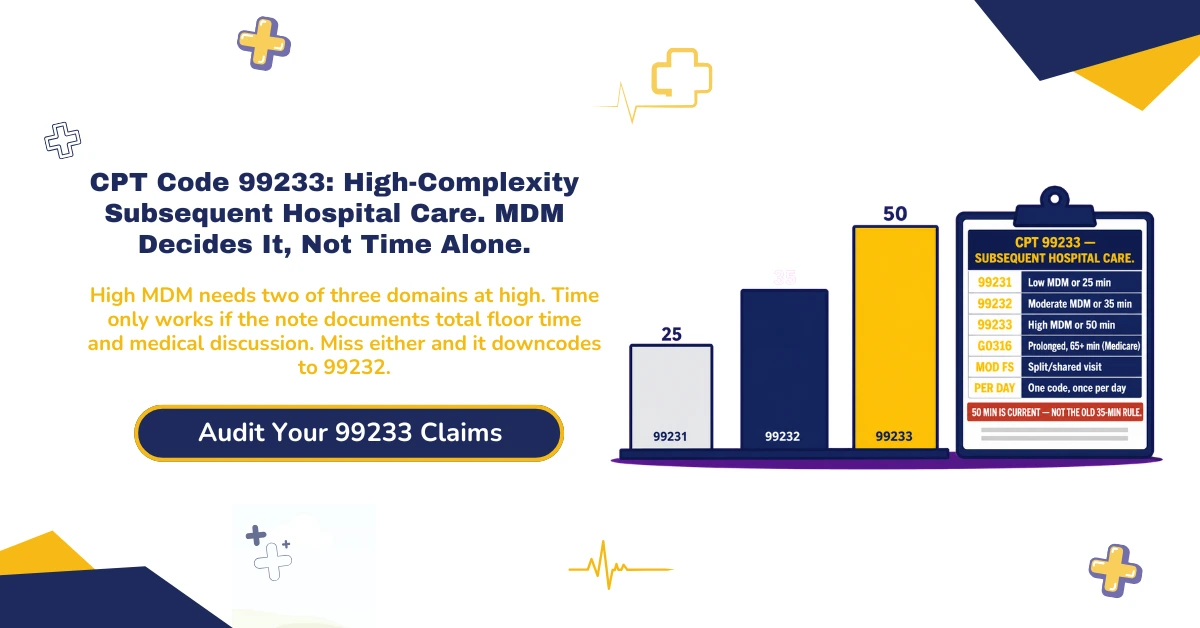
MDM and total time are independent pathways. A provider selects whichever pathway supports the higher-level code based on what the documentation actually reflects. If the note captures moderate-complexity MDM but the encounter lasted only 30 minutes, MDM governs. If the encounter ran 42 minutes but the MDM documentation is thin, time governs. Billers who default to MDM without checking time leave recoverable revenue on the table every time a well-documented long encounter is coded down for insufficient MDM language.
4. MDM Pathway - Three Elements and the Two-of-Three Rule for 99232
Moderate-complexity MDM requires meeting at least two of three elements: (1) number and complexity of problems addressed, (2) amount and complexity of data reviewed and analyzed, and (3) risk of complications or morbidity. Meeting only one element drops the encounter to that same figure territory. This two-of-three structure is the most misunderstood feature of that same figure MDM billing, and it is the structural reason why a note that documents one chronic illness without capturing data reviewed or risk language will be coded down regardless of how complex the actual clinical encounter was.
5. MDM Element 1 - Problems Addressed - What Qualifies as Moderate for 99232
For the problems element, moderate complexity requires at least one chronic illness with exacerbation, progression, or side effects of treatment, OR two or more stable chronic conditions, OR one undiagnosed new problem with uncertain prognosis. A single stable chronic condition does not meet the threshold. The practical billing implication: a hospitalist managing a patient with stable hypertension and stable type 2 diabetes has documented two stable chronic conditions and satisfies this element, even if neither condition is acutely decompensated.
6. MDM Element 2 - Data Reviewed - Moderate Complexity Thresholds for 99232
Moderate data complexity under the AMA 2023 guidelines requires meeting at least two of three defined sub-categories within that element: (a) review of or communication with an external provider or records from an outside facility, (b) independent interpretation of a test ordered by another provider, or (c) ordering or reviewing three or more tests or documents in a structured care plan. Billers should apply the two-of-two-sub-category threshold within the data element rather than treating any single sub-category as automatically sufficient. The physician must document their own analysis of the result. Billers auditing notes for this element should look for language like "reviewed outside records" or "independently interpreted the CT" rather than a generic "labs reviewed."
7. MDM Element 3 - Risk - Prescription Drug Management as the Key Moderate Indicator
Prescription drug management is the clearest single indicator of moderate risk for that same figure MDM purposes. If a physician adjusts, initiates, or discontinues a prescription medication during the encounter, that action alone satisfies the risk element. Billers should train physicians to document prescription decisions explicitly: "adjusted metoprolol dose" is defensible; a note that fails to name a specific medication decision is not. Diagnosis or treatment significantly limited by social determinants of health also qualifies, but prescription drug management is the most common and most auditable moderate-risk indicator in the inpatient setting.
8. Time-Based Billing for 99232 - What Counts Toward the 35-Minute Threshold
Total time includes all provider time on the date of the encounter: bedside evaluation, reviewing labs and imaging, documenting the note, coordinating care with nursing and consultants, and communicating with the patient's family. It does not require continuous time and does not need to be all face-to-face. The physician must document the total time spent, not just the bedside portion. A common documentation gap: the note records a 15-minute bedside visit but omits the 25 minutes of chart review and care coordination that would have pushed the total to that same figure territory.
9. POS 21 vs. POS 22 - How Place of Service Affects 99232 Reimbursement
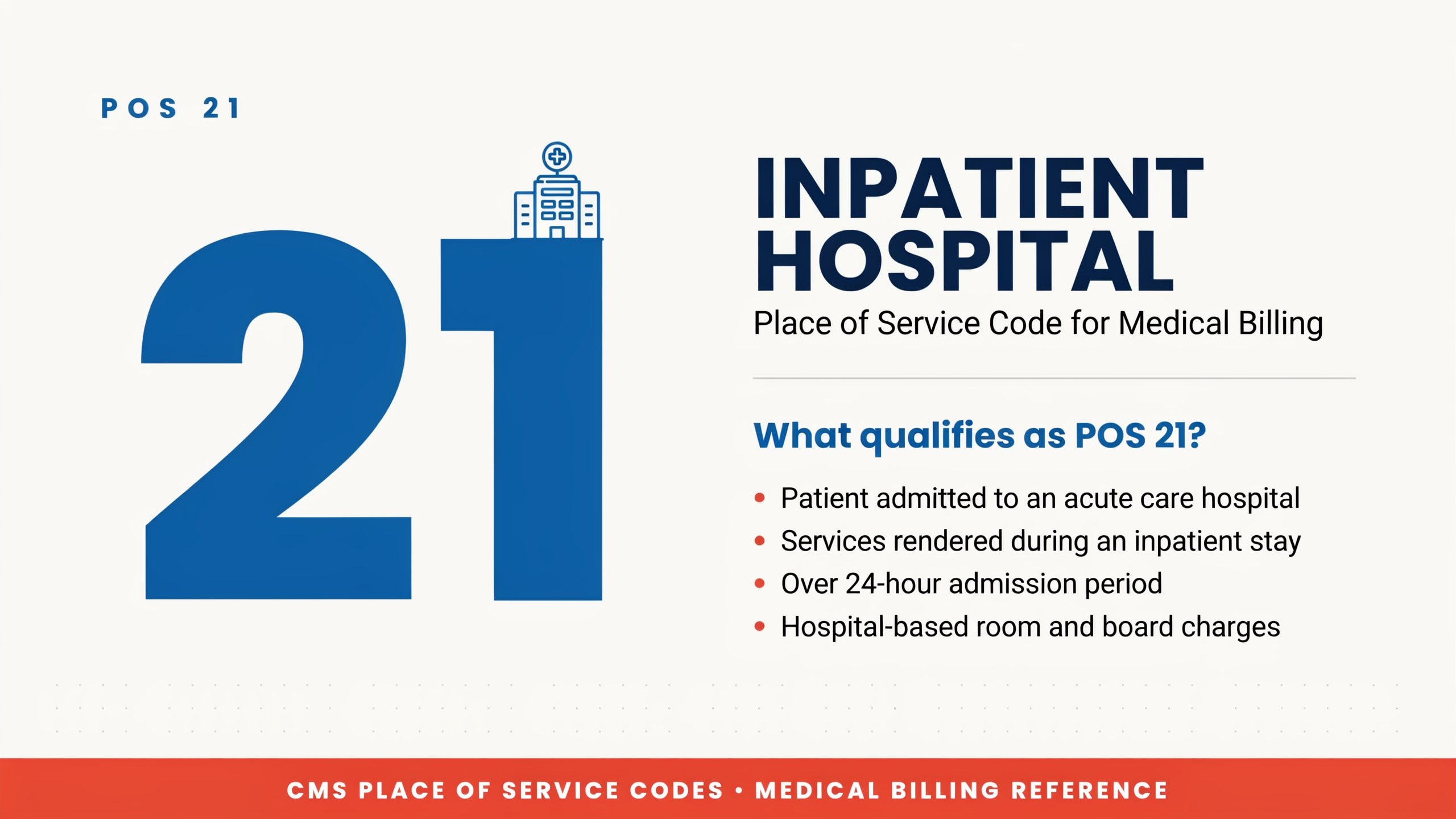
CPT that same figure billed under POS 21 (inpatient hospital) uses the facility rate because the hospital bears overhead costs. POS 22 (observation) follows the same facility rate logic after the that same figure merger. Industry data confirms that the that same figure AMA changes mean 99232 now covers both inpatient and observation subsequent visits, with the POS code driving the rate applied. Submitting POS 21 for an observation patient or POS 22 for a true inpatient triggers automated claim edits and delays payment regardless of how clean the MDM documentation is.
10. Once-Per-Day Billing Rule - Only One 99232 Per Provider Per Patient Per Day
CPT that same figure is a per-day code. A single physician or qualified healthcare professional may bill it only once per calendar day per patient, regardless of how many times they assess the patient. If a hospitalist rounds in the morning and returns for a reassessment in the afternoon, those services combine into one claim. The clinical work from both encounters should be reflected in a single note, and the time from both visits may be aggregated when using the time-based pathway.
11. 99231 vs. 99232 - Understanding the Level-1 Boundary to Prevent Undercoding
99231 requires only straightforward or low-complexity MDM, or less than 35 minutes of total time. The boundary between 99231 and that same figure is where systematic undercoding concentrates. Physicians managing patients with multiple chronic conditions, adjusting medications, or reviewing outside records almost always meet the 99232 threshold, yet many default to 99231 out of habit or because the note does not explicitly capture the complexity they deliberated. Every that same figure billed in place of a defensible 99232 is a paid-but-underpaid claim with no denial to prompt a correction.
12. 99232 vs. 99233 - Recognizing High-Complexity Encounters to Prevent Overcoding
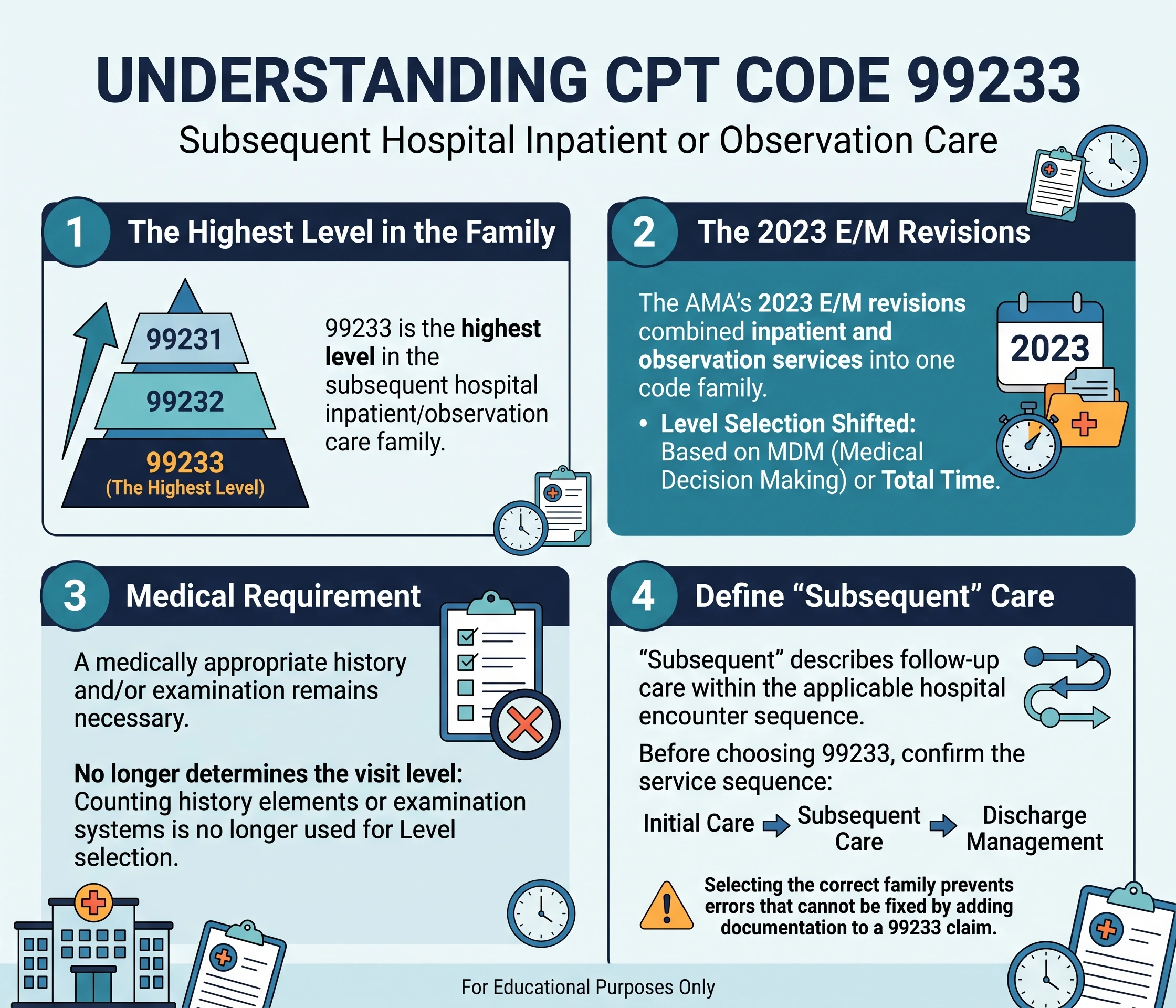
99233 requires high-complexity MDM or 55 or more minutes of total time. High-complexity MDM means a severe exacerbation of a chronic illness, a new problem requiring hospital admission, or drug therapy requiring intensive monitoring. Billing 99233 for a patient whose condition is serious but stable, without documented high-complexity MDM elements, is the overcoding pattern most likely to generate a RAC audit finding. The practical rule: if the physician is not making a decision that could result in significant morbidity or death, that same figure is likely unsupportable.
13. The 2023 Observation Code Merger - How It Changed 99232 Billing Forever
Before January 1, that same figure, subsequent observation care used CPT codes 99224, 99225, and 99226. Those codes were eliminated. Industry data confirms that same figure-99233 now cover both inpatient and observation subsequent visits, with POS 21 or POS 22 distinguishing the setting. Practices still submitting 99224-99226 for observation patients receive automatic rejections. The merger also means billers must verify patient status (inpatient vs. observation) at the time of each subsequent visit, because a patient's status can change mid-stay.
14. CPT in a Hospital Context - What 'CPT' Means for Physician Professional Fee Billing
CPT codes govern physician professional fee billing, not hospital facility billing. When a hospitalist bills that same figure, they are billing for their cognitive and clinical work, separate from the hospital's UB-04 facility claim for room, nursing, and ancillary services. Both claims can and should be submitted for the same encounter. Confusion between professional and facility billing is a common source of incorrect claim routing, particularly in practices where hospitalists are employed by the hospital but bill under a separate physician group NPI.
15. Who Can Bill CPT 99232 - Physicians and Qualified Healthcare Professionals
Physicians (MD, DO) may bill that same figure independently. Nurse practitioners and physician assistants may bill that same figure under their own NPI when they are functioning as the primary treating provider and their scope of practice and state law permit it. However, Medicare and most commercial payers require that the APP is not incident-to billing in the inpatient setting, since incident-to does not apply to hospital care. Billers should verify payer-specific APP billing rules before submitting that same figure under an NPI other than the treating physician.
16. Multi-Provider Billing - When Two Physicians from the Same Group See the Patient the Same Day
Only one physician of the same specialty from the same group practice may bill a subsequent hospital visit per day for the same patient. If two physicians from the same group round on the same patient on the same day, only one that same figure claim is permitted, and the claim must reflect the actual work performed. Practices must have a clear internal protocol for which provider's NPI is used when multiple group members see the same patient, because duplicate claims generate automatic denials and potential fraud flags.
17. Covering Physician Rules - How to Bill 99232 When a Colleague Covers Your Patient
A covering physician billing for a colleague's patient must select the code level that reflects the actual work performed during their visit, not the level the primary physician would have selected. The covering physician bills under their own NPI. If both the primary and covering physician see the patient on the same day and they are from the same group and specialty, only one claim is permitted. Cross-coverage arrangements without clear billing protocols are one of the most common sources of duplicate claim denials in hospitalist groups.
18. Resident Supervision Rules - Teaching Physician Requirements for 99232 in Academic Settings
For that same figure to be billed under a teaching physician's NPI, the teaching physician must be present for the key or critical portions of the service. A resident's documentation alone is insufficient; the teaching physician must personally document their participation and the extent of their involvement in the MDM or examination. The teaching physician's attestation must be specific, not a generic "I agree with the above." Vague attestations are the single most common teaching physician documentation deficiency in that same figure audits.
19. Shared/Split Visit Rules for 99232 - Physician and APP Collaboration Billing
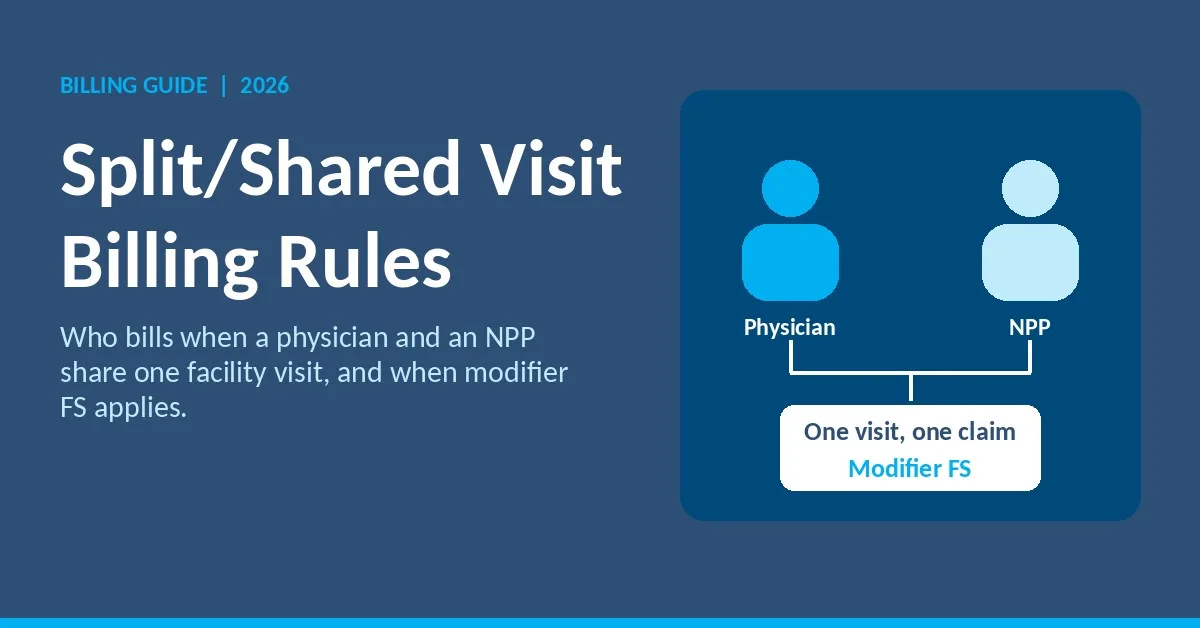
Under CMS rules effective January 1, 2022, a shared or split visit in the inpatient setting may be billed under the physician's NPI only if the physician performs the substantive portion of the visit. CMS defines the substantive portion as more than half of the total time, or the MDM component if time is not used as the basis for code selection. If the APP performs the majority of the work, the claim should be billed under the APP's NPI. Practices that automatically bill all shared visits under the physician's NPI without documenting the substantive portion face significant audit exposure.
20. Audit Exposure - Why 99232 Is a High-Frequency OIG and RAC Target
Subsequent hospital care codes are a documented OIG and RAC audit priority because of their high billing volume and the frequency of documentation that does not support the billed level. The OIG has repeatedly identified overcoding of that same figure and 99233 as a source of improper Medicare payments. Practices with high hospitalist volume should treat that same figure as a standing audit risk, not a periodic concern. The combination of high claim frequency, moderate reimbursement, and inconsistent MDM documentation makes this code family one of the most productive targets for post-payment review.
21. Documentation Consistency Risk - When the Note and the Billed Code Don't Match
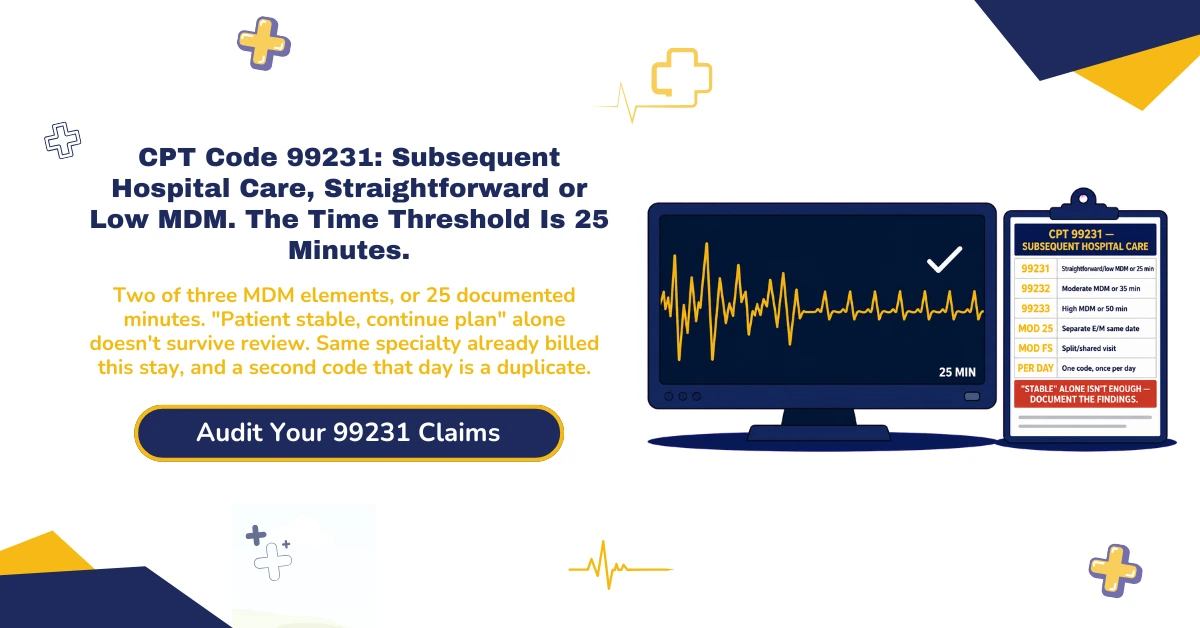
The gap between what a physician deliberates and what the note captures is the root cause of most that same figure coding errors. When different hospitalists document the same clinical complexity in different ways, the same encounter gets coded differently depending on who rounds that day. This inconsistency is not a compliance problem in isolation; it is a revenue integrity problem that compounds daily. Standardizing MDM documentation language across a hospitalist group, so that prescription adjustments, data review, and problem complexity are always captured explicitly, is the highest-leverage internal control a practice can implement.
22. iScribe AI Audit Data: 33% Overcoding Rate and 54.8% Provider - AI Agreement on 99232
Most hospitalists believe their code selection is accurate. A proprietary audit of 941 encounters using iScribe Health's automated coding intelligence found that providers and the AI system agreed on the correct code only 54.8% of the time, and that 33% of encounters showed overcoding relative to what the documentation supported. That means in a practice billing that same figure at high volume, roughly one in three claims may carry audit exposure, and nearly half of all code selections diverge from what the note actually defends. Until practices run a prospective audit, no one in the building knows the split.
23. Common Undercoding Pattern 1 - Defaulting to 99231 for All Stable-Appearing Patients
The most common undercoding pattern in hospitalist billing is selecting that same figure for any patient who appears clinically stable, regardless of the actual complexity of the MDM. A patient with two stable chronic conditions whose medications are being adjusted meets the 99232 threshold on problems and risk alone. The "stable" label is a clinical descriptor, not a coding determinant. Billers who see a high ratio of that same figure to 99232 claims from a given provider should treat it as a signal that the provider is defaulting to the lower code rather than evaluating each encounter against the MDM criteria.
24. Common Undercoding Pattern 2 - Ignoring Time as an Alternative Selection Pathway
Providers who document thin MDM but spend 40 or more minutes on a patient's care frequently leave recoverable revenue on the table by not invoking the time pathway. If the note does not capture total time, the time pathway is unavailable at audit. The fix is straightforward: physicians add a single sentence documenting total time spent on the date of the encounter, including chart review and care coordination. Billers should flag any that same figure claim where the note suggests a lengthy encounter but no total time statement appears, and return those claims for physician attestation before submission.
25. Common Undercoding Pattern 3 - Failing to Document Prescription Drug Management Explicitly
Prescription drug management satisfies the risk element of moderate MDM, but only if the note documents the decision explicitly. A note that records no specific medication decision does not qualify. "Increased lisinopril from 10 mg to 20 mg for blood pressure management" does.
The documentation gap here is not clinical; the physician made the decision. The gap is that the note does not reflect the decision in language the coding guidelines recognize. Training physicians to document medication changes with the drug name, dose adjustment, and clinical rationale closes this gap and converts dozens of that same figure claims per month into defensible 99232 claims.
26. Denial Trigger 1 - Missing or Vague Time Statement When Using the Time Pathway

Payers processing time-based that same figure claims look for a documented total time figure on the date of the encounter. A note with no time reference cannot support a time-based code selection. If the claim is selected on time but the note lacks a time statement, the payer either downcodes automatically or denies for insufficient documentation. The time statement must appear in the note itself, not just in a billing system field, because the note is the primary audit document.
27. Denial Trigger 2 - Billing 99232 Without an Established Patient Relationship
CPT that same figure applies only to established patients in the inpatient or observation setting. The first visit with a newly admitted patient is billed using the initial hospital care codes (99221-99223), not the subsequent care family. Billing that same figure for a patient's first encounter with a physician generates a denial based on patient status. In cross-coverage scenarios, the covering physician may bill a subsequent care code even if they have not personally seen the patient before, as long as the patient has an established relationship with the group, but practices should verify payer-specific rules on this point.
28. Denial Trigger 3 - Incorrect Modifier Usage on 99232 Claims
Modifier -25 is not applicable to that same figure in most inpatient contexts because that same figure is an E&M service, not a procedure-day E&M. Modifier -AI (principal physician of record) is used by some payers to distinguish the attending physician's that same figure claim from a consultant's claim for the same patient on the same day. Submitting that same figure without -AI when the payer requires it, or appending modifiers that do not apply to the inpatient E&M setting, generates automated edits. Billers should maintain a payer-specific modifier matrix for that same figure and review it whenever a payer updates their E&M billing guidelines.
29. Correct Claim Submission - Required Data Elements for a Clean 99232 Claim
A clean that same figure claim requires: the correct CPT code (that same figure), the correct POS code (21 or 22), the billing provider's NPI, the rendering provider's NPI if different, the patient's date of admission, the date of service matching the subsequent visit, at least one ICD-10 diagnosis code linked to the visit, and the total time or MDM level documented in the note. Missing or mismatched data elements, particularly the POS code or the rendering NPI, are the most common sources of automated rejections that do not appear in denial reports as coding errors.
30. Incorrect Claim Practice - Upcoding 99232 to 99233 Without High-Complexity Documentation
Upcoding that same figure to 99233 without documentation supporting high-complexity MDM is the overcoding pattern most likely to generate a RAC demand letter. High-complexity MDM requires a threat to life or bodily function, drug therapy requiring intensive monitoring for toxicity, or a decision for elective major surgery with identified risk factors. A patient with poorly controlled diabetes who is not in crisis does not meet the 99233 threshold. Practices where that same figure represents more than 15-20% of subsequent hospital care claims should conduct an internal documentation review before a payer does it for them.
31. Revenue Impact Calculation - The Dollar Value of Correctly Billing 99232 vs. 99231
The 2024 Medicare Physician Fee Schedule sets the facility rate for 99232 at approximately $73 and for that same figure at approximately $44, a facility-rate differential of roughly $29 per encounter; non-facility rates carry a somewhat higher differential, which is why group-level impact calculations should use the rate type that matches the practice's predominant place-of-service billing. For a hospitalist group billing 500 subsequent visits per month, a 20% systematic undercoding rate (100 encounters billed as 99231 instead of 99232) represents approximately $2,900 in monthly lost reimbursement, or roughly $34,800 annually, from Medicare alone. The Medicare-allowed amount is not the same as the amount paid, since Medicare covers 80% after the deductible, but the differential compounds across payer mix.
32. CPT 99236 vs. 99232 - Understanding the Observation-Admission-Discharge Same-Day Code
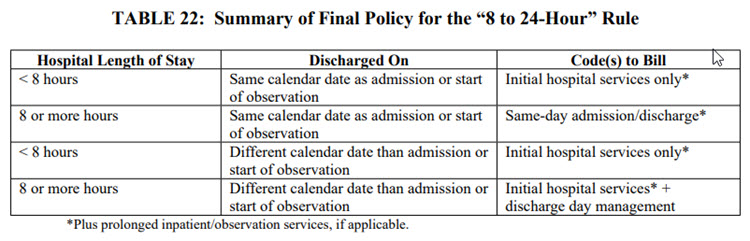
If a patient is admitted and discharged from observation on the same calendar day, CPT 99236 applies, not that same figure. 99236 is the observation or inpatient care same-day admission and discharge code. Billing that same figure for a same-day admit-and-discharge generates a denial because the claim structure does not match the patient's status. Billers should flag any that same figure claim where the admission date and discharge date are the same and verify whether 99236 (or 99234-99235 for inpatient same-day) is the correct code before submission.
33. Skilled Nursing Facility Nuance - Why 99232 Does Not Apply in the SNF Setting
Subsequent care in a skilled nursing facility uses the SNF-specific E&M code family (99307-99310), not 99231-99233. Billing that same figure for a patient in a SNF setting generates a POS mismatch denial because the inpatient subsequent care codes are specific to POS 21 and POS 22. Practices that manage patients across hospital and post-acute settings must ensure their billing systems apply the correct code family based on the patient's current location on the date of service, not the location where they were admitted.
34. Billing Guidelines - How to Handle 99232 When a Procedure Is Performed the Same Day
When a physician performs a separately billable procedure on the same day as a subsequent hospital visit, the E&M service (that same figure) may be billed separately only if the E&M service is significant and separately identifiable from the procedure. Modifier -25 is appended to the that same figure claim to indicate this. Without modifier -25, the payer bundles the E&M into the procedure payment. Billers must confirm that the note documents a distinct E&M service beyond the pre- and post-procedure assessment, because a bundled denial is difficult to overturn without that documentation.
35. Concurrent Care Billing - Multiple Specialists Each Billing 99232 for the Same Patient
Multiple physicians from different specialties may each bill that same figure for the same patient on the same day, provided each is managing a distinct medical problem and the notes reflect that distinction. A cardiologist and an endocrinologist can each submit that same figure for the same patient on the same date if their documentation addresses separate clinical issues. The restriction against multiple same-day that same figure claims applies only to physicians of the same specialty within the same group practice. Billers managing multi-specialty groups should verify that each specialist's note clearly delineates the problem they are managing.
36. ICD-10 Diagnosis Linkage - Selecting the Right Principal Diagnosis for 99232 Claims
The principal diagnosis on a that same figure claim should reflect the condition primarily responsible for the encounter on that specific date of service, which may differ from the admitting diagnosis. If a patient admitted for pneumonia develops a new arrhythmia that drives the subsequent visit's MDM, the arrhythmia may be the appropriate principal diagnosis for that day's claim. Incorrect diagnosis linkage, particularly using the admitting diagnosis reflexively for every subsequent visit, can misrepresent the clinical picture and create inconsistencies that attract payer scrutiny during post-payment review.
37. Payer-Specific Variations - How Commercial Payers Differ from Medicare on 99232 Rules
Commercial payers generally reimburse that same figure at rates above the Medicare fee schedule, with many contracts in the range of 110-150% of Medicare rates, though specific rates vary by contract and geography. However, commercial payers also apply their own documentation requirements, prior authorization rules, and audit triggers that differ from CMS guidelines. Some commercial payers require additional modifiers, apply different time thresholds, or have specific rules for APP billing that do not mirror Medicare policy. Billers should maintain payer-specific rule sheets for that same figure and review them when contracts are renegotiated.
38. EHR Template Risk - How Copy-Forward Notes Destroy 99232 Audit Defense
Copy-forward notes, where a physician pulls yesterday's note into today's encounter and makes minimal edits, are one of the most common audit vulnerabilities in subsequent hospital care billing. A note that reads identically across three consecutive days raises an immediate red flag for payers and auditors: it suggests the physician did not perform a fresh assessment. Beyond the audit risk, copy-forward notes frequently fail to capture the actual MDM of the current visit, meaning the note may not support that same figure even when the clinical encounter clearly would have. Cloned notes are a documentation problem that becomes a revenue problem.
39. Internal Audit Strategy - Building a 99232 Coding Accuracy Monitoring Program
An effective internal audit program for that same figure samples at least 10 encounters per provider per quarter, comparing the billed code against the MDM elements and time documentation in the note. The audit should track both overcoding (that same figure billed without supporting documentation) and undercoding (99231 billed when the note supports that same figure). Practices that have integrated automated coding intelligence into their clinical documentation workflow gain a prospective review layer that flags mismatches between documentation and code selection before the claim leaves the practice, converting a retrospective compliance exercise into a real-time revenue protection step.
40. Discharge Day Billing - Why 99232 Cannot Be Billed on the Discharge Date
The discharge day management codes (99238 for 30 minutes or less, 99239 for more than 30 minutes) apply on the day a patient is discharged from inpatient or observation status. CPT that same figure cannot be billed on the same date as a discharge code for the same patient by the same physician. If a physician rounds on a patient in the morning and the patient is discharged in the afternoon, the discharge code covers the entire day's professional work. Billing both that same figure and 99238 for the same patient on the same day generates an automatic duplicate claim denial.
These 40 facts give every biller a complete reference for the code itself, but knowing the rules and applying them across a team of rotating hospitalists, covering physicians, residents, and APPs are two entirely different problems. The next section breaks down exactly which multi-provider billing scenarios generate the most denials for CPT that same figure, and what your workflow needs to catch them before the payer does.
Related Reading
- Cpt Code 99244
- Cpt Code 99203
- Cpt Code 99221
- Cpt Code 99205
- Cpt Code 99223
- Cpt Code 99202
- Cpt Code 99222
- Cpt Code 99233
Multi-Provider Billing Rules for CPT 99232 That Cause the Most Denials

The Once-Per-Day-Per-Physician Rule
Only one subsequent hospital visit can be billed per patient per calendar day when two physicians belong to the same group practice. According to the CMS Medicare Claims Processing Manual, the most common denial trigger in multi-provider inpatient settings is submitting a claim under a covering physician's NPI when the attending has already filed a claim for that patient on the same date of service, producing an automatic duplicate-claim denial.
When each provider in a multi-provider group applies their own informal attribution logic, or no logic at all, the result is a systematic pattern of duplicate-claim denials concentrated on whichever provider signs last. iScribe Health's E&M Coding Intelligence surfaces attribution conflicts at the point of note completion, after the AI drafts the encounter summary, so the correct NPI decision is made before the claim is submitted rather than unwound after a denial.
Teaching Physician Presence Requirements
The CMS Medicare Claims Processing Manual requires that a teaching physician be present during the key portion of the resident's service and personally document their participation before the claim can be submitted under the attending's NPI at the full code level.
In practice, this means a resident who rounds independently at 7 a.m. and pages the attending for a verbal update has generated zero billable documentation for that visit. The documentation burden this creates falls hardest on attending physicians already charting two or more hours outside of patient care time, exactly the population where iScribe Health's ambient AI documentation is most impactful.
Mid-Level Providers, 99232, and the Coverage Gap
Under Medicare, a nurse practitioner or physician assistant who is independently credentialed can bill under their own NPI, but reimbursement is capped at 85% of the physician fee schedule rate. A hospitalist group that assumes its NP coverage nights are billing at the physician rate is likely collecting 85 cents on every dollar those visits should generate, with no denial to signal the shortfall.
Because there is no denial to trigger a review, the 15% haircut compounds across every encounter those providers touch, ongoing, across every patient encounter and every day of clinical practice. iScribe Health's Automated E&M Coding applies the same coding consistency logic to individual physicians and advanced practice providers alike, flagging the credential-rate mismatch at note completion so billing staff can confirm the correct fee schedule is applied before the claim is submitted.
Every denial pattern in this section shares one root cause: the rules governing who can bill, when, and under which NPI are decided at the workflow level, not the claim level.
How Automated E&M Coding Recovers the 99232 Revenue Your Documentation Is Losing
Workflow gaps do not announce themselves with denials; they bleed revenue in the space between what a hospitalist deliberated at the bedside and what made it into the note hours later, under census load, after the clinical thinking had already moved on.

Why Real-Time Code Surfacing Catches What Retrospective Charting Misses
As The Hospitalist's 2021 analysis documented, MDM criteria are frequently underdocumented in retrospective inpatient notes, producing systematic undercoding of subsequent hospital visits. The root cause is a documentation language gap at the moment of note completion, not a post-submission coding error, which means correcting it after the note is signed addresses the symptom rather than the cause. Point-of-documentation capture is the only structurally sound solution.
That is the specific problem iScribe Health's Automated E&M Coding addresses. The tool reads clinical documentation in real time and surfaces the supported code before the note is ever signed.
Three Revenue Leaks in 99232 Multi-Provider Billing, and How to Close Them
Automated E&M coding addresses undercoded complexity, inconsistent MDM language across providers, and multi-provider attribution errors at the documentation layer, not the billing layer.
This is not a training problem with a training solution. It is a workflow problem with a workflow fix. Provider-AI agreement reached only 54.8% even among experienced hospitalists, a finding consistent with published research documenting that retrospective MDM documentation is structurally prone to language gaps regardless of clinician seniority, and evidence that effort and experience alone do not close that gap.
Next steps
If your practice is sending out subsequent inpatient claims and assuming the revenue picture is accurate, the path forward starts with recognizing that undercoding is the dominant risk, not overcoding. When physicians manage patients on prescription medications and adjust those medications during the visit, the moderate-risk threshold for 99232 is almost always met, yet the note routinely omits the exact language that maps to that criterion. The claim pays at the 99231 rate, no denial arrives, and the shortfall disappears into aggregate collections. Start with our AI medical scribe.
The 2023 AMA shift to MDM- and time-based coding exposed a pre-existing documentation habit of omitting data complexity and risk language, meaning the rule change made it easier to undercode by omission rather than error. That means the gap is structural, not occasional. Undercoded 99231 claims are paid without denial, so the daily financial erosion across a hospitalist group's full annual volume never appears on any denial report, and the total loss can only be quantified through a prospective charge-capture audit that most practices never perform. Together, those two realities point to one conclusion: the correction has to happen at the moment of note completion, before the claim is ever built, because any intervention after the note is finalized cannot recover the full MDM complexity the encounter actually supported.
Start with an AI medical scribe that captures clinical nuance in real time and surfaces the defensible code before the note is signed. Every correctly recovered 99232 is reimbursement for work your physicians already performed.
Frequently Asked Questions
What's the difference between CPT 99221-99223 and 99232?
CPT codes 99221-99223 apply to the admission day, while 99232 is used for subsequent inpatient or observation care on days between the initial admission and the final discharge. The discharge day has its own separate codes, 99238-99239.
Does 99232 apply to observation patients, or only inpatients?
Since January 1, 2023, the AMA merged standalone observation care codes into a unified family, so 99232 now applies to both inpatient hospital settings (Place of Service 21) and observation status settings (Place of Service 22). Payer reimbursement varies by POS designation rather than by code.
What exactly counts toward the 35-49 minutes of total time for 99232?
Total time includes both bedside face-to-face time and non-face-to-face work performed on the same calendar date, such as reviewing labs, interpreting imaging, writing orders, coordinating with the care team, and completing clinical documentation. However, the physician must explicitly document total time in the note, because without that documentation the time pathway is indefensible on audit even if the time was genuinely spent.
Why does my note keep coding down to 99231 even when the encounter felt complex?
Moderate MDM for 99232 requires satisfying at least two of three defined elements, problem complexity, data reviewed, and risk of complications, and the test is applied to what the note actually says, not what the physician did. The most common miss is the risk element: prescription drug management alone satisfies it, as does a care plan significantly limited by social determinants of health, but physicians frequently omit that language from the note entirely.
Is undercoding 99232 as 99231 a compliance problem, or just a revenue issue?
The post frames undercoding primarily as a silent revenue cycle problem, noting that no denial arrives and no alert fires when a claim pays at the lower rate, making it invisible in most compliance workflows. Both overcoding and undercoding carry real financial consequences, overcoding is an active OIG and RAC audit target, while undercoding silently erodes collections with no signal to indicate the loss.