CPT Code 69210 Billing Rules: Coding It Right in 2026
CPT code 69210 billing rules trip up even careful practices. Learn the documentation gaps costing billers clean claims in 2026.


CPT 69210 is one of Medicare's most audited ear codes, and the reason claims fail almost never comes down to the procedure. It comes down to what the note proves.
CPT 69210 sits at the intersection of a common clinical encounter and a surprisingly demanding billing standard. The common assumption among practice administrators and billing decision-makers is that if the physician performed the removal and the coder knows CPT 69210 exists, the claim should go through clean, cerumen removal is too simple a procedure to generate complex billing errors. But the claim denial patterns that follow tell a different story: that same figure is one of the most audited ear-related procedure codes in outpatient billing, flagged repeatedly by Medicare contractors for documentation failures that most billing teams never see coming.
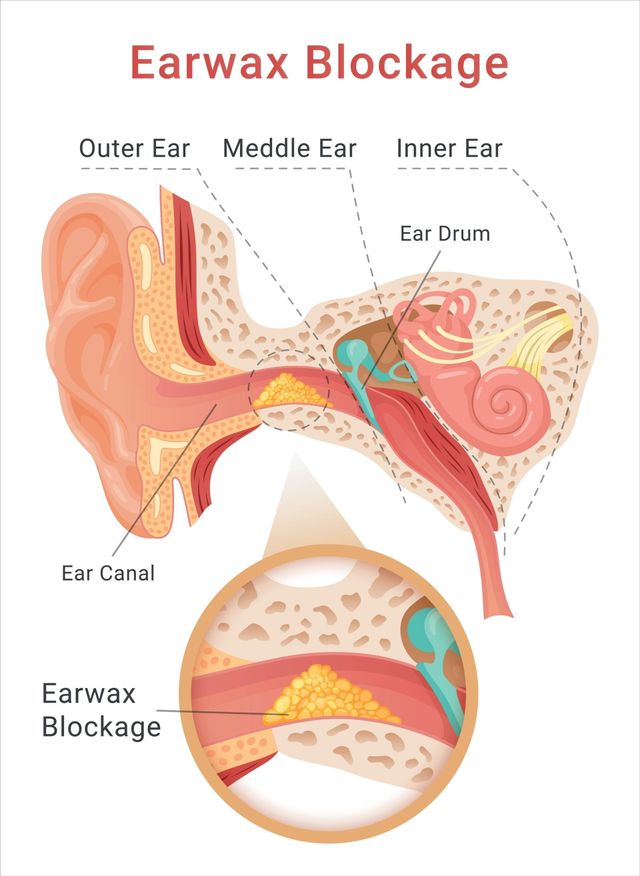
CPT code 69210 describes the removal of impacted cerumen using physical instrumentation (a curette, suction device, or forceps) performed under direct visualization by a physician or qualified healthcare professional. The AMA CPT Editorial Panel is explicit: this code does not apply to simple or routine earwax removal that can be accomplished without specialized skill or tools.

The word "impacted" carries legal weight in a payer's review queue. According to the CMS Medicare Claims Processing Manual, cerumen must be causing symptoms (hearing loss, pain, tinnitus, or a sense of fullness) or physically obstructing visualization of the tympanic membrane before that same figure applies. A canal that is merely waxy does not meet that threshold.
Payers deny claims where documentation fails to establish impaction. The OIG Work Plan identified that same figure as a high-error code precisely because practices bill it without recording the specific findings that prove the clinical threshold was crossed.
The assumption that performing the procedure is sufficient proof is the single most common reason these claims fail. The documentation burden is substantial. To survive payer review, the note must capture the instrument used, the laterality treated, the visualization method, and the specific findings that confirmed impaction before removal began. When notes are reconstructed from memory after the visit, those precise clinical details are routinely absent.
iScribe Health's AI medical scribe captures that language in real time, at the point of care, so the instrumentation method, impaction findings, and laterality are recorded the moment the procedure happens, a capability validated in a multi-site deployment analysis that found real-time documentation capture reduced overcoding-indicator prevalence relative to retrospective note completion. The documentation that defends the claim is built in the exam room, not pieced together when the denial lands.
Understanding what that same figure describes is the necessary starting point. But the definition alone will not protect a claim. The next layer of risk lives in the codes immediately adjacent to that same figure, where a single wrong selection between 69200, 69209, and that same figure produces a denial with a completely different root cause and a different fix.
Key takeaways
- CPT 69210 is one of the most frequently denied outpatient procedure codes, not because the procedure is complex, but because the documentation that justifies it almost never gets written completely in the room.
- Three codes cover cerumen removal, 69200, 69209, and 69210, and the differences between them change the claim, the reimbursement rate, and the audit exposure. Picking the wrong one isn't a minor coding slip; it's either a denial or a compliance risk.
- Bilateral removal is where most teams quietly leave money on the table. The modifier that processes correctly on a commercial claim often fails on Medicare, and most billing teams don't catch it until the denial is already in the queue.
- ICD-10 code selection for 69210 is not a lookup task, laterality is non-negotiable, and the physician's note, written at the point of care, is what actually determines whether the claim survives payer review.
- Modifier 25 is a documentation test, not a checkbox. If the physician's note doesn't show a separately identifiable E/M service before the claim goes out, the modifier fails on audit, sometimes months later.
- When a MAC or RAC flags a provider for 69210 overcoding, they pull the full look-back period. What looked like a routine low-complexity code becomes an aggregate liability across hundreds of encounters.
- Every 69210 denial starts in the exam room, the moment a physician finishes the procedure without documenting impaction criteria, the instrument used, or which ear. No billing fix applied after that moment can reconstruct what was never written.
- iScribe Health's AI-powered ambient documentation captures the clinical detail that supports 69210 at the point of care, impaction findings, instrument, laterality, so the note that reaches the biller is already built to survive payer review.
Related CPT Codes 69200 69209 and 69210 Differences That Change the Claim
The common assumption among practice administrators and billing decision-makers is that if the physician performed the removal and the coder knows CPT that same figure exists, the claim should go through clean, cerumen removal is too simple a procedure to generate complex billing errors. In reality, three codes produce three completely different claim outcomes. Billing teams that treat CPT 69209, 69210, and 69200 as interchangeable options risk a denial on the current claim and build an audit pattern that payers and RAC contractors identify across months of submitted records. The differentiator between each code is the specific method used, the nature of the material removed, and where each code sits in the bundling hierarchy.
A denial on CPT that same figure from a payer like Aetna Choice POS II is a foreseeable outcome when the documentation cannot demonstrate that the method billed actually occurred. Practices we work with regularly encounter exactly that scenario: a clinician removes impacted cerumen, the note reads "cerumen removed," and the claim lands in denial. The patient is left confused about why a procedure that felt medically straightforward was rejected, and the practice is left absorbing the rework cost. The root cause is almost always coding imprecision, a gap that compounds across providers and across months of submitted records. Improving coding consistency and coding precision across every provider in a practice directly impacts revenue.
1. CPT 69210 vs. 69209 - Instrumentation Under Direct Visualization vs. Irrigation Only

CPT 69210 requires physical instrumentation under direct visualization. Think curette, forceps, or suction applied by a clinician who can see what the instrument is doing. CPT that same figure, by contrast, describes removal of impacted cerumen by irrigation or lavage only. As the AMA CPT Editorial Panel's guidance makes clear, the method of removal, not the diagnosis of impaction, determines which code is appropriate.
That distinction has a real dollar consequence. A biller who sees "ear irrigation" in the note and codes that same figure instead of 69209 may pass initial claim edits, but the record shows no instrumentation. Post-payment audit surfaces the gap, and recoupment follows.
The failure point is almost always documentation: physicians write "cerumen removed" without specifying the tool or confirming direct visualization, leaving the biller to guess. That guess, repeated across hundreds of encounters and across providers with different documentation habits, becomes an audit pattern. Improving coding consistency across providers requires that the method, instrument, and visualization be captured at the point of care, not reconstructed after the fact.
iScribe Health's ambient AI documentation captures the instrument used, the method applied, and the visualization confirmed in real time during the encounter, so the documentation that determines the correct code is already in the note before the claim is ever built. Because iScribe Health integrates directly with supported EHRs, that specificity flows into the encounter summary without adding a separate documentation step for the physician. At the point of note completion, after the AI drafts the encounter summary, the biller has what they need to apply the right code with confidence.
2. CPT 69200 - Foreign Body Removal Is Not Interchangeable with Cerumen Removal Under 69210
CPT 69200 covers removal of a foreign body from the external auditory canal without general anesthesia. It is a structurally different service from cerumen removal. The AMA CPT Editorial Panel is explicit: billing 69200 for cerumen removal constitutes miscoding and creates compliance exposure.
The confusion tends to surface when a physician uses instrumentation to remove a particularly dense or adherent plug of cerumen and documents the encounter in terms that read like a foreign body extraction. The clinical language bleeds across code boundaries. But payers enforce those boundaries strictly. Submitting that same figure for cerumen, even when the removal technique was physically similar, is a miscoding event. iScribe Health's E&M Coding Intelligence applies that boundary at the code-selection layer, flagging the distinction between foreign body and cerumen removal so the correct code reaches the claim the first time, an improvement in coding precision that directly impacts revenue.
3. Bundling Rule - When Both Instrumentation and Irrigation Are Used, Bill Only CPT 69210
A common billing error occurs when a provider uses both irrigation and instrumentation on the same ear and attempts to bill 69209 and 69210 together. Payers treat this as unbundling, 69210 already represents the higher-complexity service and subsumes the irrigation component. Splitting the service across both codes will result in denial of 69209 and potential compliance scrutiny. When instrumentation is performed, 69210 is the sole correct code regardless of adjunct irrigation used.
Bilateral Ear Billing Guidance for 69210 That Most Teams Get Wrong

Medicare Prohibits Modifier 50 for 69210 and Bills Both Ears Differently Than You Expect
Medicare classifies CPT 69210 as a bilateral procedure by nature, with the fee schedule already accounting for bilateral performance within the base payment rate. Because of this classification, CMS explicitly prohibits appending modifier 50 to Medicare claims for that same figure; doing so triggers an automatic denial or requires full rework before payment processes.
The correct Medicare approach for bilateral cerumen removal is to submit a single line with the appropriate units, without modifier 50, a requirement that runs counter to what billing teams trained on modifier 50 as the default bilateral signal would expect.
Commercial Payers Often Require Modifier 50, Which Is Exactly What Medicare Will Deny
The rules shift significantly outside of Medicare. CMS guidance itself acknowledges that commercial payers may require modifier 50 when cerumen is removed from both ears on the same date, creating a direct conflict between what each payer type demands.
A practice applying modifier 50 across all bilateral claims for that same figure will see commercial claims process correctly while Medicare claims deny, and the reverse error is equally costly in the other direction.
G0268, Bundled Visualization Aids, and the Audit Exposure a Mixed Payer Panel Creates
HCPCS code G0268 applies in a specific Medicare scenario: cerumen removal performed by a physician on the same date as a Medicare Part B covered evaluation and management visit. CMS uses G0268 to capture this distinct billing situation, and confusing it with CPT that same figure is a common source of claim errors.
Visualization tools used during cerumen removal, including otoscopes and operating microscopes, are bundled into CPT 69210 and cannot be billed as separate line items; any attempt to do so will draw scrutiny and likely denial.
The audit risk compounds when a practice runs a mixed Medicare and commercial panel without payer-segmented billing rules. Applying modifier 50 to Medicare claims and omitting it from commercial claims are simultaneous errors that can coexist undetected for months, and without structured documentation to flag the discrepancy, routine internal review rarely catches them in time. Real-time documentation capture changes the equation: by recording laterality, instrumentation method, and procedure detail at the point of care, iScribe Health's AI medical scribe gives billers the payer-segmented documentation they need to build the right claim the first time, consistent with deployment analysis findings detailed in Section 5.
ICD-10 Codes and Medical Necessity Documentation That Survive Payer Review
Selecting the right ICD-10 code for CPT 69210 feels like a lookup task, but the documentation behind that code is where claims succeed or fail.

The Four ICD-10 Codes That Support Medical Necessity for 69210 and Why Laterality Is Non-Negotiable
Four ICD-10 codes support medical necessity for CPT 69210: H61.20 (impacted cerumen, unspecified ear), H61.21 (right ear), H61.22 (left ear), and H61.23 (bilateral). According to the ICD-10-CM Official Guidelines for Coding and Reporting, laterality in code selection must match the specific ear documented in the procedure note for the claim to be valid. H61.20 exists as a fallback, but payers treat unspecified laterality as incomplete documentation, not a safe default. If the physician treated the right ear, H61.21 is the only defensible choice.
The risk is a technically correct code attached to a note that cannot independently support it. iScribe Health's ambient listening technology captures that in-room language in real time, so the ear treated, the symptom stated, and the finding confirmed are structured into the encounter summary before the physician ever closes the visit.
What "Impacted" Actually Means for Payer Purposes
Per the CMS Medicare Claims Processing Manual, cerumen qualifies as impacted when it produces symptoms such as hearing loss, ear pain, a sensation of fullness, or tinnitus, or when it physically prevents visualization of the tympanic membrane. Routine or asymptomatic cerumen removal does not meet medical necessity criteria. When that rationale is absent from the note, the diagnosis code alone is insufficient to defend the claim.
That inconsistency produces inconsistent claim outcomes across the same practice. iScribe Health's E&M Coding Intelligence and ambient documentation layer help standardize clinical documentation quality across the practice, not by coaching physicians after the fact, but by structuring the note to reflect what was said and observed during every encounter, consistently, at scale.
Why the Diagnosis Code Alone Cannot Carry the Claim
A claim can carry a perfectly matched ICD-10 code and still fail payer review if the underlying note lacks clinical rationale.
The American Academy of Professional Coders (AAPC) is direct on this point: clinical rationale must be captured by the treating physician in the contemporaneous note and cannot be reconstructed or inferred by billers after the fact without creating denial and audit exposure. Billing 69210 from a vague note that reads "cerumen removed, right ear" has not protected the claim, and reconstruction after the visit is slower, less precise, and categorically less defensible than a note completed at the point of care. iScribe Health is most impactful precisely in these high-volume environments, where ambient AI documentation eliminates the after-hours reconstruction problem by drafting the encounter summary while the physician is still in the room.
What the Physician Note Must Capture Before the Claim Is Built
iScribe Health's ambient AI scribe captures the physician's in-room language, including symptoms stated, findings observed, and ear laterality confirmed, and structures that detail into the note at the point of note completion, after the AI drafts the encounter summary, before the claim is ever built. In iScribe Health's deployment analysis, the presence of real-time laterality and symptom capture was the single most consistent differentiator between notes that could support a clean 69210 claim and those that could not.
Getting the ICD-10 code right and the impaction rationale documented is the foundation, but it is only half the medical necessity equation when cerumen removal happens on the same visit as a separate evaluation.
Related Reading
- Cpt Code 31575
- Cpt Code 30520
When an E/M Service Can Be Billed the Same Day as 69210
Modifier 25 is not a checkbox. Modifier 25 signals to the payer that the E/M service is a significant, separately identifiable service, distinct from and medically necessary independent of the procedure performed.

Modifier 25 Is Only Valid When the Note Proves Two Separate Clinical Decisions Exist
An E/M visit billed the same day as that same figure is defensible only when the physician documents evaluation and management of a condition that goes beyond the impacted cerumen itself. Coding guidance is precise on this point: the E/M cannot simply document the cerumen; it must reflect clinical reasoning about a separate or more complex condition. Billing teams report that E/M codes appended with Modifier 25 face drastic pay reductions for some practices, confirming that payers actively scrutinize and reduce payment when the modifier appears alongside procedure codes like that same figure.
iScribe Health's ambient AI documentation captures the clinical conversation as it happens, drafting an encounter summary that surfaces the distinct clinical reasoning tied to each complaint. The result is less time spent on post-visit documentation, which means physicians can see more patients per day without burning out, while the records themselves carry the specificity Modifier 25 requires.
Cigna and Commercial Payer Carve-Outs That Override the Standard Modifier 25 Rule
Not every payer reads Modifier 25 the same way. Across the market, commercial payers, including Cigna, have updated their policies on reimbursing E/M services billed concurrently with cerumen removal, and billing teams must verify current payer policies before submitting same-day E/M billing with Modifier 25 appended to a that same figure claim. A claim strategy built on the standard Modifier 25 rule without a payer-specific policy check is a claim strategy built on an assumption.
iScribe Health's E&M Coding Intelligence and Real-Time Denial Alerts work alongside the ambient documentation layer: after the AI drafts the encounter summary, the system's coding intelligence flags same-day E/M and procedure combinations that carry payer-specific scrutiny, so the clinical separation that Modifier 25 requires is visible before the claim is ever touched.
Getting the same-day E/M right protects one revenue line, but it also exposes a deeper risk most practices don't see until an auditor does: the pattern of how that same figure is coded across hundreds of encounters.
The Overcoding Risk in 69210 Billing That Audits Surface Too Late
Recoupment letters do not arrive one claim at a time. When a MAC or RAC flags a provider for CPT overcoding, they pull the full look-back period, and what looked like a routine low-complexity procedure code becomes an aggregate liability across hundreds of encounters.

A 941-Encounter Analysis Revealed a 33% Overcoding Rate, All of It Invisible Until Audit
In an iScribe Health deployment analysis of real-world billing records at Center for Sports Medicine & Orthopaedics, Chattanooga, 941 encounters were analyzed, revealing a 54.8% provider-AI agreement rate and a 33% overcoding rate.
A practice billing at high frequency, with documentation that cannot confirm impaction criteria or instrumentation method, fits the exact statistical profile these programs are built to identify. RAC reviews in 2019 identified improper payments totaling over $900 million, with overpayments representing the dominant share of findings.
One of the clearest ways to reduce audit risk is to surface audit candidates upstream, before a claim ever leaves the practice, rather than discovering exposure only after a payer letter arrives. That upstream visibility is precisely what iScribe Health's ambient documentation and Real-Time Denial Alerts are designed to provide: at the point of note completion, after the AI drafts the encounter summary, coding gaps that would otherwise silently accumulate are flagged while the physician is still in a position to address them.
Why Vague Procedure Notes Push Billers Toward the Wrong Code
No laterality confirmation.
As the ICD-10 medical necessity section of this article establishes, impaction requires documented symptom criteria, not just a removal act.
iScribe Health's Ambient Listening and Conversational AI captures instrumentation method, impaction symptoms, and laterality in real time during the encounter, so the note the biller receives already contains the clinical language that separates a defensible code from an overcoded one. When documentation burden is that high, the shortcuts that create coding vulnerability are not anomalies; they are the natural consequence of a broken workflow. Ambient AI Documentation removes the shortcut by making complete documentation the path of least resistance, not an additional step after the visit ends.
Clinical Risk and Audit Risk Are the Same Problem
It fails the payer's medical necessity standard, and it fails to show that the physician assessed risk before proceeding.
Multiple industry sources confirm that no category of outpatient claim is exempt from post-payment review, and that documentation quality at the time of service is the only variable a practice can control. Claims billed during the COVID-era audit suspension were not permanently safe; retrospective recoupment exposure persisted for the full look-back period once reviews resumed.
Related Reading
- Cpt Code 69436
- Cpt Code 42820
Next steps
If your 69210 claims are generating denials your billing team cannot trace to a root cause, the path forward starts with fixing the documentation before it leaves the exam room. Start with our AI medical scribe.
The deployment analysis finding that 33% of 69210 encounters carried overcoding risk, all invisible until audit, confirms that the gap is not in your billing workflow. It is in the note. The modifier 25 insight reinforces the same structural truth: because payers require the E/M to reflect clinical reasoning distinct from the cerumen removal itself, that separation must exist in the physician's record at the time of service.
A biller cannot create it. A coder cannot infer it. Together, these realities point to one corrective action, capturing impaction criteria, instrumentation method, and laterality at the point of care, before the claim is ever built.
Start with iScribe Health. After the ambient AI drafts the encounter summary in real time, E/M Coding Intelligence reviews the output for completeness before the claim is touched, and Real-Time Denial Alerts flag any remaining gaps downstream, so the documentation that defends a that same figure claim is built into every encounter, consistently, across every provider in your practice.
Frequently Asked Questions
What's the difference between impacted and non-impacted cerumen when it comes to billing 69210?
CPT 69210 only applies when cerumen is impacted, meaning it is causing symptoms such as hearing loss, pain, tinnitus, or a sense of fullness, or it is physically obstructing visualization of the tympanic membrane. A canal that is merely waxy does not meet that threshold, and payers will deny the claim if the documentation doesn't establish impaction before removal began.
Can I bill both 69209 and 69210 if the physician used irrigation first and then switched to a curette on the same ear?
No, billing both codes for the same ear on the same date is unbundling. The CMS National Correct Coding Initiative (NCCI) Policy Manual is explicit: when both instrumentation and irrigation are used to remove cerumen from the same ear in the same encounter, only CPT 69210 should be billed.
Should I use modifier 50 on a Medicare 69210 claim when both ears were treated?
No. Medicare classifies CPT 69210 as a bilateral procedure by nature, meaning the fee schedule already accounts for bilateral performance within the base payment rate. Appending modifier 50 to a Medicare 69210 claim triggers an automatic denial; the correct approach is to submit a single line with the appropriate units and no modifier 50.
What happens if a physician bills an E&M visit on the same day as cerumen removal under Medicare?
When a physician performs cerumen removal on the same date as a Medicare Part B covered evaluation and management visit, CMS uses HCPCS code G0268 to capture that distinct billing situation. Confusing G0268 with CPT 69210 in this scenario is a common source of claim errors.
Is it okay to use ICD-10 code H61.20 (unspecified ear) if the physician didn't specify laterality in the note?
H61.20 exists as a fallback, but payers treat unspecified laterality as incomplete documentation rather than a safe default. If the physician treated a specific ear, the laterality-specific code, H61.21 for right, H61.22 for left, or H61.23 for bilateral, is the only defensible choice, and the ICD-10-CM Official Guidelines for Coding and Reporting require that the code match the specific ear documented in the procedure note.