CPT Code 59025 Explained: What Coders Need to Know
CPT code 59025 denials hit billing teams hard. Learn what documentation gaps cost practices and how to stop them before claims fail.


CPT 59025 denials rarely come from wrong code selection. They come from documentation written before the claim, and fixing that gap is simpler than most billing teams think.
The common assumption among practice administrators and billing decision-makers is that selecting the right CPT code is the primary determinant of whether an NST claim gets paid, so denial investigations focus on code selection rather than the underlying note. CPT code 59025 is one of the more precisely defined codes in antepartum billing, yet it generates a disproportionate share of denied claims across OB-GYN practices. Most of those denials have nothing to do with the code itself.
The instinct when a claim comes back denied is to audit the charge sheet. In the case of CPT 59025, that investigation almost always ends at a dead end, because the code selection is rarely the problem. Practices that have examined their denial patterns at the note level are discovering that the real failure happens much earlier, at the point of care, before the claim ever reaches the payer, a pattern consistent with CMS CERT Report findings that documentation insufficiency, not code selection, is a leading driver of improper payments.
See our AI medical scribe for how this works in practice. CPT that same figure describes a fetal non-stress test (NST): external electronic fetal heart rate monitoring that records fetal heart rate in response to fetal movement, without inducing contractions or using oxytocin stimulation. That last clause matters.

The absence of contraction induction is what separates a billable NST from a contraction stress test and from routine intrapartum monitoring, which is bundled into the global obstetric package and not separately reimbursable. The code applies specifically to antepartum assessment of fetal well-being, ordered as a standalone procedure outside of labor admission. The AAPC Medical Billing and Coding Forum makes the mechanism clear: what separates a reimbursable CPT that same figure claim from one that gets denied is whether the clinical note documents the reason the NST was ordered as a standalone antepartum assessment rather than routine admission monitoring.
That documentation gap compounds quickly. In a busy antepartum setting, the note gets finished quickly, clinical context goes unstated, and a payer cannot distinguish the encounter from a labor check. Because CPT that same figure is high-volume, structurally incomplete notes accumulate across dozens of claims per week. AI-powered ambient scribing captures the fetal monitoring language payers require in real time, before the documentation gap becomes a denial. Before a single claim can survive payer review, the note behind it must describe something very specific: the equipment used, the monitoring duration, and the fetal response data the payer expects to see.
Key takeaways
- CPT 59025 denials almost never trace back to wrong code selection, they trace back to a clinical note that failed to document what the provider actually did.
- A billable NST requires two named devices, a documented monitoring duration, and a written physician interpretation, a note that says 'NST performed' gives payers a factual basis to reclassify or bundle the service.
- Medical necessity isn't established by a high-risk diagnosis like GDM alone; payers require explicit documentation of the clinical indication that triggered that specific NST on that specific date.
- Billing only one unit of CPT 59025 when two clinically distinct NSTs occurred on the same date isn't conservative coding, it's a documented revenue loss.
- Modifier selection, global OB package exclusion, and the NST-versus-labor-check distinction all live in the same clinical note written hours before the claim reaches a biller.
- Coding-related denials surged more than 125% in 2024, and up to 65% of denied claims are never resubmitted, most practices are quietly absorbing losses they could prevent.
- iScribe Health's ambient AI documentation captures the equipment, duration, indication, and physician interpretation in real time, so the note that reaches your biller already contains what payers require to pay CPT 59025 claims.
What Equipment and Monitoring Duration a Billable NST Actually Requires
A note that documents "NST performed" without naming the equipment or stating how long the monitoring ran gives payers a factual basis to reclassify the service entirely, often as routine labor monitoring bundled into the global obstetric package and reimbursed at zero.

The Two Devices That Must Appear in Every 59025 Note
A billable non-stress test requires two externally applied devices documented by name. According to the American College of Obstetricians and Gynecologists, fetal heart rate monitoring uses a cardiotocograph to record the fetal heartbeat alongside a tocodynamometer to detect uterine contractions; both must be in place for a complete NST, and both must be explicitly named in the note.
When a note is silent on device use, payers cannot confirm a complete external fetal monitoring setup occurred, and denial follows. One of the most persistent documentation gaps practices face is inconsistency: a thorough note on Monday, a sparse one on Friday afternoon, because device naming is left to clinician memory under time pressure. iScribe Health's Ambient Listening and Conversational AI captures the spoken clinical encounter in real time, so equipment names surface in the draft note automatically at the point of care, standardizing clinical documentation quality across every provider and every shift.
The 20-Minute Minimum and What to Document When the Test Runs Longer
A standard NST runs for a minimum of 20 minutes. ACOG guidance is clear: if the fetus does not demonstrate the required accelerations within that window, the test is extended, and documentation must reflect both the actual duration and the clinical rationale for any extension. Start time, end time, and the reactivity finding that drove any extension are each discrete documentation elements. A note that records only the 20-minute baseline when monitoring ran 40 minutes misrepresents the service and creates audit exposure.
- Record the actual start time of monitoring
- Record the actual end time of monitoring
- Document the reactivity finding that drove any extension beyond 20 minutes
- State the clinical rationale for any extended monitoring duration
Capturing these elements accurately in the moment is where ambient documentation provides a direct advantage. Because iScribe Health's ambient documentation materializes at the point of note completion, after the AI drafts the encounter summary from the live conversation, the actual monitoring duration is already captured before the encounter closes rather than reconstructed hours later.
Why Physician Interpretation and a Written Report Are Non-Negotiable Billing Components
Industry research specifies that fetal heart rate monitor interpretation by a physician or qualified healthcare professional, along with production of a written report, are both required; without both, the encounter does not meet the requirements for a professional service. Each element is individually auditable, meaning a note that documents duration and device use but omits a signed interpretive statement can still result in denial or recoupment.
The precise procedural language payers require, equipment named, duration stated, reactivity interpreted, and a signed written report, is often left to memory and a rushed note. iScribe Health's Ambient AI Documentation captures that language in real time at the point of care, so the note already contains every required element before it reaches the billing queue. For practices already operating on a supported EHR, iScribe Health integrates directly into that existing workflow, so the richer, structurally complete note lands inside the EHR without a separate charting step.
Clinical Indications That Justify Ordering a Fetal Non-Stress Test
Gestational diabetes affects a significant share of pregnancies in the United States, making it the single most common clinical backdrop for CPT that same figure orders. Yet payers do not treat a standing GDM diagnosis as automatic authorization. Medical necessity for CPT that same figure is established not by the presence of a high-risk diagnosis alone, but by explicit documentation of the specific clinical indication in the note corresponding to the date of service on which the NST was performed. The diagnosis gets you in the room. The per-encounter note gets you paid.
"Fetal Growth Restriction (FGR/IUGR) is a primary clinical indication for ordering a Non-Stress Test (NST), with patients being placed on twice-weekly NST monitoring schedules."
— what we hear from obstetric healthcare providers
The diagnosis gets you in the room. The per-encounter note gets you paid.
The same criteria make clear that ICD-10 codes submitted with CPT that same figure must directly align with the clinical indication documented in the provider's note. Mismatched diagnosis codes, even when the CPT code itself is correct, are a leading trigger for medical necessity denials on NST claims. That is the gap most billing teams miss.
They treat ICD-10 pairing as a back-office task, separate from what the physician said in the note. In practice, the indication language in the note must do two jobs simultaneously: justify the test clinically and anchor the correct ICD-10 code. When those two functions are handled as separate steps, denials follow.
A patient at 41 weeks presenting with decreased fetal movement is a clear example. The note must state the indication explicitly, paired with a code such as O36.8130, not leave the coder to infer it from visit context. "Routine monitoring" written in the note while the submitted code implies acute medical necessity is a contradiction payers flag on review.
41 weeks
Gestational age when post-term NST is triggered
Providers who verbalize their NST rationale during the encounter, "I'm ordering this today because her glucose control has deteriorated and I want to assess fetal reactivity", are giving coders exactly what they need. But that reasoning evaporates the moment the encounter ends if no one captures it in real time. iScribe Health's ambient scribing platform captures that per-encounter indication language at the point of care through Ambient Listening and Conversational AI, so the note arrives in the coder's queue already containing the explicit justification payers require, before a denial has the chance to occur.
At the point of note completion, after the AI drafts the encounter summary, E&M Coding Intelligence applies an additional layer of review, flagging ICD-10 and CPT pairings that do not align with the documented indication before the claim ever leaves the practice. The real-time capture approach is particularly valuable in high-volume practices where clinicians regularly chart two or more hours outside of patient care time, where multiple providers document the same procedure type differently, and where no systematic pre-submission audit of indication specificity exists. IT and EHR administrators, as well as clinical informatics teams, can standardize documentation quality across the entire practice through EHR Integration, so the same discipline applied to one provider's NST notes extends to every physician, nurse practitioner, and clinical staff member ordering the same test.
Below are the six qualifying indications recognized under OB-GYN coding guidelines, and the documentation logic each one demands.
1. Gestational Diabetes - Fetal Surveillance Trigger Requiring Explicit NST Justification

Gestational diabetes is the most frequently documented NST indication, but volume does not protect against denial. The note must state why surveillance is warranted on that specific date, not simply reference the GDM diagnosis. A note citing the specific clinical trigger, such as worsening glucose control and the need to assess fetal reactivity, gives the coder the clinical anchor needed to pair O24.419 or the appropriate trimester-specific code with CPT 59025. A note that omits that reasoning does not. iScribe Health's ambient documentation captures that reasoning verbatim as the provider speaks it, so the distinction between a defensible note and a vulnerable one is never left to memory or post-encounter reconstruction.
2. Preeclampsia and Gestational Hypertension - High-Stakes Indications With Tight ICD-10 Pairing Requirements

Preeclampsia and gestational hypertension carry some of the tightest ICD-10 specificity requirements in antepartum billing. The HealthPartners coverage criteria distinguish preeclampsia by severity and trimester, and the note must reflect that same level of detail. A note documenting the provider's specific clinical findings and stated rationale for assessing fetal status supports a defensible O14.x pairing. A generic "hypertension monitoring" note submitted against a preeclampsia code creates the kind of mismatch that payers flag as a medical necessity failure, not a clerical error. Practices where multiple providers manage the same high-risk population, and where note language varies by clinician habit, face compounding exposure on every encounter in this category.
3. Intrauterine Growth Restriction (IUGR) - Surveillance Indication With Strong ICD-10 Specificity Demands
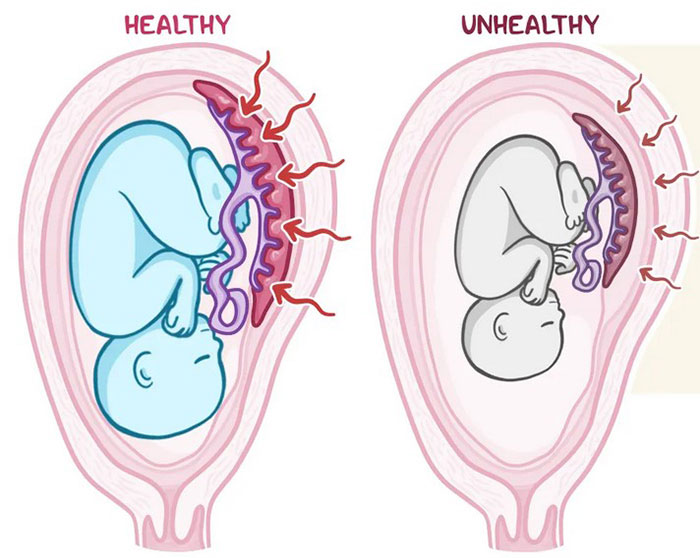
IUGR is a primary driver of twice-weekly NST schedules, a frequency that amplifies documentation risk across every encounter. Mothers placed on ongoing IUGR surveillance face a documentation burden that compounds with each visit: the note must confirm the growth concern remains active on that date of service, not simply reference a prior ultrasound finding. Practices see this acutely when anxious patients return after growth scans showing abnormally low percentiles for limb and head measurements, encounters where the clinical picture is urgent but the documentation under time pressure is often thin. ICD-10 code O36.5930 and its trimester variants require the note to confirm the indication remains active on the date of service.
4. Post-Term Pregnancy - Time-Sensitive Indication Where Date-of-Service Documentation Is Critical
Post-term pregnancy (41 weeks and beyond) is a time-defined indication, which means gestational age confirmation on the date of service is not optional. HealthPartners' coverage criteria make clear that payers reviewing post-term NST claims look for the gestational age stated in the note, not just in the problem list. A note that documents the confirmed gestational age and the clinical indication on that date gives the coder the clinical and temporal specificity needed to support O48.1. A note that omits the confirmed gestational age on that date leaves the claim exposed.
5. Decreased Fetal Movement - Symptom-Driven Indication Requiring Same-Day Clinical Narrative
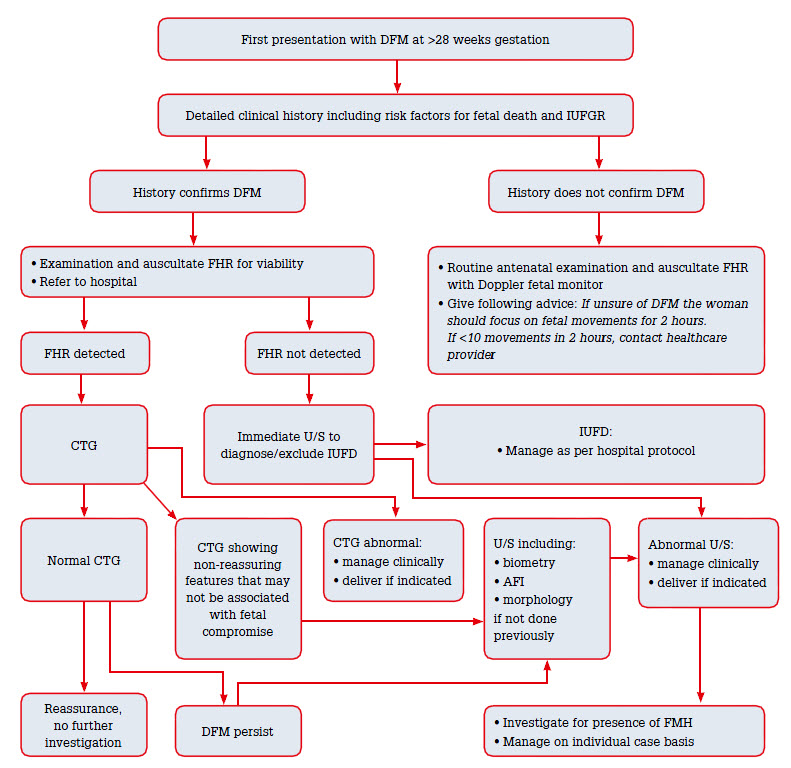
Decreased fetal movement is a symptom-driven indication, which means the note must capture the patient's report and the clinical response on the same date of service. It is one of the clearest examples of an indication that cannot be inferred from a standing diagnosis. A significant decrease in fetal movement is a primary clinical trigger for ordering an NST, and the complexity deepens when the mother has an anterior placenta that naturally dampens perceived movement, a nuance that belongs explicitly in the note to explain why clinical concern is warranted even when kick counts appear borderline.
8130 or the appropriate code, not a generic "fetal monitoring" entry that gives payers no clinical story to evaluate. iScribe Health captures the patient's reported symptom history and the provider's stated clinical response in real time, so that same-day narrative is already in the note before the encounter closes.
6. High-Risk Diagnosis Alone Does Not Establish Medical Necessity - The Indication Must Be Explicitly Stated

The HealthPartners 2024 coverage criteria state this directly: a high-risk diagnosis in the problem list does not establish medical necessity for a specific NST encounter. The provider must document why the test was ordered on that date. Payers treat an undocumented indication as an absent one.
The gap is not effort. The gap is visibility. Coders reviewing notes after the fact cannot reconstruct clinical reasoning the physician never wrote down, and submitting a claim without that reasoning is the most preventable source of CPT that same figure denials.
For practices running a supported EHR, iScribe Health integrates directly into the existing workflow, no parallel system, no duplicate entry, so ambient documentation becomes part of the encounter itself rather than an additional step that busy clinicians skip.
7. ICD-10 and CPT 59025 Mismatches - The Leading Cause of Medical Necessity Denials in NST Billing

Correct CPT code selection alone is insufficient to establish medical necessity or prevent denial, according to industry data's 2024 criteria. When the note documents a high-risk condition but the submitted ICD-10 code does not match, or when the note states a generic rationale while the code implies acute necessity, the claim fails on medical necessity grounds regardless of CPT accuracy. These denials are routinely miscoded in practice tracking systems as "wrong CPT," which means the real cause, a note-to-code mismatch, goes uncorrected.
iScribe Health's E&M Coding Intelligence reviews the AI-drafted encounter summary at the point of note completion, surfacing alignment issues between documented indication and proposed code before submission. Real-Time Denial Alerts extend that layer of protection further, flagging claim-level risk so that billing teams are not discovering mismatch patterns weeks after the fact when denial volume has already accumulated.
Knowing which indications justify a fetal non-stress test is only half the equation. The harder problem, and the one where most CPT that same figure claims actually break down, is translating that clinical indication into note language specific enough to survive payer review, which is exactly what the next section covers.
NST Documentation Requirements That Determine Whether CPT 59025 Gets Paid
A CPT claim does not fail because the wrong code was selected. It fails because the clinical note fails to transmit the provider's intent to the payer. As CMS's Comprehensive Error Rate Testing (CERT) Report makes clear, documentation insufficiency is a leading cause of improper payments, and the note is the primary determinant of whether a claim survives review.
The four elements below are what payers look for. Omit any one of them and the claim is vulnerable, regardless of how well the NST was performed.
1. Start Time, End Time, and Clinical Indication - The Foundational Trio CPT Code 59025 Requires
NST documentation requirements begin with time-stamping the encounter. Payers use start and end times to confirm the service duration and to distinguish a standalone antepartum test from a bundled labor evaluation. Without both times, the note cannot independently substantiate that a billable session occurred. The clinical indication, tied explicitly to the date of service, must also appear here; a standing high-risk diagnosis in the chart header does not satisfy this requirement.
Practices we work with at iScribe Health consistently find that clinicians who chart two or more hours outside of patient care each day are the most exposed to this gap. Manual charting at that volume makes granular time-stamping a near-impossible habit to sustain. iScribe Health's Ambient Listening and Conversational AI captures start and end times automatically during the encounter, so the foundational trio is locked into the note before the clinician leaves the room, reducing the time spent on documentation and protecting that time for actual patient care.
2. Reactive vs. Non-Reactive Classification - The Interpretation Language That Determines Payment
Reactive vs. non-reactive NST language is the single most contested documentation element in payer review. Phrases like "FHR normal" or "reassuring tracing" are routinely flagged as ambiguous because they do not constitute a formal interpretation. A compliant note states the classification explicitly, using payer-ready language that identifies the reactivity finding and the clinical basis for the determination. Absent that language, payers have documented grounds to reclassify or deny the claim even when the correct CPT code appears on the charge.
As Revex Square notes in its billing compliance analysis, modifier and documentation errors of exactly this type frequently go undetected during routine claim submission and only become visible during external review. iScribe Health's E&M Coding Intelligence surfaces this classification language at the point of note completion, after the AI drafts the encounter summary, so the reactivity finding is stated in defensible, payer-ready terms every time without adding a separate review step for the physician.
3. NST vs. Labor Check Distinction - Documentation Language That Prevents Reclassification
The NST vs. labor check distinction is where fetal non-stress test coding rules most often break down in practice. A patient presenting with possible labor who receives fetal monitoring is not an NST encounter, and note language that could read as either service gives payers grounds to reclassify the claim or bundle it into a different service category. The note must anchor the encounter as a scheduled antepartum test ordered for a specific high-risk indication. Ambiguous dictation is the most common audit trigger in this category.
Glenwood Systems reinforces this point, identifying vague or dual-purpose documentation language as a primary driver of CPT modifier and coding errors that expose claims to denial. iScribe Health's Real-Time Denial Alerts flag this ambiguity at the point of note completion, before the claim is submitted, giving clinicians the specific signal they need to anchor the encounter language correctly while the clinical context is still fresh.
4. Follow-Up Recommendations - The Closing Element That Completes a Billable NST Note
A complete CPT 59025 documentation record closes with a documented follow-up plan. "Repeat NST in one week" or "proceed to biophysical profile given non-reactive result" signals that the provider rendered a formal clinical interpretation, not a passive monitoring session. Payers use the presence or absence of this element to confirm that a qualified professional reviewed the tracing and exercised clinical judgment, which is a billing requirement, not a courtesy notation.
iScribe Health's Ambient AI Documentation captures the provider's verbal follow-up disposition as part of the encounter summary draft, so this closing element is present in the note by default rather than added, or forgotten, during after-hours charting. For practices already operating on a supported EHR, this happens through seamless EHR Integration, so the complete, compliant note flows directly into the record without a separate documentation workflow.
5. The Invisible Deficiency Problem - Why NST Documentation Gaps Surface Only at Audit
Most practices do not realize their NST notes are missing required elements until a payer audit surfaces a pattern, at which point the revenue loss is already months deep and potentially recoverable as an overpayment liability. As Revex Square confirms, documentation errors frequently go undetected during routine claim submission and only become visible during external review. The gap is visibility.
iScribe Health addresses that visibility problem at its root. The Ambient Listening and Conversational AI captures start and end times, clinical indication, reactivity classification, and follow-up recommendations at the point of care. Automated E&M Coding and Real-Time Denial Alerts then evaluate the drafted note before it reaches the biller's queue, so the practice gets paid faster, builds a more defensible documentation record on every encounter, and clinicians recover the hours they would otherwise spend correcting chart deficiencies after the fact.
Getting the note right is the prerequisite, but it is not the whole picture. Once documentation is solid, the next question practices face is how many times the same CPT code can be billed in a single day, and the answer depends far less on clinical judgment than on which payer is reviewing the claim.
Related Reading
- Cpt Code 58150
- Cpt Code 57454
- Cpt Code 76805
- Cpt Code 76817
NST Billing Frequency Rules and How Payer Policies Affect Daily Claim Counts
When a patient receives two clinically distinct NSTs on the same date and the practice submits only one claim, that is not conservative coding.

When Two NSTs in One Day Are Both Billable and What the Note Must Prove
Multiple NSTs on the same date of service may each be billed separately when each session is supported by distinct start and end times and an independent clinical indication documented in the medical record.
This is where iScribe Health's ambient AI documentation is designed to change the equation. iScribe Health's Ambient Listening and Conversational AI captures session-level detail, including start and end times and the clinical indication that prompted each encounter, before the coder ever opens the chart.
Payer-by-Payer Frequency Limits - Why Medicare, Medicaid, and Commercial Rules Don't Align
Payer-specific frequency limits for CPT that same figure vary across Medicare, Medicaid, and commercial payers, who may impose daily billing caps or require prior authorization for repeat NST testing on the same date of service.
Payer verification before submission is the only reliable control, and in practices billing across multiple payer types simultaneously, that verification burden is significant. iScribe Health's E&M Coding Intelligence and EHR Integration surface payer-specific risk signals within the existing clinical workflow, so the team is not discovering a prior-authorization requirement for the first time when a denial lands.
Modifiers, Global OB Packages and the Labor Check Distinction Coders Miss

Modifier -26 and -TC - Which Component You're Billing Determines Which Modifier You Append
According to the AAPC OB-GYN Coding Alert, modifier -26 is appended when the physician interprets the NST and the facility owns the equipment; the facility then bills the technical component separately. The breakdown works cleanly when documentation consistently identifies the interpreting clinician, but when one provider reliably names that clinician and another leaves the field implied, the downstream modifier selection becomes a guess rather than a read. iScribe Health's Ambient Listening and AI Customization capabilities address this directly. Because the ambient AI drafts the encounter summary at the point of note completion, after the physician has spoken through the clinical encounter, it can be configured to surface the interpreting-provider field as a structured, required element before the note is finalized.
Global OB Package Carve-Out - Why CPT 59025 Usually Survives Bundling But Not Always
iScribe Health's Real-Time Denial Alerts and E&M Coding Intelligence surface this payer-level variance before a claim is submitted rather than after it is denied. For practices already running a supported EHR, iScribe Health integrates directly into that environment, so the alert reaches the workflow where the note and the claim coexist as a separate audit step that happens days later.
NST vs. Labor Check - The Dictation Language That Separates a Clean Claim From an Audit Trigger
Thin dictation language is the most common source of NST claim denials, because when a provider's dictation can plausibly read as either an NST or a labor check, that ambiguity repeats across every encounter that provider documents. In high-volume OB practices where clinicians are already charting two or more hours outside of patient care time, the conditions that produce thin notes are structural.
Key takeaway: A single documentation gap, missing reactivity language, standalone indication, or interpreting provider, simultaneously threatens modifier selection, global package carve-out, and NST vs. labor check classification all at once.
iScribe Health's Ambient Listening captures the clinical conversation in real time and, through AI Customization, can be configured to prompt for the specific language elements, reactivity language, standalone indication, interpreting provider, that determine which claim survives payer review.
Why CPT 59025 Billing Accuracy Gaps Stay Hidden Until You Measure Them

Why Clean Claims Do Not Prove Clean Documentation
Key takeaway: Silent underpayment is the harder problem. A claim paid at a reduced rate produces no denial code, no work queue entry, and no flag for the biller to act on.
iScribe Health's Real-Time Denial Alerts capability surfaces exactly this category of problem at the point of note completion, after the AI drafts the encounter summary, before the claim ever leaves the practice.
Provider-to-Provider Note Variation Creates Invisible Audit Exposure
ENT Today's analysis confirmed that one provider's note style can consistently trigger denials while another's clears, and no one notices the pattern without systematic measurement.
This is precisely the problem iScribe Health's ambient listening and conversational AI addresses at the source.
Why Manual Review Misses CPT 59025 Gaps at OB-GYN Volume
Industry research noted that the volume OB-GYN practices generate makes systematic quality control impossible without AI-powered technology. That structural reality is what allowed a significant overcoding pattern across hundreds of OB encounters at a single practice to go entirely undetected until ambient AI ran a structured audit, a finding documented in a case study of platform deployment.
The AI Customization layer means note structure and coding logic can be aligned to the specific documentation requirements of NST billing rather than applied generically across specialties.
How Ambient AI Documentation Closes the CPT 59025 Accuracy Gap Before Claims Go Out
Coding-related denials surged more than 125 percent in 2024 compared to 2023, according to RACmonitor's analysis of 5 billion claims, and total at-risk payer audit dollars were five times higher than the prior year, $11.2 million versus $2.6 million, based on the same analysis. The clinical detail payers require is present in the room during the encounter and gone the moment the provider walks out.

Why NST Documentation Gaps Form at the Moment of Care, Not at Billing
The information a payer needs to approve a CPT that same figure claim, start and end times, reactivity interpretation, clinical indication, and follow-up plan, exists only once: during the encounter itself. A provider who finishes an NST, sees two more patients, and then opens the EHR to document is no longer recalling a live event but reconstructing one from memory.
Reconstructed notes compress detail, smooth over ambiguity, and drop the specific language that separates a clean claim from a denial trigger. The gap is visibility into what the note is missing before it leaves the room.
How Ambient AI Captures the Full NST Clinical Narrative Before the Note Is Finalized
An AI medical scribe operating during the NST encounter captures what a manually written note typically omits, recording the clinical narrative as it happens rather than as it is later recalled. Specifically, real-time capture surfaces:
- The exact clock times the monitor was applied and removed
- The provider's spoken reactivity interpretation
- The stated clinical indication
- The follow-up recommendation discussed with the patient
These are captured as the encounter unfolds, not inferred after the fact. Coders cannot insert clinical detail that was never documented. A coder who receives a note with no reactivity interpretation and no documented indication has nothing to work with, and the claim goes out incomplete.
How Real-Time Capture Translates to a Clean CPT 59025 Claim
Key takeaway: Complete documentation at the point of care is the only intervention that prevents a CPT that same figure denial rather than explaining one.
RACmonitor's that same figure data confirms the surge in denials is driven by documentation deficiencies, not code selection errors alone, which means the fix must happen before the note is finalized rather than after the claim is rejected.
Resubmission cycles shrink. Practices considering this approach should request documentation of outcomes relevant to their own setting. The other half of the equation is knowing exactly what a payer-ready NST note looks like before it leaves the room, so every element payers evaluate is already captured when the encounter ends.
Related Reading
- Cpt Code 59409
- Cpt Code 59515
Next steps
If your NST claims keep coming back denied despite accurate code selection, the path forward starts with recognizing that CPT 59025 reimbursement is won or lost in the clinical note, not on the charge screen. A code is only as defensible as the documentation beneath it, and most denials trace back to notes that are vague, incomplete, or indistinguishable from a routine labor check. Start with our AI medical scribe.
The evidence points to a clear sequence. ICD-10 codes submitted with CPT 59025 are not a clerical pairing exercise; they are the payer's primary test of whether the clinical note and the claim tell the same story, and when those two diverge on medical necessity, the claim fails regardless of CPT accuracy. Practices that perform two clinically distinct NSTs on the same date and bill only once are absorbing a real revenue loss driven by documentation uncertainty, not by any actual payer prohibition. Together, these gaps point to a single corrective action: capturing complete, payer-ready NST documentation at the moment of care, before the clinical detail that determines reimbursement disappears from memory.
Start with an AI medical scribe designed for clinical-grade, real-time documentation. When start and end times, reactivity findings, clinical indication, and follow-up plans are captured during the encounter rather than reconstructed hours later, coders receive source documentation that already contains every element payers evaluate during adjudication. Claims go out cleaner, resubmission cycles shrink, and the documentation gap that drives denials closes at the point it actually forms.
Frequently Asked Questions
If the CPT code itself is correct, why is my NST claim still getting denied?
The denial almost never comes from the code selection. According to the post, the real failure happens at the point of care, the clinical note doesn't document the reason the NST was ordered as a standalone antepartum assessment, leaving payers unable to distinguish it from routine labor monitoring that is bundled into the global obstetric package and reimbursed at zero.
Does documenting a high-risk diagnosis like gestational diabetes automatically establish medical necessity for CPT 59025?
No. The post is explicit that a high-risk diagnosis gets you in the room, but the per-encounter note gets you paid. Payers require the specific clinical trigger for that date of service to be stated in the note, for example, worsening glucose control and the need to assess fetal reactivity, not just a reference to the standing GDM diagnosis.
What exactly has to be in the note for a CPT 59025 claim to survive payer review?
The note must name both devices used (the cardiotocograph and the tocodynamometer), state the actual start and end time of monitoring, document the reactivity finding and any clinical rationale for extending beyond the 20-minute minimum, explicitly state the indication for that date of service, and include a signed physician interpretation with reactive or non-reactive findings stated, 'FHR normal' does not meet the standard.
Can I submit any ICD-10 code with CPT 59025 as long as the patient has a qualifying diagnosis on file?
No. The post warns that ICD-10 codes submitted with CPT 59025 must directly align with the clinical indication documented in the provider's note for that date of service. Mismatched diagnosis codes, even when the CPT code is correct, are a leading trigger for medical necessity denials, and a contradiction between the note language and the submitted code is something payers flag on review.
If a patient's NST runs longer than 20 minutes, do I need to document anything beyond the standard monitoring note?
Yes. The post states that when monitoring is extended, the note must reflect both the actual duration and the clinical rationale for the extension, meaning start time, end time, and the reactivity finding that drove the longer session are each discrete required documentation elements. A note that records only the 20-minute baseline when monitoring actually ran 40 minutes misrepresents the service and creates audit exposure.