CPT Code 42820 Explained: What It Covers and Means
CPT code 42820 decoded for billing teams, with the age rules and documentation gaps that cost practices real reimbursement.


One wrong birthday, one bundled code, one automated flag: here is exactly where CPT 42820 claims break down and what your billing workflow must catch before the denial does.
The common assumption among practice administrators and billing decision-makers is that tonsillectomy coding errors stem from coder unfamiliarity; fix the code lookup problem and reimbursement improves. That assumption is wrong. CPT Code 42820 is one of the most frequently queried codes in ENT billing, and for good reason: tonsillectomy with adenoidectomy is among the most common surgical procedures performed on children in the United States.
See our AI medical scribe for how this works in practice. For any practice administrator or billing team managing ENT claims, confirming this code is not just routine housekeeping. It is the first line of defense against a denial.

530,000
combined tonsil/adenoid procedures on kids yearly
Most billing staff treat a successful code lookup as the finish line. In practice, it is the starting line.
The AMA's clinical descriptor carries embedded criteria that the underlying chart note must explicitly support, or the code becomes indefensible the moment a payer or auditor requests documentation. CPT Code 42820's official descriptor, as maintained by the American Medical Association (AMA), reads: "Tonsillectomy and adenoidectomy; younger than age 12." (American Medical Association CPT) Seven words after the semicolon carry the full clinical and administrative weight of the code. Every term corresponds to a documentable clinical event: a tonsillectomy (removal of the palatine tonsils), an adenoidectomy (removal of the adenoid tissue), and a patient who has not yet reached age 12 at the time of service. All three must be confirmed in the operative note before the code is defensible.
Both structures must be addressed in the same encounter for 42820 to apply. A vague operative note that confirms a tonsillectomy but omits explicit reference to adenoid removal leaves no defensible basis to submit the code. The choice at that point is to query the provider, delay the claim, or downcode; every one of those outcomes costs the practice time or money. Beyond documentation, the AMA descriptor contains one word that carries more billing risk than most ENT practices realize: the age qualifier. Understanding exactly where that cutoff falls, and what happens to the code the moment a patient crosses it, is the subject of the next section.
Key takeaways
- CPT 42820 covers tonsillectomy with adenoidectomy for patients under age 12, cross that threshold and the correct code is 42821, a distinction that triggers automatic denials when missed.
- The age rule is the easy part. The real exposure is the clinical narrative: a technically correct CPT code paired with a vague or incomplete operative note gives payers every reason to downgrade or deny the claim outright.
- NCCI bundling violations on CPT 42820 don't stop at one rejected line item, they give payers a documented pattern to question every similar claim in the same billing period, opening the door to recoupment demands.
- ICD-10 codes J35.03, J35.3, and G47.33 carry most CPT 42820 claims, but medical necessity lives in the operative and office notes, not the diagnosis field, the right code on a thin chart still loses.
- Modifier 22 is the most powerful and most misused modifier on CPT 42820 claims; without documentation that explicitly quantifies why the procedure exceeded typical complexity, the modifier adds an audit flag instead of reimbursement.
- Claim rejection rates rose 19.10% in FY24, and the consistent root cause isn't coder error, it's documentation that arrives at the billing desk too thin to defend.
- iScribe Health's Automated E&M Coding generates CPT and E&M codes directly from clinical documentation at the point of care, so the narrative that makes a CPT 42820 claim defensible is built before the chart ever reaches a coder.
The Age Threshold Rule That Separates CPT 42820 from CPT 42821
In reality, age determines everything in tonsillectomy billing, and the margin for error is exactly one calendar day.

CPT 42820 Applies Only When the Patient Is Strictly Under 12 on the Date of Service, Not the Scheduling Date
The patient's age on the date of service is the only age that matters to a payer, yet the most common breakdown occurs when scheduling-date age is treated as a substitute.
Consider a typical scenario: a scheduler confirms the patient is 11 years old, the authorization is approved under the CPT code matching that age, and the procedure is booked. Age on the date of service controls the code, and that verification step belongs in the coding workflow, not the scheduling workflow.
A claim submitted under 42820 for a 12-year-old patient on the date of service is a miscoded claim, regardless of what the authorization paperwork says.
Why a One-Day Birthday Difference Is the Single Most Common Age-Gating Error in Tonsillectomy Billing
Key takeaway: Any mismatch between a patient's calculated age on the date of service and the age-specific code billed generates a recoupment flag automatically, no human reviewer required.
The age verification step lives in the scheduler's workflow, not in the clinical documentation that reaches the coder. iScribe Health's Automated E&M Coding layer can flag date-of-service patient age at the point of documentation capture, giving coders a verified age signal before the claim is built, not after it is rejected.
- 1. Confirm Date of Birth → Verification: Check the patient's DOB on the claim face sheet → Pass Condition: DOB is on file and matches payer records.
- 2. Confirm Date of Service → Verification: Check the operative note → Pass Condition: DOS is the actual surgery date, not the scheduling date.
- 3. Calculate Patient Age on DOS → Verification: Use the age on the date of service, not the scheduling or authorisation date → Pass Condition: Age < 12 → bill that same figure; Age ≥ 12 → bill 42821.
- 4. Cross-Check Authorization Code → Verification: Compare the approved authorization code with the code being billed → Pass Condition: Auth code matches the age-correct CPT code.
- 5. Flag Birthday Changes → Verification: If the patient had a birthday between scheduling and DOS, request supervisory review → Pass Condition: No age change between scheduling and DOS, or the code was updated to reflect it.
Rule: If any row fails, do not submit. Query the record or update the code before the claim leaves the queue.
NCCI Bundling Rules for CPT 42820 That Trigger Automatic Denials

NCCI Edits Are Enforced at the Claim Level with No Modifier Override
CMS NCCI guidance confirms that Procedure-to-Procedure (PTP) edits are enforced at the claim level, and where the edit indicator does not permit modifier bypass, the denial is automatic and non-negotiable. The modifier indicator for those component-code pairs is set to 0, so no modifier, not 59, not 51, can override the edit.
Practices that rely on DenialStop as part of their denial-management workflow gain an additional checkpoint that flags prohibited pairs before they advance to submission, reinforcing the claim-level enforcement that payers will apply regardless.
Unbundling Errors as an Audit Trigger That Multiplies the Financial Risk
The financial exposure scales fast, and the practice bears the burden of proving each individual claim was coded correctly. DenialStop outlines how systematic denial-pattern tracking is the first step in containing that exposure before it compounds.
Key takeaway: One flagged CPT unbundling error can trigger CMS extrapolation, converting a single denied claim into a recoupment demand applied to every tonsillectomy encounter in the same billing period.
This is the documentation failure that iScribe Health's Ambient Listening and Conversational AI is built to prevent. By capturing the full clinical encounter in real time, including the integrated procedure narrative that NCCI compliance depends on, iScribe Health produces a complete, structured operative summary at the point of note completion, after the AI drafts the encounter, eliminating the gaps that unbundling errors typically exploit.
For practices already running a supported EHR, iScribe Health's EHR Integration means the ambient documentation experience is seamless and requires no parallel workflow, so compliant coding becomes the path of least resistance rather than an added burden.
ICD-10 Diagnosis Codes That Commonly Support CPT 42820 Claims
Three ICD-10 codes do most of the heavy lifting on CPT that same figure claims: J35.03, J35.3, and G47.33. Selecting the right one is only half the job. The ICD-10-CM Official Guidelines for Coding and Reporting make the underlying principle clear: medical necessity lives in the operative and office notes, not in the diagnosis field alone. A claim carrying a technically correct code but a vague clinical narrative is still a denial waiting to happen.
1. J35.03 - Chronic Tonsillitis and Adenoiditis - The Primary Diagnosis for CPT 42820 Claims

J35.03 is the statistically dominant primary diagnosis paired with CPT that same figure on clean claims, according to industry data. It signals concurrent chronic infection of both the tonsils and adenoids, making it the most clinically precise anchor when the operative indication is recurrent or chronic infectious disease. The real limitation: payers expect the note to document infection frequency, duration, and treatment history. A code without that narrative is an assertion without evidence.
One of the most consistent problems ENT practices face is coding inconsistency across providers, one physician's note captures episode count, antibiotic course history, and functional impact in granular detail, while another's states only "chronic tonsillitis." 03, but only one claim is defensible. That inconsistency is not a coder problem; it is a documentation problem that surfaces at the point of claim construction, not at the point of care.
iScribe Health's Ambient AI Documentation addresses this directly: by listening to the encounter in real time and drafting a structured encounter summary at the point of note completion, the system captures infection frequency, treatment history, and obstruction severity language before the patient leaves the room, giving every provider on the team the same evidence layer, consistently, across every encounter.
2. J35.3 - Hypertrophy of Tonsils with Hypertrophy of Adenoids - The Obstruction-Driven Diagnosis

When the clinical driver is airway obstruction rather than infection, J35.3 is the appropriate primary code, according to industry data. Coders frequently face uncertainty choosing between J35.03 and J35.3 when both infection and hypertrophy are present. The deciding factor is the surgeon's documented primary indication. If the note does not clearly name obstruction as the driver, J35.3 becomes difficult to defend under payer review, regardless of how accurately it was selected at the point of care.
Improving coding precision to directly impact revenue starts here: when the operative note explicitly names obstruction as the primary indication, with severity language the payer can evaluate, J35.3 moves from a defensible guess to a defensible fact. iScribe Health's E&M Coding Intelligence layer, applied at the point of note completion after the AI drafts the encounter summary, surfaces the structured clinical language coders need to distinguish obstruction-driven from infection-driven indications without relying on post-hoc note reconstruction.
3. G47.33 - Obstructive Sleep Apnea - A Valid Supporting Diagnosis When OSA Is Documented
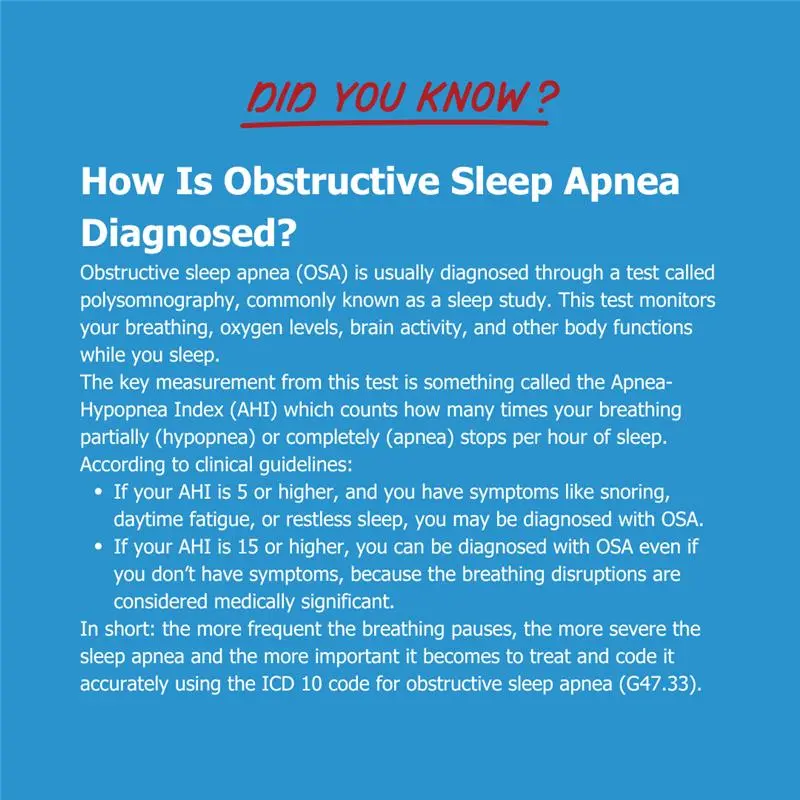
G47.33 functions as a valid secondary or co-primary diagnosis when obstructive sleep apnea is an explicit surgical indication, per the American Academy of Otolaryngology, Head and Neck Surgery Clinical Practice Guideline: Tonsillectomy in Children. The limitation here is sharp: payers require the clinical note to document an OSA workup, not just a parental report of snoring. A claim where G47.33 appears as primary but the physician note contains no documented sleep study or formal OSA evaluation is a straightforward target for medical-necessity denial.
High-volume ENT practices, the environments where iScribe Health's ambient documentation is most impactful, specifically those where clinicians regularly chart two or more hours outside of patient care time, are most exposed to this gap. When a physician is dictating under time pressure or reconstructing a note at the end of a full clinical day, the OSA workup detail is exactly the kind of structured clinical fact that gets compressed or omitted. Because iScribe Health's Ambient Listening captures the conversational context of the encounter in real time, the drafted note includes the OSA evaluation reference at the moment it is discussed, not as an afterthought retrieved from memory hours later.
4. Documentation-Diagnosis Alignment - Why Claim Denials Spike When the Note Doesn't Match the Code
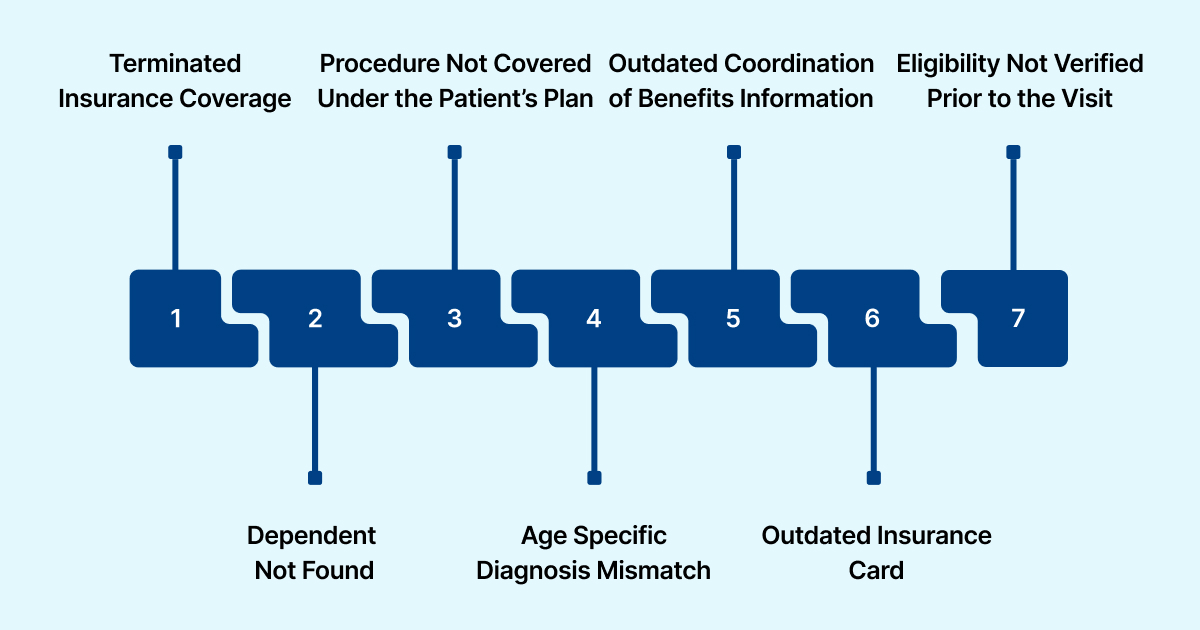
The CMS Medicare Claims Processing Manual is direct: claim denials for CPT that same figure increase when the selected ICD-10 code is not corroborated by the clinical documentation. The diagnosis code is the claim's assertion; the note is its evidence. Practices that dictate under time pressure or reconstruct notes after the encounter routinely omit the infection frequency, obstruction severity language, or OSA workup details that payers require. Most ENT providers select J35.03 or J35.3 in good faith, but when the note is vague, even an accurate code pairing becomes indefensible.
iScribe Health's Real-Time Denial Alerts add a downstream safety net: when the AI-drafted encounter summary is complete, the system flags documentation gaps that create denial risk, surfacing the missing evidence layer before the claim is submitted rather than after it is rejected. For practices integrated with a supported EHR, this workflow operates seamlessly within the existing clinical environment, so the alert reaches the coder and the physician without requiring a separate platform or a separate login. The result is improved coding consistency across providers, the same structured narrative, the same evidence layer, on every CPT that same figure claim regardless of which physician performed the procedure.
5. Paradise Criteria - The Clinical Threshold That Should Anchor ICD-10 Selection for CPT 42820
The Paradise criteria establish a concrete eligibility threshold for infection-driven tonsillectomy: seven or more documented throat infections in one year, or five or more per year for two consecutive years. That frequency benchmark is exactly what payers look for when auditing J35.03 claims. Documenting episode count, antibiotic courses, and functional impact in the pre-operative note is not optional clinical detail; it is the evidence layer that makes the diagnosis code defensible. Without it, J35.03 is a label without a case behind it.
This is where ambient documentation delivers its most direct revenue impact. Because iScribe Health captures structured clinical narrative in real time, including the episode frequency, antibiotic course count, and functional impact language that Paradise-criteria audits require, coders receive that evidence at the point of claim construction rather than having to chase the physician for addenda after a denial arrives. Across every patient encounter, every day of clinical practice, that consistency compounds: fewer denials on J35.03 claims, less administrative rework, and coding precision that directly protects reimbursement on a high-volume procedure code.
Selecting the right ICD-10 code and backing it with a defensible clinical narrative gets the claim out the door clean. The next section breaks down the RVU values and Medicare reimbursement rates attached to CPT that same figure, so practice administrators can put a precise dollar figure on what a single denied or downcoded encounter actually costs the practice.
Related Reading
- Cpt Code 31575
- Cpt Code 30520
RVU Values and Medicare Reimbursement Rates for CPT 42820

How Work, Practice Expense, and Malpractice RVUs Stack Up for CPT 42820
CPT that same figure carries a work RVU of 5.00, a practice expense RVU of 3.96, and a malpractice RVU of 0.47, producing a total RVU of approximately 9.43 before geographic adjustment. Each component is multiplied by its corresponding Geographic Practice Cost Index (GPCI) before the three products are summed and applied against the annual conversion factor. As the CMS CY 2024 Medicare Physician Fee Schedule Final Rule confirms, reimbursement rates vary by locality through GPCIs applied to all three RVU components, so the same code yields different dollar payments depending on where the service is rendered.
- Work RVU → 5.00.
- Practice Expense RVU → 3.96.
- Malpractice RVU → 0.47.
- Total RVU (pre-GPCI) → ~9.43.
Physicians charting two or more hours outside patient care time increase the probability that reconstructed documentation is thinner than the encounter actually warranted. iScribe Health's Ambient Listening and Conversational AI is designed to close that gap: it captures the operative and clinical narrative as the encounter unfolds, so the specificity required to defend a full work RVU is present in the draft note before the claim is ever generated.
That capability is most impactful in high-volume practices and health systems where clinicians regularly carry that kind of after-hours charting burden, and it materializes most seamlessly when the practice is already running a supported EHR. iScribe Health integrates directly into existing workflows without disrupting the billing or documentation infrastructure already in place.
What Medicare Actually Pays according to industry data and What One Downcode Costs
The CY 2024 Medicare conversion factor is $32.74, as established under the CMS CY 2024 Medicare Physician Fee Schedule Final Rule. Applied to CPT that same figure's total RVU of approximately 9.43, the national average Medicare allowed amount lands near $308.74 before locality adjustment.
Key takeaway: At $308.74 per clean claim, a 10% documentation-driven downcode rate across just 40 monthly claims converts to a concrete, recurring monthly revenue leak, not an abstract compliance concern.
Multiply that delta across 40 claims per month with a 10% documentation-driven downcode rate and the monthly revenue leak becomes a concrete budget line. The documentation gap that forced the downcode was created at the point of care, and that is exactly where iScribe Health's Real-Time Denial Alerts and E&M Coding Intelligence operate.
The 90-Day Global Period and Its Effect on Reimbursement Planning
CPT that same figure carries a 90-day global surgical period under CMS rules, as confirmed by the Centers for Medicare & Medicaid Services, so all routine post-operative evaluation and management visits within 90 days are already priced into the allowed amount. The $308.74 national average is the total Medicare payment for the procedure and the post-operative care that follows.
Modifiers Commonly Used with CPT 42820 and When to Apply Them
Three modifiers appear on CPT 42820 claims with enough frequency that every ENT billing team should know their triggers cold. The wrong choice, or the right choice without supporting documentation, converts a clean claim into an audit flag.
1. Modifier 22 (Increased Procedural Services) - When Operative Complexity Exceeds the Norm for CPT Code 42820
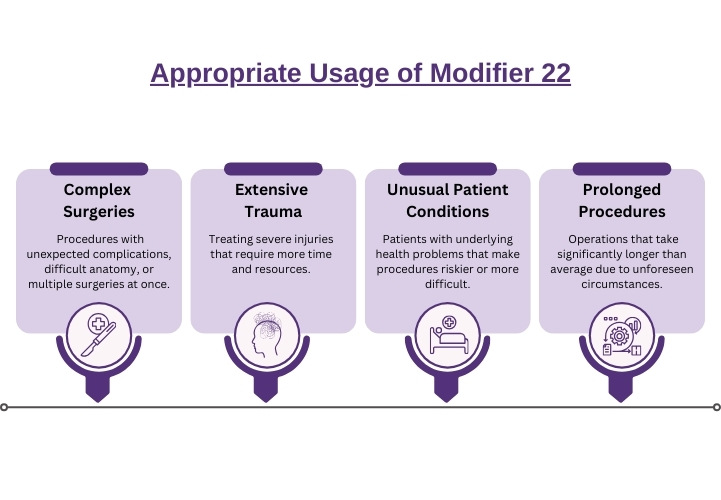
Modifier 22 is simultaneously the most powerful revenue-protection tool on a complex CPT 42820 claim and the most reliable audit trigger when misused. According to the Medicare Claims Processing Manual, Chapter 23 (CMS), the modifier is only payable when the operative note explains, in specific language, the exact nature of the increased complexity. Typical triggers include severe peritonsillar scarring, unexpected hemorrhage, or anatomical anomalies that substantially extend operative time. Without that contemporaneous narrative, the modifier flags the claim.
2. Modifier 52 (Reduced Services) - Partial Completion of CPT 42820 at the Surgeon's Discretion

Modifier 52 applies when the surgeon elects to reduce the scope of the procedure as a clinical judgment call. A practical example: an ENT who encounters unexpected bleeding and decides to defer one component of the procedure should append Modifier 52, but only if the operative note documents the specific reason for that reduction. Per the Medicare Claims Processing Manual, Chapter 23 (CMS), vague or reconstructed notes do not satisfy this requirement.
3. Modifier 53 (Discontinued Procedure) - Termination of CPT 42820 Due to Patient Safety Risk

Modifier 53 is reserved for cases where the procedure is stopped entirely because continuing would place the patient at unacceptable risk, typically an anesthetic complication or acute intraoperative finding. The clinical distinction from Modifier 52 matters: 52 is discretionary, 53 is safety-driven. The Medicare Claims Processing Manual, Chapter 23 (CMS) requires the physician to document the specific clinical reason for termination in real time; retrospective documentation is insufficient to justify the modifier under Medicare rules.
4. Documentation-First Rule - Every Modifier Applied to CPT 42820 Must Be Anchored in the Clinical Note
The common assumption is that modifiers are billing decisions coders make after reviewing a claim. In practice, a modifier's revenue value is locked or lost at the point of care, before billing staff ever see the encounter. The CMS 2026 transmittals confirm that Modifier 22 is not payable without detailed operative documentation. Coders who append modifiers to recover reimbursement on thin notes are creating recoupment exposure.
One of the most consistent patterns in high-volume ENT practices is that surgeons fully intend to document complexity in the moment and then don't, because the case ends, the next patient is waiting, and a complete intraoperative narrative gets compressed into a brief post-case summary written from memory hours later. In practices where clinicians are regularly charting two or more hours outside of patient care time, that compression is the predictable result of a documentation workflow that places too much burden on recall rather than real-time capture.
5. Real-Time Contraindication Capture - Documenting Intraoperative Findings That Modify or Halt CPT 42820
When a contraindication to tonsillectomy, such as an uncontrolled bleeding disorder or unexpected airway obstruction, surfaces intraoperatively and causes the procedure to be modified or discontinued, that finding must be captured in the medical record at the time it occurs. Delayed or reconstructed documentation weakens the evidentiary basis for Modifier 52 or 53 on CPT Code 42820 claims and significantly increases the risk of payer denial or post-payment audit recoupment.
What the Operative Note Must Capture
The documentation gap is a timing problem. Surgeons who intend to circle back after the case and reconstruct the complexity, reduction, or termination rationale are producing exactly the kind of retroactive summary that payers discount. The Medicare Claims Processing Manual, Chapter 23 (CMS) is explicit: contemporaneous documentation is the standard, not a best practice.
This is where iScribe Health's ambient AI documentation capability directly addresses the problem. Because iScribe Health delivers a completely hands-free documentation experience during the encounter, capturing intraoperative findings as the surgeon narrates the case in real time, the operative note reflects what actually happened, as it happened. There is no reconstruction, no memory-dependent summary, and no gap between the clinical event and the written record.
For practices already running a supported EHR, iScribe Health's EHR integration means the ambient documentation flows seamlessly into the existing system; there is no separate platform to manage and no double-entry. At the point of note completion, after the AI drafts the encounter summary, the record is already anchored in the contemporaneous, specific narrative that Modifier 22, 52, and 53 defensibility demands.
The result is that every modifier appended to a CPT 42820 claim is backed by documentation that was created at the moment of clinical decision, not assembled afterward. For high-volume ENT teams where the documentation burden compounds across every case, every day, that shift in timing is the difference between a modifier that protects revenue and one that creates recoupment exposure.
Knowing which modifiers apply to CPT 42820, and having the documentation to back each one, closes a significant billing gap. But modifier defensibility is only one layer of what it takes to protect ENT revenue; the next section examines why even a perfectly coded, perfectly modified CPT 42820 claim can still fail when the broader documentation workflow breaks down.
Why Knowing CPT 42820 Is Not Enough to Protect Your ENT Revenue

The Documentation Gap That Turns Correct Codes Into Denied Claims
The second part, the one that actually determines reimbursement, happens in the provider note. iScribe Health's analysis of documentation-to-coding workflows makes the structural problem explicit: a technically correct CPT code submitted against a vague or incomplete provider note is just as vulnerable to denial or downcode as the wrong code, because the note is the only evidence that the procedure was medically necessary and performed as described.
A provider dictating post-operatively after a full surgical day, under time pressure, may omit the patient's confirmed age at the date of service, the bilateral nature of the procedure, and the clinical rationale supporting medical necessity. The resulting claim fails because the note cannot support it.
What a 33% Hidden Overcoding Rate Reveals About Point-of-Care Capture Failures
A trial analysis of 941 encounters at the Center for Sports Medicine and Orthopaedics surfaced a 33% overcoding rate that had been completely invisible to the practice before automated coding intelligence reviewed how codes were actually being applied at the point of documentation.
Key takeaway: A trial analysis of 941 encounters surfaced a 33% overcoding rate that was entirely invisible to the practice, silent, systematic, and discovered only after automated coding intelligence reviewed point-of-documentation patterns.
That figure matters for ENT practices specifically because tonsillectomy coding sits at an intersection of age-gated rules, bundling constraints, and medical necessity documentation requirements. The cause is upstream, in the note itself, and it fails silently across every encounter. The pattern is most pronounced in high-volume settings where providers regularly chart outside of patient care time, compressing the documentation that coders depend on.
Operative Note-to-Claim Transcription Gaps Driving CPT 42820 Denials
iScribe Health's Automated E&M Coding closes the loop at the point of care.
One honest constraint: this approach delivers its full value when the practice is already running a supported EHR and providers are willing to engage with ambient documentation during or immediately after the encounter.
Knowing CPT that same figure is the starting line.
Related Reading
- Cpt Code 69436
Next steps
If your 42820 claims are returning denied even when the code is right, the path forward starts with fixing documentation at the point of care, not at the billing desk. Start with our AI medical scribe.
The 33% overcoding rate that stayed invisible until an automated documentation-to-code workflow surfaced it confirms that coding errors accumulate silently, outside any coder's line of sight. The NCCI bundling analysis makes the mechanism clear: when an operative note fails to confirm the combined tonsillectomy-adenoidectomy narrative, billing staff defensibly attach a component code, and an automatic, non-overridable denial follows. Both failures originate in the same place, the chart, before billing staff ever see the encounter. Together, they point to a single corrective action: capturing the complete clinical narrative in real time, so the note is defensible before the claim is generated.
Start with an AI medical scribe that captures the full operative narrative during the encounter itself. The drafted note arrives at the billing desk with age-confirmed patient status, bilateral procedure documentation, and ICD-10-supporting clinical rationale already present, so the code is defensible on first submission rather than reconstructable after a denial.
Frequently Asked Questions
What happens if my patient turns 12 between the scheduling date and the actual surgery date?
The claim must be updated to CPT 42821 before submission. The patient's age on the date of service is the only age that matters to a payer, age at scheduling, pre-operative consultation, or insurance authorization does not count. Submitting CPT 42820 for a patient who is 12 or older on the date of service is a miscoded claim, regardless of what the authorization paperwork says.
Can I use a modifier like -59 or -51 to override a bundling denial on CPT 42820?
No. The modifier indicator for the prohibited component-code pairs alongside CPT 42820 is set to 0, meaning no modifier can override the edit. Appending a modifier to a prohibited pair does not create an exception, it creates an audit flag.
Do I need to bill a separate adenoidectomy code alongside CPT 42820 to capture that part of the procedure?
No. CPT 42820 is a bundled code by definition, its descriptor already covers both the tonsillectomy and the adenoidectomy performed together in a single operative session for patients under age 12. Attaching a separate tonsillectomy or adenoidectomy code on the same date of service is textbook unbundling and triggers automatic denial.
What ICD-10 code should I use when the reason for surgery is airway obstruction rather than chronic infection?
When the clinical driver is airway obstruction, J35.3 (Hypertrophy of Tonsils with Hypertrophy of Adenoids) is the appropriate primary code. The deciding factor is the surgeon's documented primary indication, if the note does not clearly name obstruction as the driver, J35.3 becomes difficult to defend under payer review.
How can a single denied CPT 42820 claim turn into a much larger financial problem?
Payers use CMS extrapolation methodology to project overpayment across all similar claims in the same billing period, meaning one flagged CPT 42820 unbundling error can become the basis for a recoupment demand applied to every tonsillectomy encounter filed in that window. The practice then bears the burden of proving each individual claim was coded correctly.