9 Best AI Scribe for athenahealth Options in 2026
Avoid shelfware. The best AI scribe for athenahealth options for 2026, ranked by real EHR integration so practices stop losing physicians at day 75.


Most AI scribes claim athenahealth compatibility. Few actually earn it. Here is what separates the tools physicians still use at day 90 from the ones that quietly become shelfware.
The wrong feature set rarely kills an AI scribe investment. The common assumption is that if a vendor claims athenahealth compatibility, the integration is good enough to deploy without deeper vetting, and if physicians don't adopt the tool, the problem is change management, not the product. The real failure happens quietly, around day 75, when a physician opens the tool for the last time without realizing it. For athenahealth practices evaluating ambient documentation tools, the selection risk is almost never about capability gaps on a spec sheet. It is about whether the tool gets used after the implementation call ends.
"AI scribes require significant post-visit editing, negating time savings and failing to reduce documentation burden, a core reason practices abandon them before renewal."
— what we hear from medical practices
: "Compatible with athenahealth" can mean almost anything. In practice, it usually means a separate browser tab, a manual copy-paste step after each encounter, or a middleware layer that breaks every time athenaOne pushes an update. None of those configurations qualify as native integration, but all of them appear in vendor sales decks under the same reassuring label.

The distinction matters because friction compounds. A physician who spends 90 seconds copying a note after every encounter absorbs roughly 45 minutes of added work across a full clinic day. According to PatientNotes, primary care physicians already spend approximately 3 hours per day on clinical documentation alone.
Adding copy-paste steps does not reduce the burden. It redistributes it into a new, more frustrating shape. PatientNotes notes that tools requiring separate logins or double-entry steps drive abandonment within the first 60 to 90 days, converting the subscription into shelfware.
3 hours
Daily documentation burden for primary care MDs
An AI scribe that only analyzes the finalized note cannot flag the gap between what was documented and what was coded. Physicians managing documentation fatigue tend to undercode rather than risk overcoding scrutiny, creating a quiet, ongoing revenue leak. iScribe Health's E&M coding intelligence addresses this by working from the clinical encounter itself, the layer where coding accuracy is determined.
In a post-documentation audit across a multi-specialty ambulatory group, a significant share of encounters were found to be overcoded, a pattern that went undetected until after the fact. iScribe Health's encounter-level coding intelligence is designed to surface that kind of systemic discrepancy at the point of documentation, so practices are not discovering coding exposure through an external audit.
The gap between "compatible" and native determines whether a tool gets used or gets cancelled.
Key takeaways
- Physician abandonment, not feature gaps, is what kills AI scribe investments in athenahealth practices, and it typically shows up quietly around day 75, not at renewal.
- athenahealth runs three certification tiers for integration partners; most AI scribe vendors are only clearing the lowest bar, which is why 'compatible' and 'integrated' are not the same word.
- A 94% provider acceptance rate is the number that separates a scribe tool from shelf-ware, and it's the metric vendor slide decks almost never show.
- Choosing between athenahealth's native Ambient Notes and a third-party scribe is not a features decision; it's a coding accuracy and reimbursement decision that no license price comparison will surface for you.
- Before any demo, audit the exact fields your physicians use every day, note placement, encounter flow, and specialty templates, because a generic walkthrough will not expose where your specific athenaOne configuration creates documentation friction.
- iScribe Health closes the loop as athenahealth's Preferred Ambient Partner, with deep native integration into athenaOne, Veradigm, and Greenway Health, which is why its adoption numbers hold where other tools quietly fade out.
The athenahealth Integration Compatibility Checklist Buyers Keep Skipping
The common assumption among healthcare practice administrators and operations leaders is that if a vendor claims athenahealth compatibility, the integration is good enough to deploy without deeper vetting, and if physicians don't adopt the tool, the problem is change management, not the product. In reality, the athenahealth Marketplace lists over 800 partner solutions, and according to athenahealth's own Marketplace Partners documentation, a listing signals only that a vendor completed a basic API registration, not that their tool is embedded in athenaOne clinical workflows.

athenaConnect Listing vs. Preferred Ambient Partner Status and the Workflow Gap Between Them
A standard athenaConnect Marketplace listing and athenaOne Preferred Ambient Partner status are not two points on the same spectrum. Per athenahealth's Marketplace program documentation, the Preferred Ambient Partner tier requires deeper vetting of workflow integration, security standards, and clinical validation that a basic listing does not. That distinction matters operationally: a listed vendor may require physicians to toggle between separate applications or manually transfer note content, adding friction at every encounter. Scale that to 25 providers across a busy orthopedic or primary care practice, and the structural gap becomes a throughput problem, particularly for high-volume health systems where clinicians are already charting two or more hours outside of patient care time every day.
That is precisely the environment where iScribe Health's ambient listening and EHR integration are most impactful: the tool materializes seamlessly when the practice is already running athenaOne and needs documentation that does not require a separate workflow to complete.
The Hidden Time Tax of Workaround Integrations Inside athenaOne
Vendors relying on Chrome extension overlays or browser-layer screen-scraping operate entirely outside athenahealth's API framework, according to athenahealth's Marketplace Partners guidance. That architecture means every platform update athenahealth pushes can silently break the integration, leaving clinicians to discover the failure mid-encounter.
The clinical staff and IT administrators we work with consistently identify this as the point where physician burnout compounds rather than eases: documentation burdens shift form but do not shrink. iScribe Health's ambient listening and conversational AI architecture route directly through sanctioned EHR integration, so the note generated from a live patient encounter populates athenaOne at the point of note completion, after the AI drafts the encounter summary, without a copy-paste step in between.
The HIPAA and BAA Checklist for AI Scribe Contracts in athenaOne Environments
Marketplace listing status does not automatically extend athenahealth's compliance umbrella to a partner's data handling practices. Buyers must independently verify that a partner's integration falls under athenahealth's HIPAA compliance framework. Three questions should be answered in writing before any contract is signed:
- Does the vendor hold a direct BAA with your practice, and does that BAA explicitly cover PHI processed during ambient documentation sessions?
- Does the vendor's data residency align with athenahealth's security requirements?
- Does the integration use sanctioned API access, or does it rely on screen-scraping that places PHI outside athenahealth's data controls entirely?
A vendor that cannot answer all three in writing, with documentation, has not cleared the bar that athenahealth's own compliance expectations set.
iScribe Health's athenaOne Preferred Ambient Partner status means those three questions have already been answered at the certification level, giving practices a documented compliance foundation rather than a gap to close after deployment.
athenaHealth AI Scribe Vetting Checklist
- 1. Integration tier → What to Demand in Writing: Confirmation of Preferred Ambient Partner status or documentation of the exact API endpoints used.
- 2. BAA coverage → What to Demand in Writing: A direct BAA with your practice that explicitly covers PHI from ambient sessions.
- 3. Data residency → What to Demand in Writing: Written confirmation that data residency aligns with athenahealth security requirements.
- 4. API vs. screen-scrape → What to Demand in Writing: Confirmation of sanctioned API access; reject screen-scrape architectures.
- 5. Structured data write → What to Demand in Writing: Verification that notes populate discrete EHR fields, not just free-text fields.
- 6. Mobile/multi-device support → What to Demand in Writing: Confirmation of compatibility with athenahealth’s mobile workflow.
- 7. Update resilience → What to Demand in Writing: A documented process for handling athenaOne platform updates.
- 8. Adoption metrics → What to Demand in Writing: Published provider acceptance rates specific to athenahealth deployments.
- 9. Coding intelligence → What to Demand in Writing: Confirmation of whether E/M coding analysis—including automated E/M coding and real-time denial alerts—runs during documentation or post-audit.
Any vendor that cannot answer items 2, 3, and 4 in writing before the contract stage has not cleared athenahealth's own compliance bar.
9 Best AI Scribe for athenahealth Options Ranked for 2026
Physician abandonment is the metric the vendor slide decks never show. Most AI scribe deployments fail not because the technology is wrong, but because providers stop opening the tool, and that pattern repeats across ambulatory practices every quarter regardless of feature count, specialty template library depth, or how many AI layers the marketing deck claims. It is the organizing logic behind this ranking. Template counts are secondary. The question that actually predicts ROI is simpler: will your providers still be using this tool in month three?
The nine tools below are ranked across three criteria: integration depth with athenaOne, physician adoption friction, and compliance posture. The tiers are real, and the gaps between them matter more than any individual feature.
Why Adoption Beats Features Every Time
A Marketplace listing badge is not a proxy for integration depth. Because athenahealth's expansive partner ecosystem conflates basic API registration with genuinely embedded clinical workflow access, a practice that selects any listed vendor believing it signals production-ready athenaOne compatibility is making a category error. That error surfaces only after go-live, as double-entry friction, separate login prompts, and copy-paste steps accumulate encounter by encounter until physicians quietly stop using the tool.
The subscription becomes shelfware. The documentation backlog grows. Coding gaps compound silently.
Most practice administrators absorb that cost without tracing it back to the architecture decision made during vendor selection. The hidden cost is provider dissatisfaction, E&M inconsistency, and months of lost productivity that compound while the tool sits unused. iScribe Health's athenaOne Preferred Ambient Partner status and a post-documentation coding intelligence layer close that gap; deep native integration removes the friction that kills adoption, and a coding intelligence layer gives physicians a concrete reason to stay.
1. iScribe Health
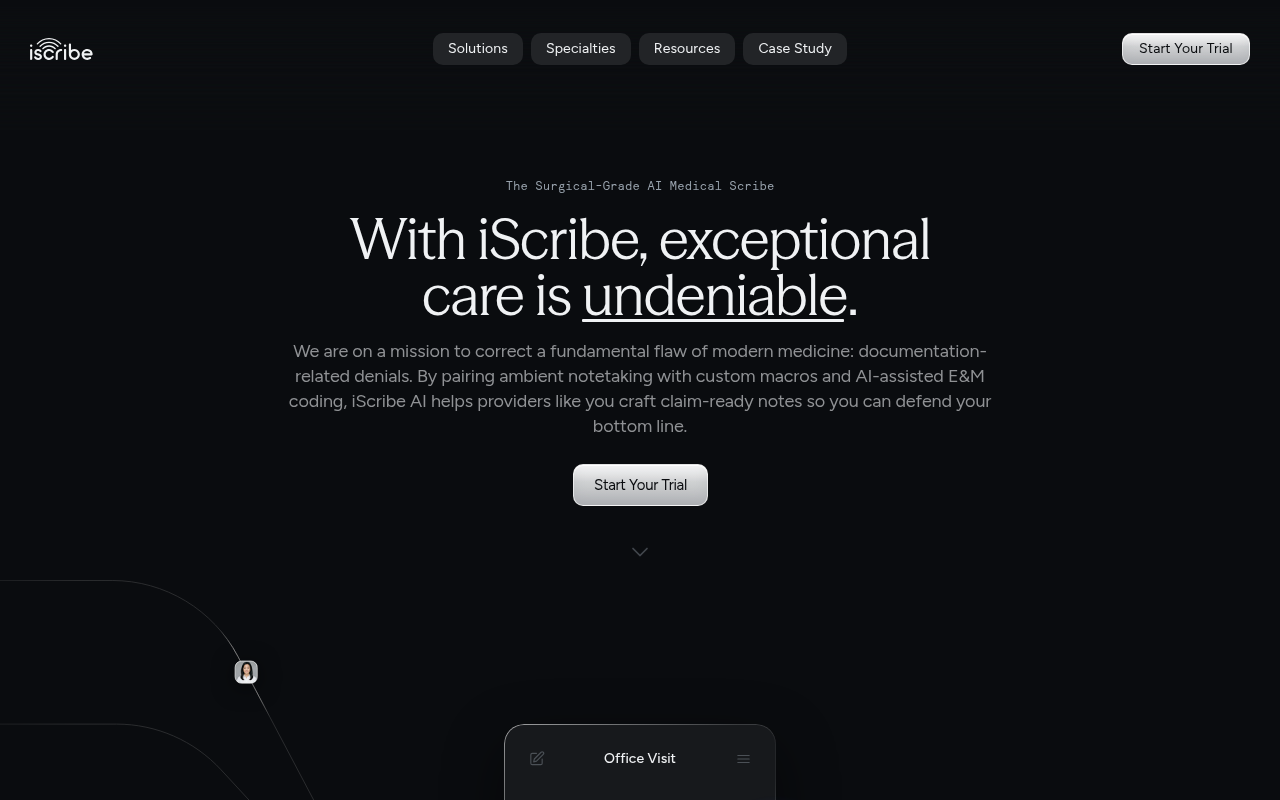
Athenahealth selected iScribe Health as an athenaOne Preferred Ambient Partner based on demonstrated integration depth, provider adoption outcomes, and clinical value, and we see this play out as a 94% provider acceptance rate across athenahealth practices using the platform. That number is not a feature; it is the outcome of removing every friction point that causes physicians to abandon tools in the first 60 days. The one real tradeoff: practices with fewer than five providers may find the implementation support model more structured than they need, and the coding intelligence layer is most valuable when documentation volume is high enough to surface meaningful coding pattern data.
94%
Provider acceptance rate in athenahealth practices
2. athenaAmbient / Ambient Notes - Best for athenahealth Practices Wanting Zero Additional Cost
Athenahealth's native ambient solution is included with athenaOne at no additional cost, making it the default starting point for budget-constrained practices not yet ready to evaluate third-party tools. It records visits, uses generative AI to create note summaries, and places them directly into patient charts without a separate login or overlay step. The tradeoff is scope: Ambient Notes stops at documentation.
There is no coding intelligence layer, no post-documentation analysis, and no specialty-specific diagnostic reasoning. For practices where documentation volume is moderate and coding complexity is low, it is a reasonable starting point. For practices where E&M accuracy and revenue optimization matter, it is a ceiling, not a solution.
3. Suki AI - Best for Enterprise Practices Powering Ambient Notes at Scale

Suki AI provides the enterprise-grade ambient clinical intelligence engine that powers athena's own Ambient Notes capabilities, making it a proven infrastructure-level choice for large health systems and enterprise group practices on athenaOne. Its ambient AI handles complex multi-speaker encounters and structured note generation across specialties. Practices that want enterprise SLAs, dedicated support, and the underlying technology behind athena's native offering should evaluate Suki directly. Pricing is enterprise-tier and requires a custom quote.
4. DeepScribe - Best for Specialty-Specific AI with athenaConnect Marketplace Integration
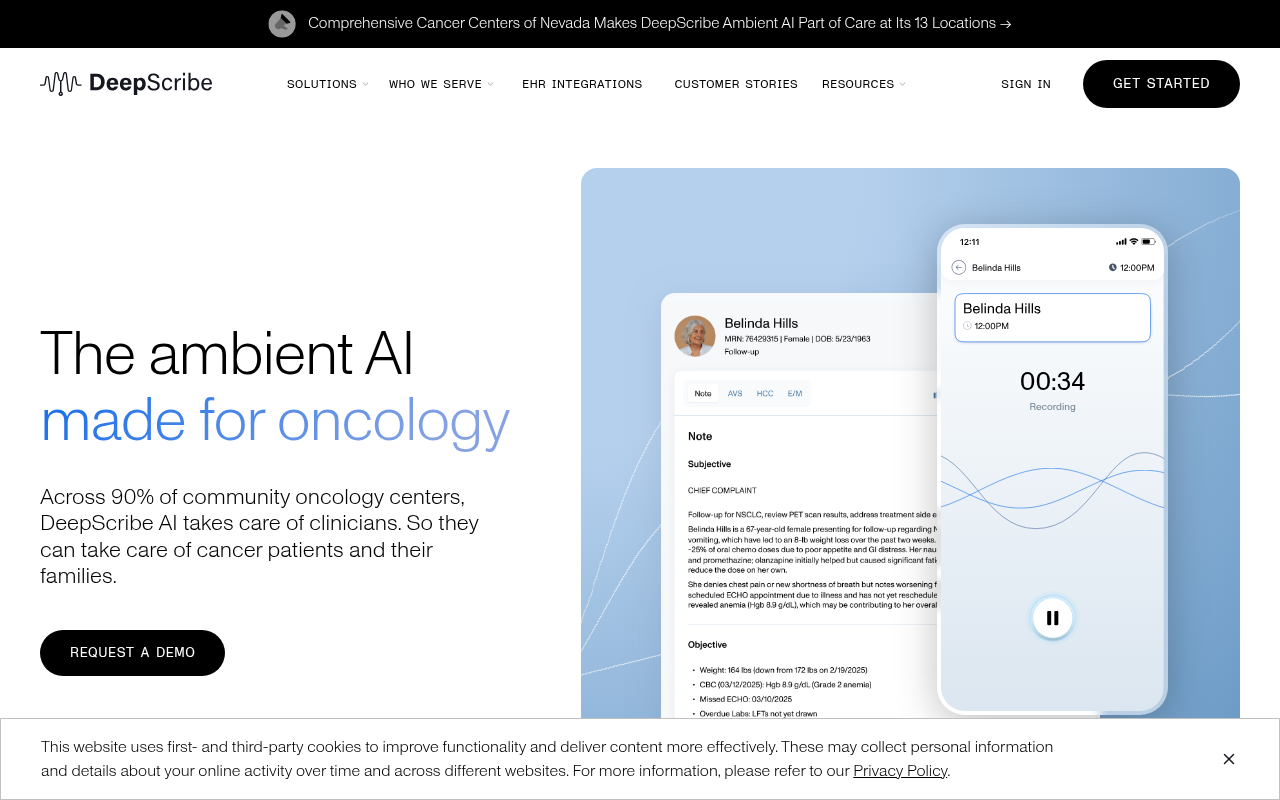
DeepScribe connects to athenahealth via the athenaConnect Marketplace, offering specialty-trained AI models that understand the clinical vocabulary of oncology, orthopedics, neurology, and other complex specialties. Its diagnostic intelligence layer suggests relevant diagnoses during documentation, reducing missed codes in high-acuity encounters. It's the strongest pick for specialty group practices where generic ambient AI produces inaccurate or incomplete notes. The marketplace integration means setup is straightforward, though pricing is demo-required and scales with provider count.
5. Freed - Best for Independent Physicians Wanting Transparent Pricing and Lightweight Setup

Freed takes a Chrome extension overlay approach to athenahealth integration, requiring no IT involvement or marketplace approval, a physician can be live within minutes. Its pricing is publicly listed and per-provider, making it the most budget-transparent option on this list and ideal for solo practitioners or small independent practices. The ambient AI captures conversations and drafts SOAP notes directly into athenaOne via the browser. The tradeoff is that the overlay architecture is less deeply integrated than native or marketplace options.
6. Glass Health - Best for Combining Ambient Documentation with Clinical Decision Support
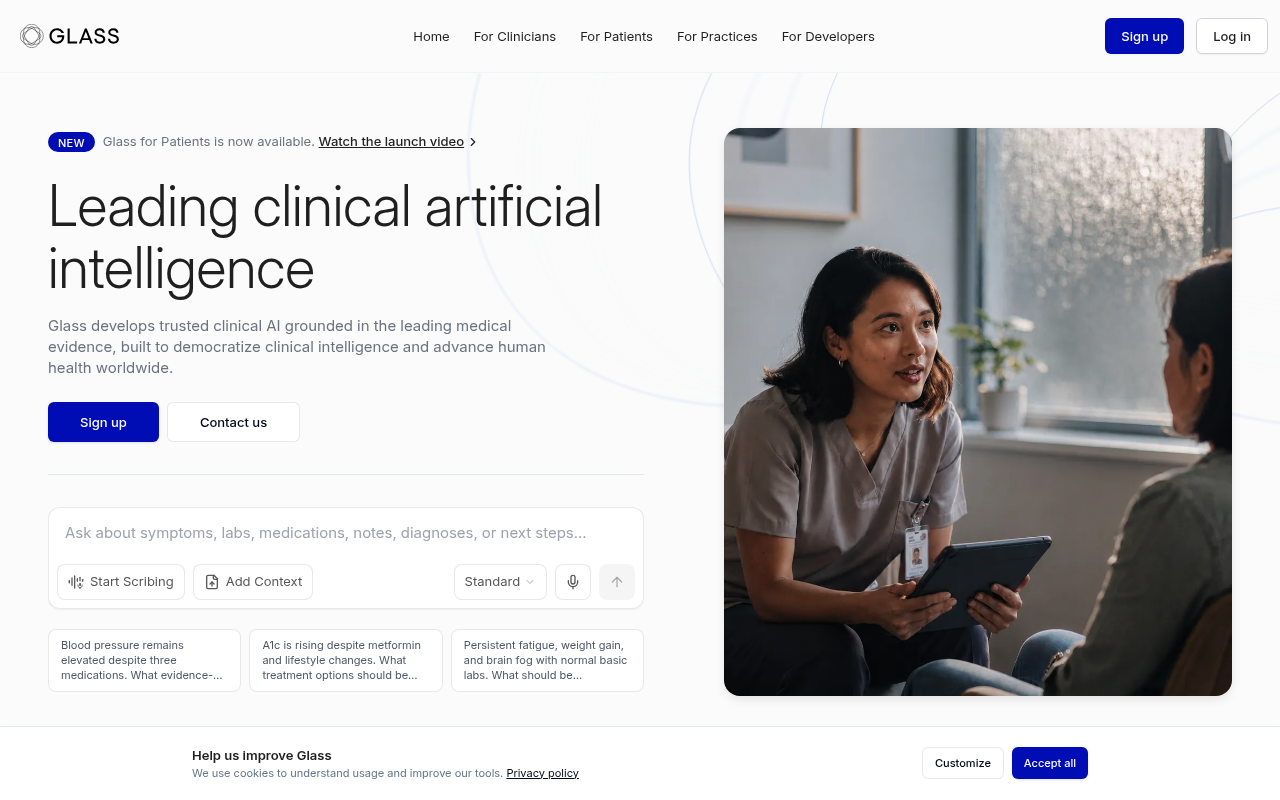
Glass Health integrates with athenahealth via SMART on FHIR, enabling it to layer ambient documentation on top of real-time clinical decision support within the same workflow. Physicians get AI-drafted notes and differential diagnosis suggestions simultaneously, making it uniquely valuable for diagnostic-heavy primary care and internal medicine practices. It's the right pick when clinical reasoning support matters as much as documentation speed. The SMART on FHIR architecture requires EHR configuration and IT involvement, adding setup complexity compared to simpler overlay tools.
7. Nabla - Best for Ambulatory Practices Prioritizing Physician-Friendly Ambient UX
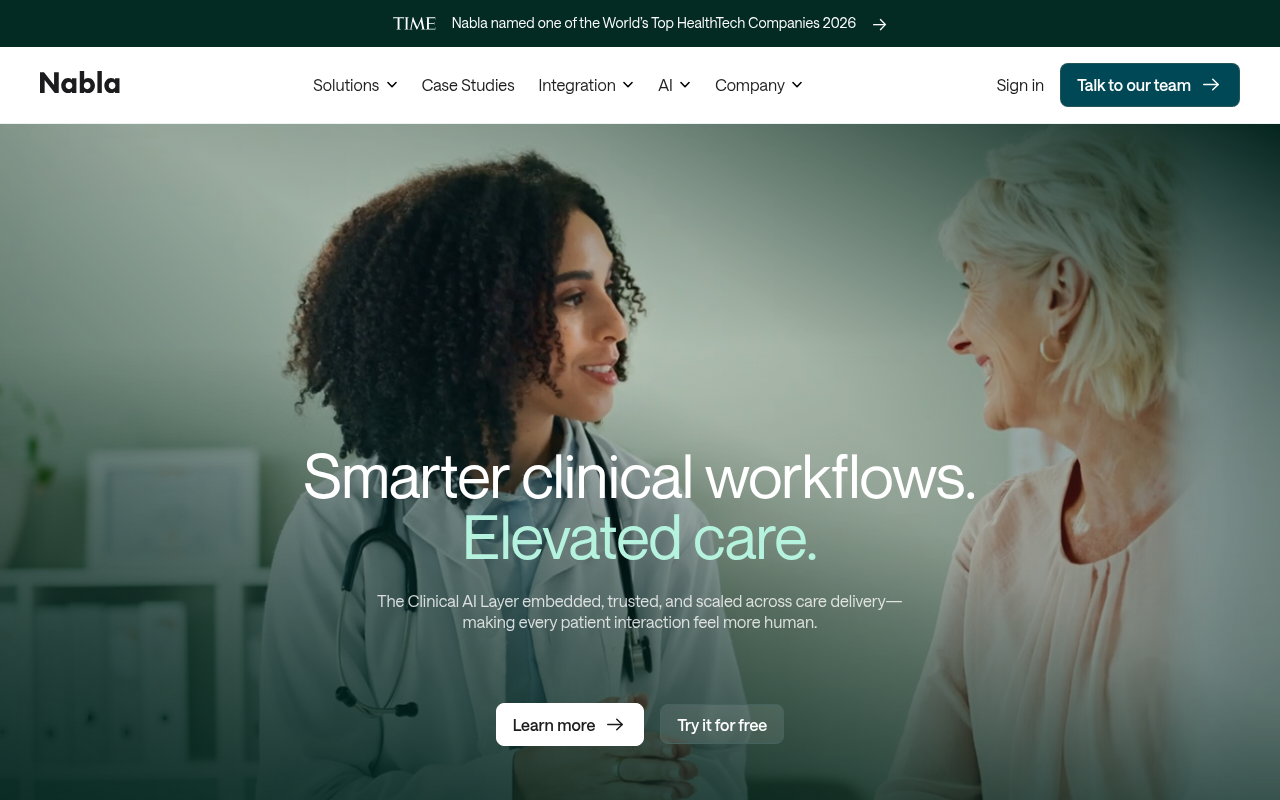
Nabla offers an ambient documentation approach designed around physician experience, with a clean interface that minimizes clicks and cognitive load during and after encounters. It connects to athenahealth as an overlay solution and supports multiple note formats adaptable to primary care, psychiatry, and general ambulatory settings. Practices with high physician burnout and low EHR adoption scores find Nabla's UX-first design drives faster provider acceptance. Pricing requires a demo, and its coding intelligence features are less mature than iScribe Health's dedicated layer.
8. Heidi Health - Best for Practices Seeking a Globally Proven Ambient Scribe with Flexible Deployment

Heidi Health is a recurring SERP topic in AI scribe comparisons and has built a strong international reputation for accurate ambient documentation across diverse clinical environments. It operates as an overlay tool compatible with athenahealth and offers both free and paid tiers, making it accessible for practices evaluating ambient AI before committing to enterprise contracts. Its flexible deployment suits telehealth and in-person workflows equally. The main limitation for athenahealth users is the absence of a native or marketplace integration, relying instead on browser-based capture.
Related Reading
- Hipaa Compliant Ai Scribe
- Top Medical Scribe Companies
- How Does An Ai Scribe Work
- Medical Scribe Cost
- Ai Scribe Cost
What Should Determine Your Choice Between Native and Third-Party AI Scribes for athenahealth
The variable that actually determines ROI is whether your tool closes the gap between documentation and defensible coding, and that gap is invisible on any feature checklist or licence price comparison.

Three Practice Variables That Actually Tilt the Native vs Third-Party Decision
As industry analysts consistently note, the best choice between a native and third-party ambient tool depends on team size, budget, and required features, and no single compatibility claim substitutes for evaluating all three in combination.
When a tool cannot be trained to recognize a practice's own shorthand, converting a spoken phrase like "type 2 diabetes" into the preferred chart notation T2DM, for example, the resulting notes feel bloated and misaligned with how clinicians actually think and document. That mismatch forces physicians to spend time reshaping AI-generated text after every encounter, which is precisely the kind of overhead that erodes the time savings ambient documentation is supposed to deliver. IScribe for orthopedic practices's AI Customization capability is built to eliminate that friction, so the ambient listening layer adapts to each practice's documentation conventions rather than forcing the practice to adapt to the tool.
This is why iScribe Health's workflow is structured so that the AI drafts the encounter summary and the physician reviews it at the point of note completion, a deliberate checkpoint that keeps clinicians in control without burying them in after-hours corrections.
A complete cost-of-ownership evaluation must include implementation, training, and ongoing support fees, not just the headline licence price, a distinction that industry analysts consistently flag as the most common source of budget surprises in EHR tool selection.
Why Coding Intelligence Is the Tiebreaker, Not a Premium Add-On
The real differentiator is whether your scribe has an integrated coding intelligence layer that catches overcoding and undercoding at the point of documentation rather than at the point of audit.
iScribe Health's Automated E&M Coding Intelligence and Real-Time Denial Alerts are designed to close that gap at documentation rather than at discovery, giving practices coding-consistent notes that are defensible before, not after, an external audit surfaces the exposure. For practices already running a supported EHR, iScribe Health's EHR Integration means this coding intelligence layer materializes seamlessly within the existing workflow, with no parallel system, no duplicate data entry, and no added overhead layered onto an already stretched clinical team.
Related Reading
- Ai Scribe Accuracy
- Ai Medical Scribes With E&m Coding Built In
- Do Ai Scribes Reduce Claim Denials?
Next steps
If your practice has already absorbed the cost of a tool physicians stopped opening by day 75, the path forward starts with recognizing that adoption failure is almost always an integration architecture problem, not a change management one.
A Marketplace listing badge is not a proxy for integration depth, which means every vendor claiming athenahealth compatibility deserves a harder question about whether their tool writes structured data directly to the chart or relies on a copy-paste step that compounds friction across every encounter. Physician adoption rates are a lagging integration metric, not a leading change management metric, which means a 94% provider acceptance rate tied specifically to athenaOne Preferred Ambient Partner status tells you more about real workflow fit than any feature checklist or pilot testimonial will. Together, those two realities point to one practical action: evaluate integration architecture before evaluating features, and use specialty-specific adoption data as the filter.
Start with Best AI medical scribe for orthopedic practices to see how iScribe Health's native athenaOne integration, ambient documentation, and E&M coding intelligence perform against the documentation patterns and coding complexity your providers encounter every day. From there, you have the concrete workflow and compliance data to bring to your physicians and your CFO before any contract is signed.
Frequently Asked Questions
Does being listed on the athenahealth Marketplace mean an AI scribe is fully integrated with athenaOne?
No. According to athenahealth's own Marketplace Partners documentation, a listing signals only that a vendor completed a basic API registration, not that their tool is embedded in athenaOne clinical workflows. The distinction that actually matters is whether a vendor has achieved athenaOne Preferred Ambient Partner status, which requires deeper vetting of workflow integration, security standards, and clinical validation that a basic listing does not.
Why do physicians stop using AI scribes within the first few months?
The most common cause is friction that adds work instead of removing it, things like separate login prompts, manual copy-paste steps after every encounter, and notes that land in a free-text field rather than discrete EHR fields. Tools requiring separate logins or double-entry steps drive abandonment within the first 60 to 90 days, effectively converting the subscription into shelfware.
What HIPAA and BAA questions should I ask an AI scribe vendor before signing a contract?
You need written answers to three specific questions: whether the vendor holds a direct BAA with your practice that explicitly covers PHI processed during ambient documentation sessions, whether the vendor's data residency aligns with athenahealth's security requirements, and whether the integration uses sanctioned API access or screen-scraping that places PHI outside athenahealth's data controls. Any vendor that cannot answer all three in writing has not cleared athenahealth's own compliance bar.
Can a workaround integration like a Chrome extension overlay really hurt my practice's revenue?
Yes, in two ways. First, manual copy-paste steps introduce transcription risk and prevent structured data from populating discrete EHR fields, which affects how coders, billers, and auditors work from the record. Second, when physicians abandon a tool that adds friction, E&M coding gaps compound silently, physicians managing documentation fatigue tend to undercode rather than risk overcoding scrutiny, creating an ongoing revenue leak the practice may not discover until an external audit.
Is athenahealth's own built-in ambient documentation tool good enough, or do I need a third-party AI scribe?
AthenaAmbient / Ambient Notes is included with athenaOne at no additional cost and places note summaries directly into patient charts without a separate login or overlay step, making it a reasonable starting point for practices with moderate documentation volume and low coding complexity. However, it stops at documentation, there is no coding intelligence layer, no post-documentation analysis, and no specialty-specific diagnostic reasoning, so for practices where E&M accuracy and revenue optimization matter, it functions as a ceiling rather than a full solution.