Best AI Medical Scribes With E&M Coding Built In 2026
AI medical scribes with E&M coding built in give billing teams the visibility to stop undercoding and recover revenue missed at the point of care.


Clean notes do not equal captured revenue. Here is why AI scribes without built-in E&M coding quietly undercode your visits, and what that pattern costs you when payers start reading your bell curve.
Practices that adopted AI scribes expecting a revenue lift often discover, months later, that their 99213-to-99214 ratio barely moved. The note looks cleaner. Documentation time dropped. But the weekly charge report tells the same story it always did. The common assumption is that the coding problem is a coder problem: if you give coders better tools or more time to review notes, accuracy improves and revenue recovers. That gap is an information problem, and it starts well before anyone in billing opens the chart.
"AI medical scribes running at 90-94% note accuracy still produce clinically significant errors in 7-12% of AI-only generated notes, leading to coding mistakes and claim denials, directly leaving E&M revenue on the table."
— what we hear from healthcare revenue cycle professionals
Consider a typical orthopedic follow-up involving multiple comorbidities and a prescription adjustment. The clinician speaks through the whole visit. The AI scribe captures it all. Then the finalization process begins, and by the time a note lands in the chart, the complexity that would justify a higher E&M level was spoken but not preserved. For practices managing high patient volumes, ambient coding intelligence built into the scribe workflow is the architectural difference that determines whether that complexity survives long enough for billing to act on it.

The finalized note is not a recording. It is a compression artifact. The narrative compression that occurs during documentation strips out the nuanced complexity, including time spent, medical decision-making depth, and comorbidity interactions, that would justify a higher E&M level, so post-hoc coding review cannot recover what was never captured. A clinician summarizing a visit naturally smooths out the clinical texture that AMA guidelines use to distinguish a 99213 from a 99214. The note does not lie. It just omits.
The finalized note is not a recording. It is a compression artifact.
According to FindACode (2024), approximately 55% of E&M visits are accurately documented, meaning roughly 45% are miscoded, most commonly undercoded. In a busy practice, that is not a rounding error. It is a predictable weekly loss embedded in the workflow.
45%
of E&M visits miscoded, mostly undercoded
A documentation-only AI scribe and a coding-aware scribe are not the same product. AI scribes built purely as documentation tools record what the clinician says but do not actively surface or preserve coding-relevant clinical elements in real time.
A separate coding layer added after finalization is working from the compressed file, not the original.
The complexity signals it needs were edited out one step earlier. That is why practices that add a coding overlay on top of a documentation-only scribe often see no meaningful shift in their code level distribution after six months. The revenue left on the table from undercoding is only part of the exposure. The pattern of miscoded visits that accumulates in your claims history creates a second, compounding risk that payers are trained to detect. That is where the next section picks up.
Key takeaways
- Most AI scribes cut documentation time without moving the 99213-to-99214 ratio, because a cleaner note is not the same thing as a more accurate code.
- The clinical complexity that justifies a higher E&M level, the diagnoses weighed, the comorbidities considered, the medical decision-making spoken aloud, gets compressed out of the record the moment a note is finalized, and downstream coders can't recover what was never captured.
- Payers don't audit individual claims; they flag statistical outliers in E&M distribution by specialty, so a practice that consistently undercodes is both losing revenue and building a pattern that invites scrutiny.
- Built-in E&M coding means the coding intelligence runs at the encounter layer, from the ambient audio, not from whatever survived the documentation process.
- Five binary tests separate a native E&M AI scribe from a documentation-only tool, a platform either parses medical decision-making complexity in real time or it doesn't, and every failure creates a recurring gap in the billing cycle.
- Every week a practice runs without ambient-native coding, the complexity signals from that week's encounters are permanently gone before a coder opens a single chart.
- iScribe Health's E&M Coding Intelligence closes that gap by generating coding recommendations from the complete clinical narrative captured during the encounter, not from the finalized note, so the complexity that drives reimbursement is preserved where it actually lives.
How Inconsistent E&M Coding Patterns Invite Payer Audits
The common assumption among practice administrators and billing decision-makers is that coding accuracy is fundamentally a coder problem: if you give coders better tools or more time to review notes, accuracy improves and revenue recovers. That assumption misses where audit risk actually originates. When a provider's E&M distribution drifts from specialty benchmarks because of habit rather than patient complexity, the coding pattern itself becomes the trigger.

Payers Read Your Coding Bell Curve, Not Your Notes
Payers use automated analytics to compare each provider's E&M level distribution against specialty-specific benchmarks. The HHS Office of Inspector General found that improper payments for E&M services cost Medicare billions of dollars, with auditors specifically identifying statistical outliers in provider coding behavior as the primary selection signal. That selection logic applies regardless of practice size or specialty.
Key takeaway: Audit risk is triggered by statistical outlier detection, a provider's coding bell curve drifting from specialty benchmarks, not by individual note quality. The compliance risk is baked in before a single claim is submitted.
This exposure is not limited to high-volume practices. Therapists and specialists running very small patient panels, sometimes with only a handful of active cases, are still flagged by AI-driven utilization review systems for billing patterns that appear inconsistent with peers, even when the underlying volume makes any comparison unreliable.
That means a solo behavioral health provider with a narrow panel carries audit exposure that feels disproportionate to their footprint, and frequently is. iScribe Health's E&M Coding Intelligence is designed to surface exactly this kind of upstream risk: identifying coding candidates that may read as outliers before claims leave the practice, not after a payer flags them.
Why Missing EHR Timestamps Expose Your Practice in a Payer Audit
When a payer initiates a prepayment review, the burden of proof falls entirely on the practice, and the documentation record must demonstrate not just what was done but when it was captured.
iScribe Health's Ambient Listening and Conversational AI captures the clinical encounter as it unfolds, and its EHR Integration writes that record natively into the supported EHR at the point of note completion, after the AI drafts the encounter summary, rather than as an external attachment auditors can dismiss as an after-the-fact reconstruction. That native timestamp is what transforms documentation from a liability into a defensible record.
RACmonitor's analysis of OIG audit outcomes makes the penalty asymmetry stark: providers face million-dollar exposure, while auditors receive only recommendations for process improvement. That asymmetry means a practice without a native, EHR-timestamped encounter record is negotiating from a structurally weak position.
How Siloed Coding Tools Create Coding Inconsistency, and Audit Risk, Across a Group Practice
iScribe Health's Automated E&M Coding closes that gap by embedding coding intelligence directly into the documentation step, the moment the AI drafts the encounter summary, rather than routing it through a disconnected review portal. That integration ensures coding decisions are made in context, not reconstructed after the fact by a reviewer working from an incomplete record. Real-Time Denial Alerts extend that visibility further downstream, catching coding inconsistencies before they accumulate into the kind of statistical pattern that draws an HHS Office of Inspector General referral.
What Built-In E&M Coding Actually Means in an AI Scribe Workflow
A physician's verbal reasoning, the range of diagnoses weighed, the comorbidity interactions considered, the depth of medical decision-making expressed in real time, gets compressed into a structured narrative, and that compression is permanent. Research published in Applied Clinical Informatics (2020) found that the method of note creation itself, not just downstream coder review, directly influences professional fee billing outcomes. The revenue problem starts upstream of the note. That gap is the specific problem iScribe Health's E&M Coding Intelligence is designed to solve, treating coding accuracy as a function embedded in the documentation pipeline itself rather than a downstream review task.

The Two-Pipeline Problem - Where E&M Intelligence Sits Determines What Revenue It Can Protect
A bolt-on coding overlay reads the finalized SOAP note and suggests a CPT or E&M level based on what survived documentation. A native E&M engine runs a parallel extraction pipeline from the raw ambient audio and NLP-parsed conversation, before any documentation decisions are made. A bolt-on overlay cannot recover what was discarded. The Applied Clinical Informatics study (2020) demonstrated that voice-generated notes feeding directly into the billing pipeline produce measurably different reimbursement results than standard documentation workflows, confirming that the upstream pipeline architecture is the actual lever.
Ambient-Layer Signal Extraction - How MDM, History, and Exam Elements Are Captured Before the Note Is Written
iScribe Health's Ambient Listening and Conversational AI captures these signals at the ambient conversation layer, in real time, using NLP clinical documentation processing to tag qualifying MDM factors as they occur. At the point of note completion, after iScribe Health's AI drafts the encounter summary, Automated E&M Coding surfaces a level recommendation grounded in the full conversational record, not in whatever compression the summary introduced.
Ensuring accurate, compliant medical coding across high patient volumes to maximize reimbursement and minimize claim denials is the baseline behavior of the pipeline, realized across every patient encounter and every day of clinical practice.
Pros and cons at a glance
✓ Pros
- Captures full ambient clinical reasoning before note compression.
- Surfaces MDM, history, and examination elements missed by note-layer tools.
- Grounds E/M recommendations in the full conversational record.
- Real-Time Denial Alerts flag claims before they leave the practice.
✗ Cons
- Requires consistent microphone proximity during encounters.
- Physicians who think silently and dictate only conclusions may have less MDM signal extracted.
HIPAA-Compliant Architecture for Ambient-Layer Coding - What the Security Stack Must Look Like
The minimum required architecture includes end-to-end encryption of the audio stream from device to processing environment, a signed Business Associate Agreement covering every system that touches the raw audio, and data handling that avoids routing sensitive recordings through third-party intermediaries without explicit BAA coverage. That security foundation is a prerequisite for any ambient-layer coding system operating at the encounter level.
iScribe Health materializes most cleanly when the practice or health system is already running a supported EHR and wants a seamless ambient documentation experience, EHR Integration means the pipeline connects to existing workflows rather than requiring parallel systems, and the compliance architecture travels with it.
Related Reading
- Hipaa Compliant Ai Scribe
- Top Medical Scribe Companies
- How Does An Ai Scribe Work
- Medical Scribe Cost
- Ai Scribe Cost
Key Features That Separate Native E&M AI Scribes From Documentation-Only Tools
Five binary tests separate an AI scribe that protects revenue from one that merely produces a clean note. A tool either passes each one natively or it doesn't, and every failure leaves a specific, recurring gap in your billing cycle.
Bidirectional EHR Sync
True bidirectional sync means the finalized note, the confirmed E&M code, and the MDM rationale all write back to the chart in a single transaction, not as separate manual steps. The practical failure mode is common: a practice purchases an ambient scribe, discovers the EHR has no receiving field for the external tool's code output, and billers are back to manual re-entry within the first billing cycle. Before committing to any platform, confirm that the integration writes all three elements simultaneously and that the EHR vendor has an active API agreement in place. Integration promises made during a sales cycle and integration reality at go-live are frequently different things, and the gap costs more to fix than the tool itself.
AI Medical Scribe E&M Coding Evaluation Checklist
Use this checklist before committing to any platform. A 'No' on any row is a structural gap, not a configuration issue.
- Real-time MDM parsing → Pass Criterion: The system surfaces diagnoses, data reviewed, and risk of complications during the encounter, not after note finalization → Native or Add-On?: Native.
- Specialty-specific templates → Pass Criterion: Distinct complexity logic for each specialty and visit type, not one generic SOAP structure → Native or Add-On?: Native.
- Physician attestation gate → Pass Criterion: Code suggestions appear before provider attestation, with evidence citations from the transcript → Native or Add-On?: Native.
- Native billing queue write → Pass Criterion: Suggested codes write directly to the EHR billing queue, without manual re-entry by billing staff → Native or Add-On?: Native.
- Timestamped audit trail per encounter → Pass Criterion: The system generates an encounter-level record of captured MDM elements, suggested codes, and physician actions (confirm or override) → Native or Add-On?: Native.
- Bidirectional EHR sync → Pass Criterion: The finalized note, confirmed code, and MDM rationale all write to the chart in a single transaction → Native or Add-On?: Native.
- BAA covering ambient audio → Pass Criterion: The BAA explicitly names ambient audio capture, not just stored note text → Native or Add-On?: Confirmed in writing.
- Data residency confirmation → Pass Criterion: The vendor provides written confirmation of the data residency location before go-live → Native or Add-On?: Confirmed in writing.
1. Ambient Medical Decision-Making Capture with Real-Time E&M Code Suggestions and Evidence Citations

Native AI medical scribes with E&M coding built in listen passively to the encounter and extract MDM elements, problem complexity, data reviewed, risk of complications, then surface a suggested E&M level with the specific documentation evidence that justifies it. This is the core differentiator from documentation-only tools, which generate notes but leave code selection entirely to the physician or a separate coder. The tradeoff: ambient MDM capture requires robust NLP tuned to clinical dialogue, and accuracy degrades when physicians speak ambiguously about risk or data sources.
2. Specialty-Specific E&M Templates That Apply the Correct AMA Complexity Criteria Per Visit Type

E&M complexity thresholds differ meaningfully across orthopedics, primary care, and cardiology, a new problem with prescription drug management scores differently than a chronic stable condition with only ancillary ordering. AI medical scribes with E&M coding built in must apply the correct AMA 2021+ MDM table per specialty and visit type, not a generic SOAP template that ignores those distinctions. The limitation is real: systems that ship with only a primary-care baseline require significant configuration time before they reliably serve surgical subspecialties or hospital-based medicine.
3. Physician-Facing Code Review and Attestation Before Any E&M Code Is Committed to the Record
A native E&M scribe must present the suggested code, its MDM rationale, and the supporting note excerpt to the physician for explicit approval before anything is finalized, not auto-submit. This physician-in-the-loop gate is what separates compliant AI medical scribes with E&M coding built in from tools that create audit liability by committing codes without attestation. The practical tradeoff: adding a review step adds 30-60 seconds per encounter, which practices must weigh against the compliance and reimbursement accuracy gains.
4. Native Billing Queue Integration That Pushes E&M Codes Directly Without a Separate Portal or Double-Entry

Documentation-only scribes force billing staff to re-read the note, interpret the MDM, and manually enter a code into the practice management system, a second-entry step that introduces delay and transcription error. AI medical scribes with E&M coding built in route the physician-approved code directly into the billing queue as a structured claim-ready field, eliminating that handoff. The key limitation: this requires a certified integration with the practice's specific PM system; practices running legacy or niche billing platforms may face a lengthy custom build before the queue push is live.
5. Bidirectional EHR Sync That Lands the Finalized Note, Code, and MDM Rationale in the Chart Simultaneously
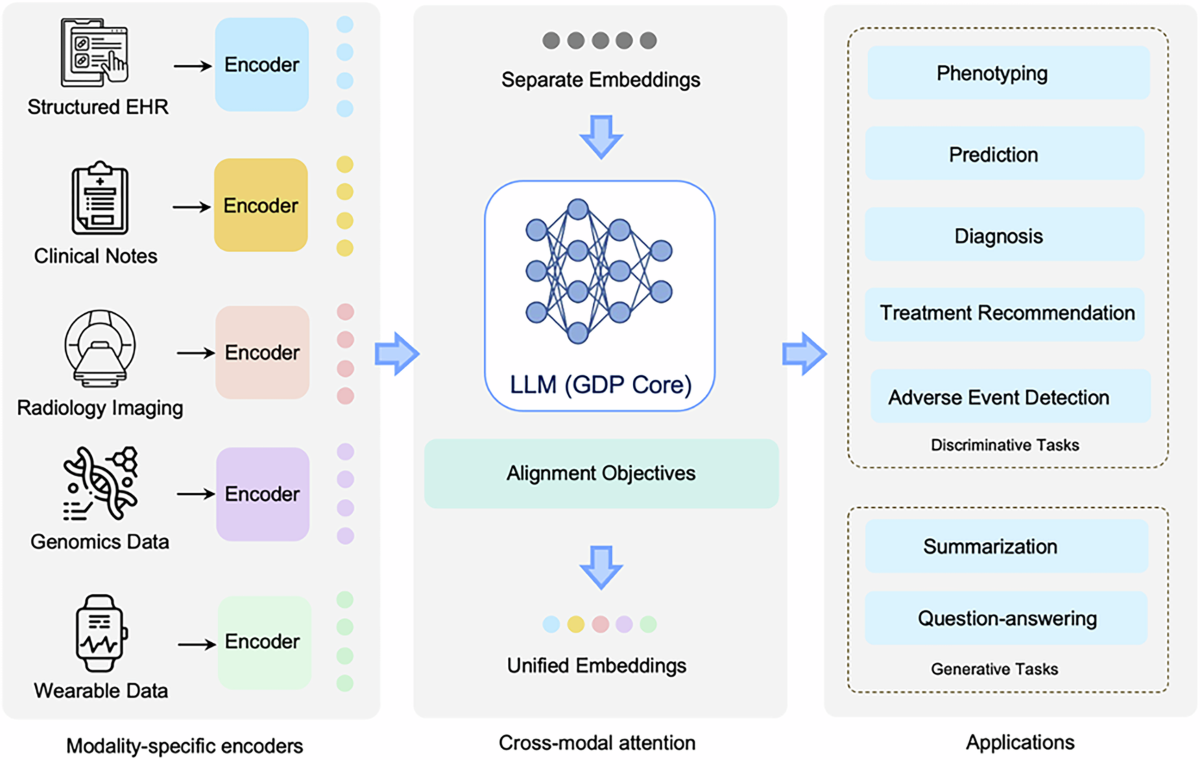
When the note, the E&M code, and the supporting MDM rationale are uploaded as separate manual steps, audit trails fragment and coders must reconcile mismatched timestamps. True bidirectional EHR sync in AI medical scribes with E&M coding built in means all three elements, finalized note, committed code, and rationale excerpt, write to the chart in a single atomic transaction, keeping the record internally consistent. The tradeoff is technical: bidirectional sync demands HL7 FHIR or deep EHR API access, and health systems with restricted API policies may limit or block full write-back capabilities.
Best AI Medical Scribes With Built-In E&M Coding for 2026
Speed and burnout-reduction scores dominate AI scribe marketing in 2026, but they measure the wrong outcome for a practice trying to close a revenue gap. A platform that cuts documentation time by 50% while routing coding to a downstream reviewer has solved a different problem than the one showing up in your charge reports. The distinguishing benchmark is whether the platform's coding intelligence operates before or after note finalization.
There is also a reliability problem that does not get enough airtime in vendor comparisons. Practices we work with have encountered AI scribes that introduce clinically dangerous transcription errors, the kind where a provider's spoken note about a sinus complaint surfaces in the chart as something else entirely. That category of hallucination is a documentation liability that undermines E&M coding accuracy and exposes the practice to audit risk. It also erodes clinician trust fast enough to kill adoption before the platform has a chance to demonstrate ROI. For high-volume practices where clinicians are already charting two or more hours outside patient care time, an unreliable scribe compounds burnout rather than relieving it.
Most platforms on the market generate E&M suggestions from the finished note, a document that has already compressed the clinical complexity that justifies a higher level of service. The platforms worth shortlisting are the ones that extract coding signals from the full ambient encounter, before summarization strips them out.
The comparison below applies that criterion directly. Each profile reflects where the coding intelligence sits in the pipeline, not just whether a coding feature exists.
1. iScribe Health - Best AI Medical Scribe With Native E&M Coding for Orthopedic Practices
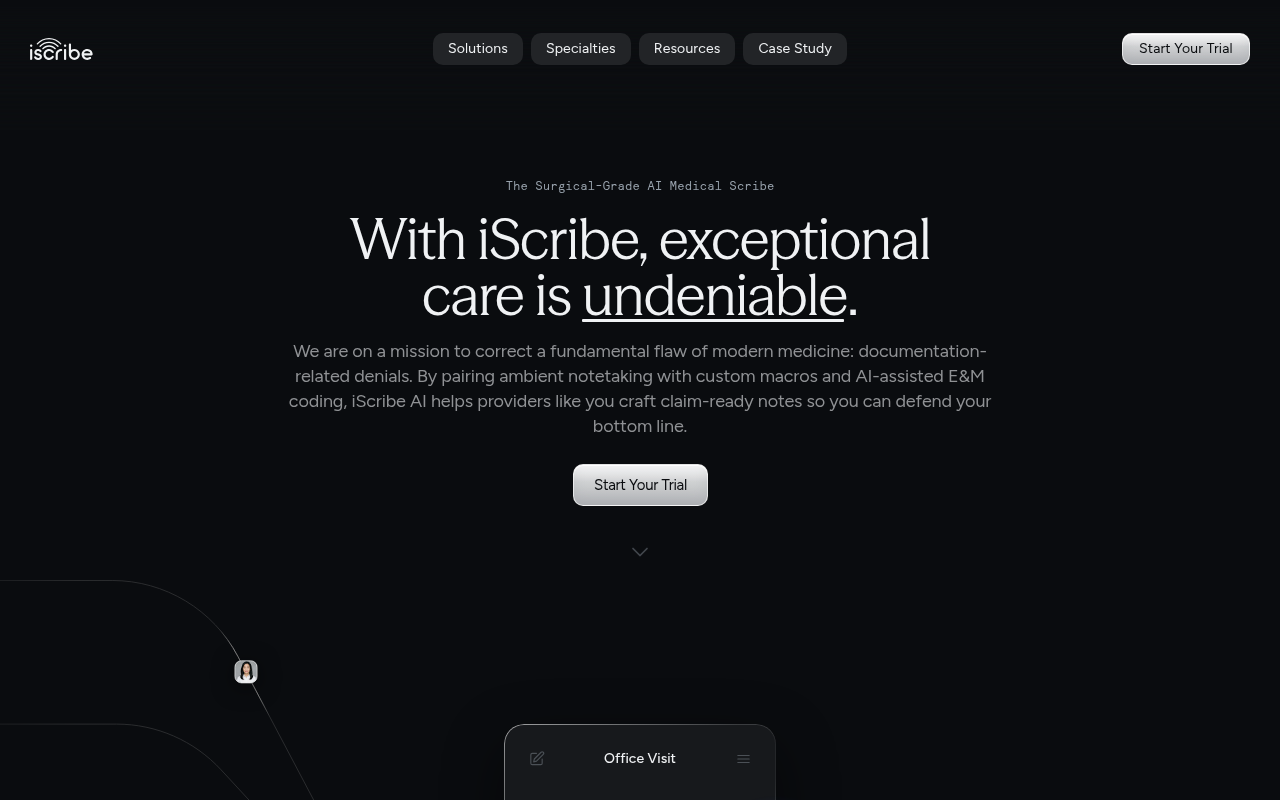
That sequencing matters: because the automated E&M coding layer reads the full ambient capture rather than the compressed note, complexity signals the provider voiced but later edited out of the summary are not lost before they reach the billing queue.
For orthopedic practices, specialty-specific MDM templates capture the complexity of surgical follow-ups and joint management visits at the source, then write the coding recommendation directly into the EHR billing queue. Real-time denial alerts surface at the point of note completion, after the AI drafts the encounter summary, giving providers and coders a concrete intervention point before a claim leaves the practice. The platform materializes most fully when the practice is already running a supported EHR and wants a seamless ambient documentation experience; practices where clinicians routinely chart two or more hours outside patient care time see the burnout-reduction benefit accrue across every encounter, every day.
The tradeoff: the platform is purpose-built for ambulatory and specialty practices, not large hospital systems needing enterprise-scale credentialing workflows.
2. Nuance DAX Copilot - Deepest Epic Integration, But E&M Coding Remains Add-On
DAX Copilot's ambient documentation inside Epic is among the most deeply integrated options for health systems standardized on that EHR, and its note quality is consistently rated high in clinician satisfaction surveys. The gap that matters for coding-focused buyers: E&M level suggestions require a separate billing overlay rather than emerging natively from the ambient capture pipeline. Practitioners in informatics roles consistently note that the coding output reflects the finalized note, not the full encounter, so complexity signals lost during documentation stay lost. Pricing varies by contract structure; consult EvidenceMD's 2025 scribe comparison for current ranges. Best fit when Epic integration depth outweighs coding nativeness on your priority list.
3. Suki Assistant - Strongest UX Polish, Limited Native Coding Intelligence
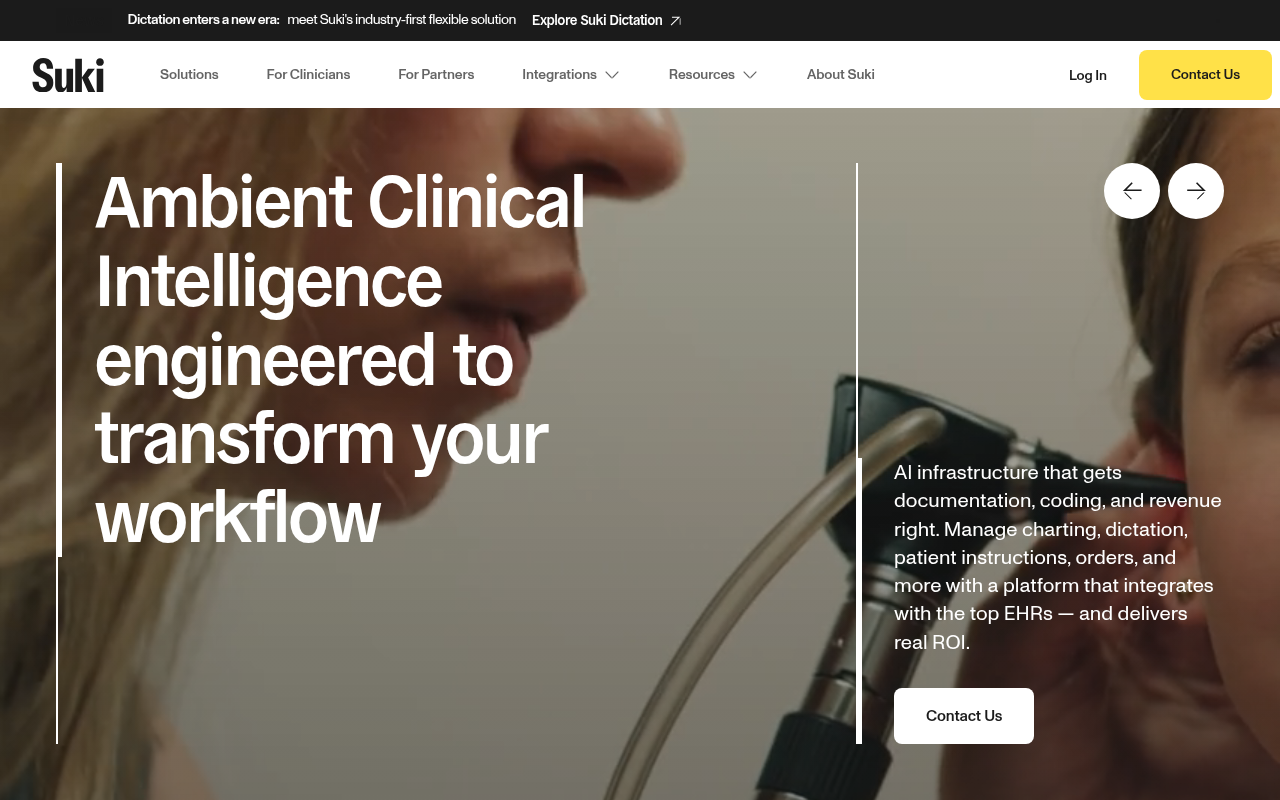
Suki's interface consistently receives the highest usability ratings in multi-specialty deployments tracked across the market, making it among the easier ambient scribes to adopt across a mixed-tenure provider group, and its documentation speed gains are documented in that same comparison. Enterprise contract pricing varies; consult EvidenceMD's 2025 analysis for current ranges. The coding layer, however, is appended after note generation rather than derived from the ambient encounter, so MDM complexity that a provider expressed verbally but edited out of the note does not reach the coder. For practices where clinician satisfaction is the primary adoption barrier, Suki is a credible choice; for practices where the shift rate to higher-level service codes is the metric that matters, the architecture is a constraint.
4. Abridge - Best for Academic Medical Centers, Coding Nativeness Still Emerging
Abridge earned Best in KLAS for Ambient AI in 2026, a recognition validated by the KLAS methodology, which requires verified peer-institution references and published implementation outcome data for Best in KLAS designation, and its academic medical center deployments are among the most rigorously validated in the category. The platform's strength is documentation accuracy and clinician trust at scale. Native E&M coding intelligence is still developing; current deployments rely on downstream coding review rather than ambient-layer code extraction. For a health system where documentation quality and institutional credibility drive the selection, Abridge is a defensible choice. For a practice where coding precision is the primary financial lever, the pipeline architecture is not yet there.
5. DeepCura - Most Agentic Architecture, Broadest Automation Scope Beyond Scribing
DeepCura's agentic design automates across a wider clinical workflow than any pure scribe platform, including prior authorizations and care gap alerts alongside documentation. That breadth is its differentiator and its tradeoff: the E&M coding output is mediated through an agent layer whose accuracy in real-world deployments lacks published outcome data as of this writing. Practices that need ambient scribing plus broad administrative automation may find the architecture compelling. Practices evaluating on coding accuracy and audit defensibility should treat the absence of published coding accuracy benchmarks as a material gap until the vendor can supply verifiable performance data.
Choosing the right platform on paper is only half the decision. The other half is knowing whether you can integrate it without stalling your billing cycle or retraining your entire front office. The next section gives you a concrete 90-day framework for doing exactly that.
Related Reading
- Best Ai Scribe For Athenahealth
- Ai Scribe Accuracy
- Do Ai Scribes Reduce Claim Denials?
How to Evaluate an AI Scribe Integration Without Disrupting Your Billing Workflow
The revenue concern, confirming that E&M coding suggestions actually reach the billing queue intact before the first claim goes out, is where practices quietly lose ground during go-live.

The Three-Phase Sequence That Protects Billing Continuity During Go-Live
Phase one begins before a single encounter is recorded: EHR bidirectional sync must be validated so that structured note data and suggested E&M codes flow directly into the billing queue without manual re-entry. Skipping this step recreates the exact double-entry gap the system was designed to close.
Phase two is a small pilot cohort of physicians running the AI scribe in parallel with the existing workflow for several weeks, giving the practice a controlled window to catch integration gaps before they affect claim volume at scale.
Mass General Brigham's phased expansion from 18 pilot physicians in July 2023 to more than 3,000 with access by spring 2025 demonstrates that this sequence preserves workflow integrity at scale.
The HIPAA Compliance Checkpoint Your Vendor Must Clear Before Ambient Capture Goes Live
Ambient audio capture carries distinct data-handling risks that a standard software BAA does not automatically cover. Practices must confirm the following as verified prerequisites before go-live, rather than assumptions discovered after the first denial cycle:
- BAA execution
- Data residency confirmation
- Audit log access
Demand written confirmation that the BAA covers ambient audio and stored note text, and that your team has direct access to audit logs without routing a request through vendor support.
90-Day Revenue Metrics That Prove ROI Before Full Rollout
Three metrics, captured against a pre-go-live baseline, tell you whether the integration is working:
- The 99213-to-99214 shift rate measures whether ambient complexity signals are actually reaching the code suggestion layer.
- Days-to-bill tracks whether the coding workflow is accelerating claim submission or stalling in a new manual review step.
- The E&M denial rate confirms whether suggested codes are defensible to payers.
Capturing several months of historical baseline data before go-live is what makes those three metrics meaningful. IScribe Health structures implementation around a pre-go-live compliance checklist and a 90-day revenue scorecard built into onboarding, so E&M coding intelligence is validated against your actual billing queue before full rollout, not discovered to be misaligned after the first denial cycle.
Next steps
If your weekly charge reports still show the same 99213-to-99214 ratio despite every coding initiative you have tried, the path forward starts with fixing where in the pipeline the intelligence lives. A bolt-on coding overlay reads the finalized note and works from a compression artifact, not the encounter. Complexity that was spoken and never preserved is gone before any coder or coding tool sees the chart.
Ambient-layer signal extraction means MDM elements, diagnoses considered, comorbidity context, and risk of complications are captured before summarization strips them out, which is the only point where that information is still recoverable. The distinguishing benchmark between platforms is whether coding intelligence operates before or after note finalization, not how fast the note appears or how much charting time drops. Those two realities point to a single evaluation action: confirm that the platform you shortlist extracts coding signals from the full conversational record, not from the document that already discarded them.
Start with Best AI medical scribe for orthopedic practices to see how iScribe Health's ambient capture and native E&M coding connect at the encounter layer, before the note is written. From there, bring your specialty, weekly volume, and current E&M distribution to a demo framed as a revenue discovery exercise rather than a software evaluation.
Frequently Asked Questions
Why didn't my E&M revenue improve after we switched to an AI scribe?
Most documentation-only AI scribes record what the clinician says but don't actively preserve coding-relevant clinical elements in real time. By the time the finalized note exists, the complexity that would justify a higher E&M level, MDM depth, comorbidity interactions, time spent, has already been compressed out, leaving a post-hoc coding review with nothing to recover.
How do payers actually detect that our practice is undercoding or overcoding?
Payers use automated analytics to compare each provider's E&M level distribution against specialty-specific benchmarks, they're reading your coding bell curve, not reviewing individual notes. The HHS Office of Inspector General has identified statistical outliers in provider coding behavior as the primary audit selection signal, meaning the risk accumulates silently across hundreds of claims before anyone flags it.
What's the real difference between a bolt-on coding overlay and a coding-aware scribe?
A bolt-on coding overlay reads the finalized SOAP note and suggests an E&M level based on what survived documentation, while a native E&M engine runs a parallel extraction pipeline from the raw ambient audio and NLP-parsed conversation before any documentation decisions are made. These are architecturally different systems, the bolt-on tool cannot recover clinical complexity that was already edited out one step earlier, which is why practices that add a coding overlay on top of a documentation-only scribe often see no meaningful shift in their code level distribution after six months.
If a payer audits us, what documentation do we actually need to defend a higher E&M code?
Auditors want contemporaneous evidence: timestamped documentation showing that the complexity supporting a given code existed at the point of care, not reconstructed afterward. A finalized note alone is a compressed summary, the ambient clinical detail that justified the code is already gone, so a scribe that writes natively into the EHR at the point of note completion produces a structurally stronger evidentiary position than a bolt-on tool that stores only the finalized note as an external attachment.
Does ambient audio capture work for physicians who don't narrate out loud during a visit?
It works less effectively for them. Physicians who think silently and dictate conclusions afterward will see less MDM signal extracted at the ambient layer than those who verbalize their clinical reasoning in real time, that's an honest trade-off the approach carries alongside its benefits.